
Get in touch with Ebestron Company

Static Mixing Tubes: How to Run a Controlled 2K Adhesive Screen Before Production

Static Mixing Tubes Blogs
Reviewed by the Ebestron technical team
Static Mixing Tubes are mixing components used in a defined two-component adhesive setup. Before that setup becomes a routine production choice, a team needs something more useful than a product label or a successful first bead: a record that shows what was screened, what was observed, what was verified, and what remains unknown.
This is a controlled-screen guide for a defined adhesive application. It’s deliberately not a catalogue, a connector guide, a geometry recommendation, or a claim that one tube trial completes process validation. Its value is in making a limited trial interpretable and reusable by the people who must decide what happens next.
Working rule: a controlled screen can support a bounded next decision. It does not prove universal tube suitability, establish root cause, or replace the adhesive maker’s current instructions and the acceptance method for the real application.
Where This Controlled Screen Starts, and What It Does Not Replace
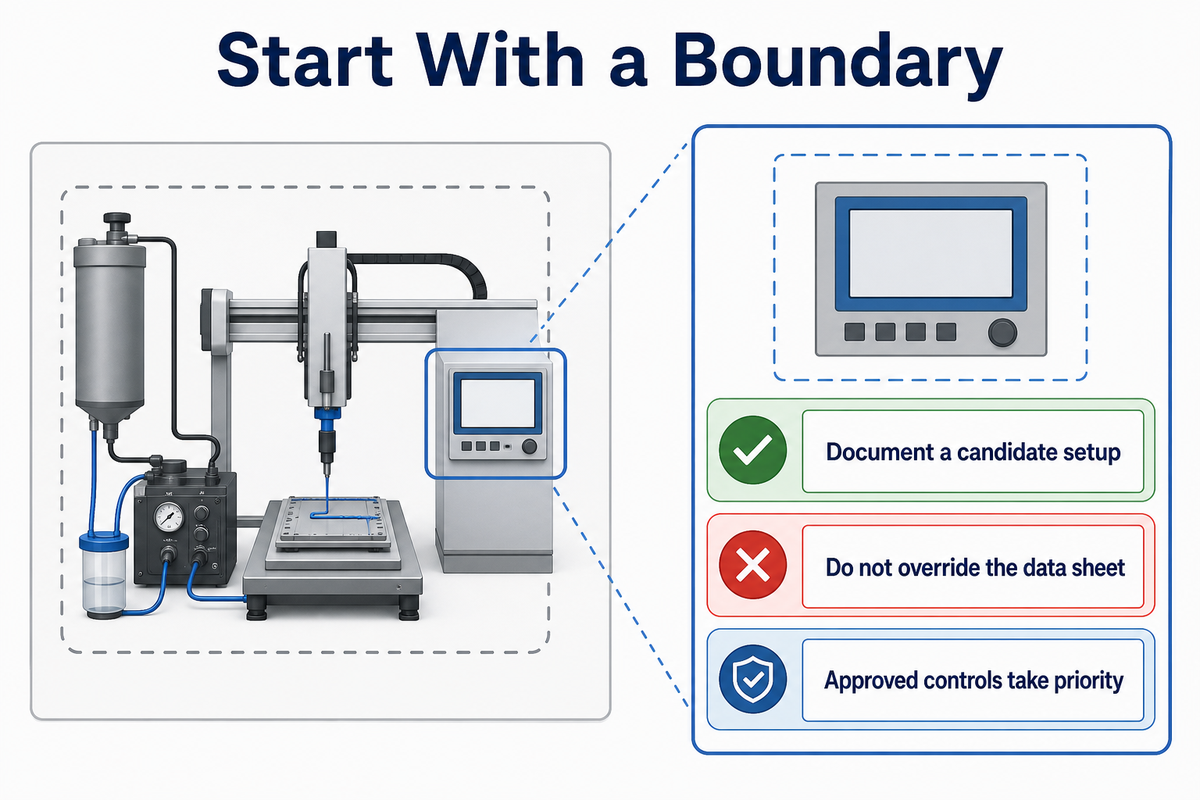
“Static mixing tubes” is often searched as if the answer should be a product choice. In a production conversation, the more practical question is usually narrower: can this defined adhesive, cartridge, dispensing setup, and application be screened in a way that another person can review later?
That distinction matters because adhesive-bond performance depends on the application system, not on one consumable in isolation. A recent adhesive-bonding review discusses the importance of application-specific factors such as material compatibility, surface preparation, curing, and service conditions. Such a tube screen should therefore sit inside that wider system rather than pretend to replace it.
For a factory team, the risk is a misleading comparison because a qualified process owner still needs a method boundary. ISO 10364:2024 is a useful external reference for the limits of working-life testing, not a tube-selection rule.
Use this guide when the objective is to document a candidate setup before routine use. Don’t use it to override a technical data sheet, approve an unverified bond design, create a safety procedure, or substitute for a customer-, site-, or industry-required qualification plan. If a job already has approved limits or a formal change-control process, those controls take priority.
Freeze the Candidate Configuration Before Changing a Process Variable
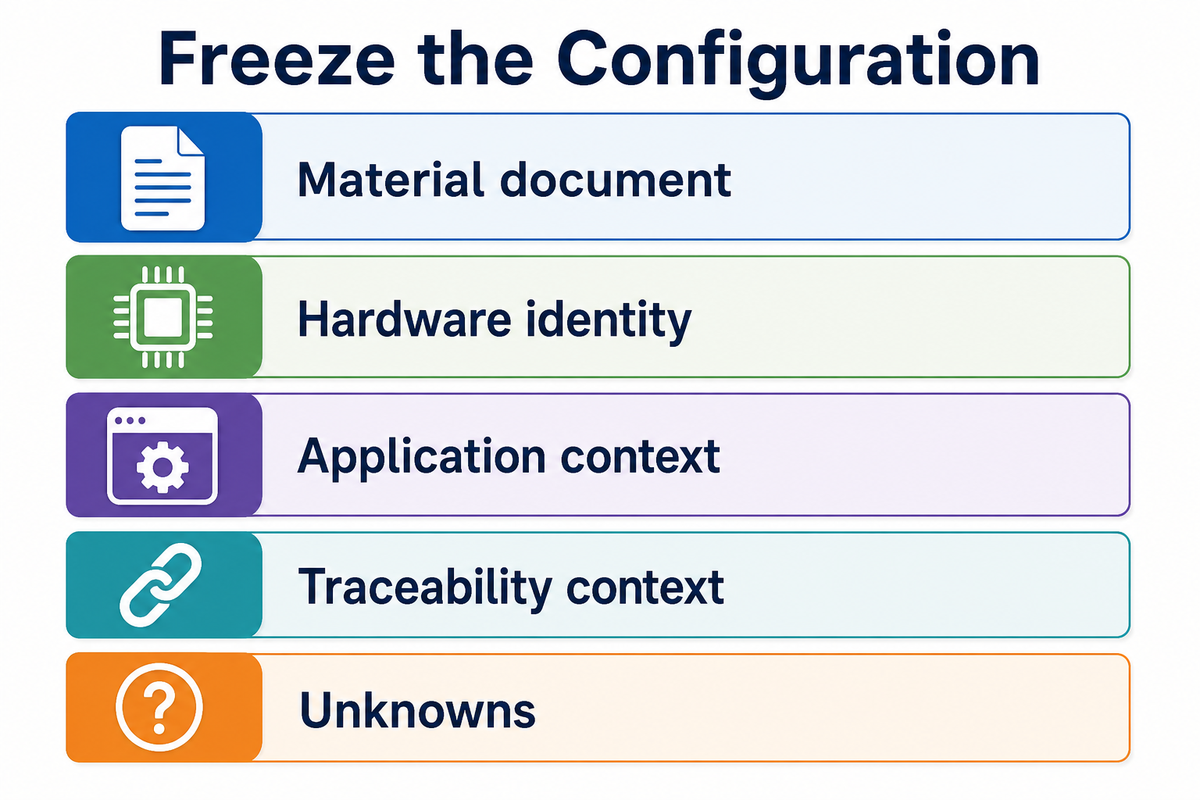
Later comparison fails if the team can’t reconstruct the setup. Start by separating known configuration facts from open questions. Practically, the aim isn’t to collect every conceivable field; it’s to capture the fields that make a later comparison understandable.
- Record the governing material information: adhesive identity and the current document or revision that governs ratio, handling, working life, cure, and application limits.
- Identify the material and hardware: available component lot information, cartridge format, candidate tube identifier, dispensing equipment identity, and any relevant equipment condition or setting already defined by the owner. Where relevant, note the nozzle and mixing nozzle tip condition, the connection style (including a bayonet interface when present), and the identifiers for any static mixing nozzles evaluated.
- Application context: what’s being dispensed, where it will be used, and which acceptance method actually governs the finished work.
- Traceability context: date, operator or responsible role, and relevant process or environmental conditions only when the governing application requires them.
- Unknowns: anything the record can’t verify, for example, a missing material document, unclear approved limit, unconfirmed equipment status, or an undefined acceptance method.
The last field is easy to omit and often the most valuable. Writing “unknown” doesn’t weaken a record. It prevents a later reader from treating an assumption as a tested fact.
Cross-industry quality guidance can be useful here only as a design analogy, not as a rulebook. FDA medical-device inspection guidance records items such as equipment, environmental controls, components, operators, established limits, and process changes when a regulated process is validated. This article is not importing medical-device requirements into adhesive dispensing. It borrows one discipline: if a field is needed to decide whether two records are comparable, give that field a place in the record.
A configuration mismatch is a risk because a third-party record cannot resolve which condition changed after a production trial. The FDA example is only a scope analogy, but it shows why qualified reviewers preserve the relevant fields before interpreting a difference.
Turn the Adhesive Data Sheet Into a Trial Window

Trial boundaries come from the material and application owners, not from a generic mixing-tube article. Before a screen, identify the current adhesive documentation and sort the information into three columns:
- Material-maker requirements: stated mix proportion, handling, working-life, cure, storage, and limitation information.
- Application-owner requirements: the actual joint, substrate preparation, geometry, inspection, performance, or release criteria that control the work.
- Screen record fields: what the team will observe and preserve while it uses the defined setup.
Those columns shouldn’t be merged. A screen record can show that a stated setup was used; it can’t invent a material limit that the documentation doesn’t provide. Likewise, a visual bead observation can’t become a bond-performance test simply because it was recorded carefully.
ISO 10364:2024 is a useful boundary reference because it covers methods for determining the working life of multi-part adhesives and explicitly notes that different methods do not necessarily provide identical results. It is not a static-mixing-tube acceptance procedure. Because the ISO page shows the edition at a review stage, anyone using it in a controlled procedure should verify the current edition and status rather than freeze a web-page snapshot into a local rule.
That boundary matters because a scope mismatch is a risk when a third-party method is used outside the condition it actually covers.
Build a One-Variable Tube Screen Without Making a Blanket Production Claim
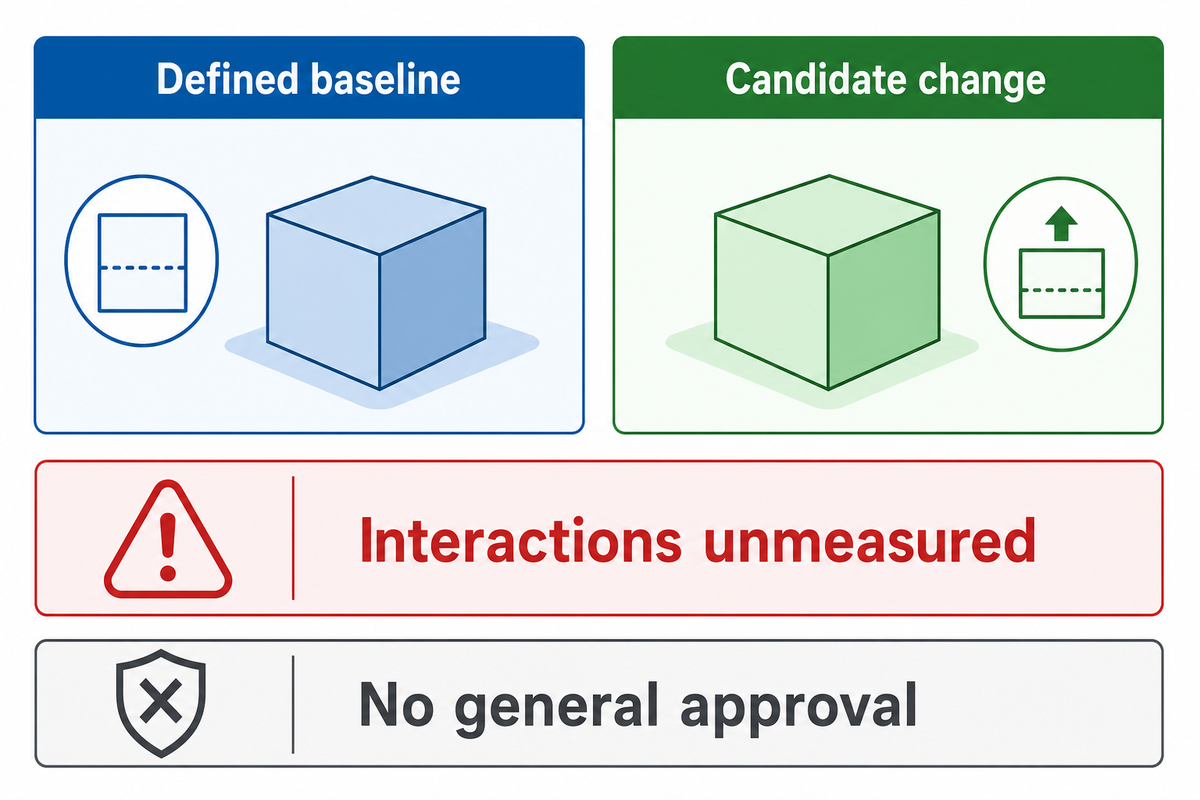
For an initial screen, choose a defined baseline if one is available, state the candidate change, and avoid changing several uncontrolled factors at once. That’s a practical way to make the first comparison readable. That result is not proof that the changed item alone caused every later result.
NIST’s experimental-design guidance explains why: one-factor-at-a-time work can leave interactions between factors unmeasured. In a static-mixing context, that limitation isn’t abstract. A peer-reviewed study of an inline static mixer found its performance changed with viscosity difference and flow regime under the study’s specific conditions. The study isn’t a cartridge-tube recipe, but it’s a useful warning against transferring a single screening result across materials or operating conditions.
For a factory trial, the risk is an overclaim rather than a defect finding: record the baseline and the controlled change before anyone attributes the result to the tube.
Decision boundary: A controlled screen documents a comparison; it does not establish a general product approval or replace the application owner’s acceptance method.
Use a one-variable screen to answer a narrow question such as: “With the same defined application context, what did we observe after introducing this candidate tube?” Don’t use it to claim that the tube is suitable for every adhesive, every dispense condition, or every downstream joint.
Record
Baseline status, the one intended change, and any condition that was not controlled.
Baseline status, the one intended change, and any condition that was not controlled.
Do not infer
That a first screen proves the tube caused the result or that unrecorded variables were irrelevant.
That a first screen proves the tube caused the result or that unrecorded variables were irrelevant.
Observe the Dispense Before Committing Parts
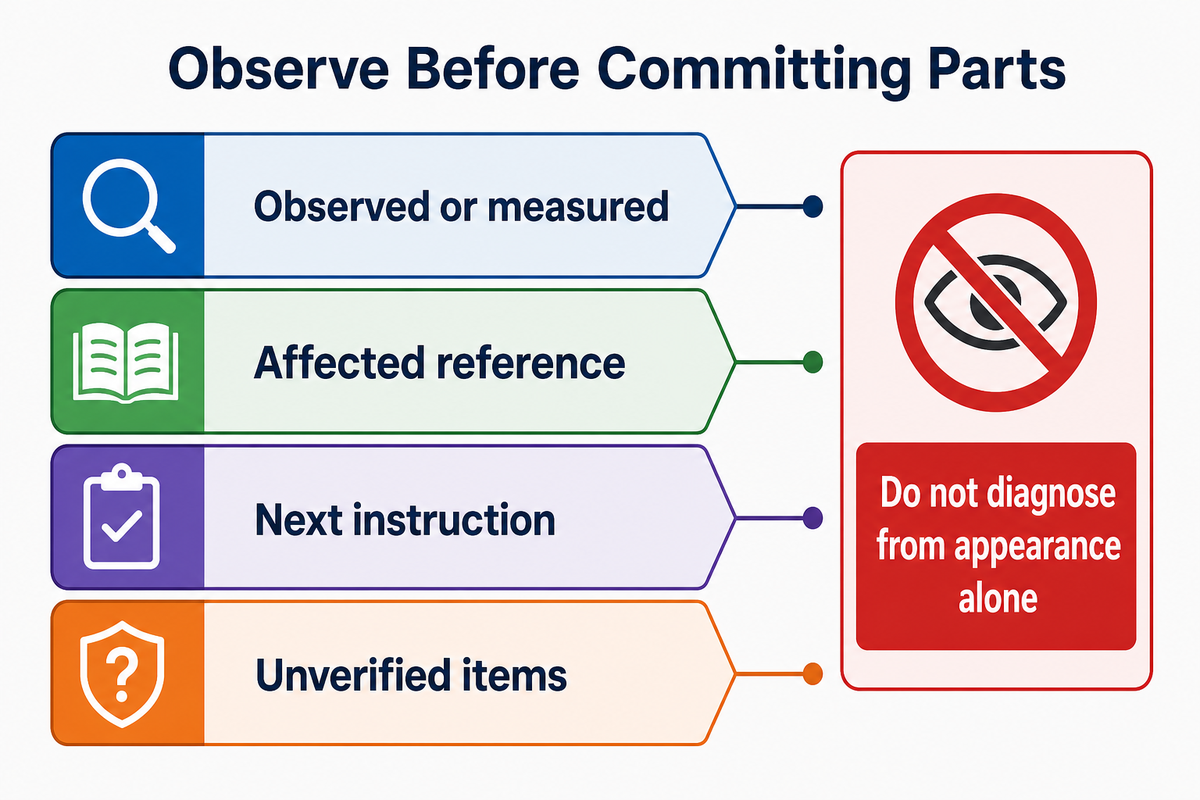
An unusual bead, streaking, changing flow, unexpected resistance, or another visible departure from the defined screen can be important. The disciplined next step is to describe what was observed, preserve the relevant reference, and route the result through the governing process. It isn’t to diagnose the tube from appearance alone.
In 2026, a report on monitoring two-part adhesive dispensing identified several distinct process concerns, such as ratio, material beginning to cure in the mixer, and purging, and noted that more than one cause can be involved. That’s why the record should distinguish:
- what the operator actually saw or measured;
- which part, sample, or work reference was affected;
- what the governing material or site instruction says to do next; and
- what remains unverified.
Why can a two-part adhesive bead look streaked or inconsistent after a tube change?
A streaked or inconsistent bead after a tube change is an observation that can justify a hold, a comparison, or a technical review; it does not identify a single cause. Material condition, ratio delivery, equipment, timing, preparation, the candidate tube, or interacting factors may all require review. Keep the language factual: “streaking observed under this recorded condition” is useful; “the tube caused the defect” is a conclusion that needs separate evidence.
Verify Cure Using the Method That Governs the Application
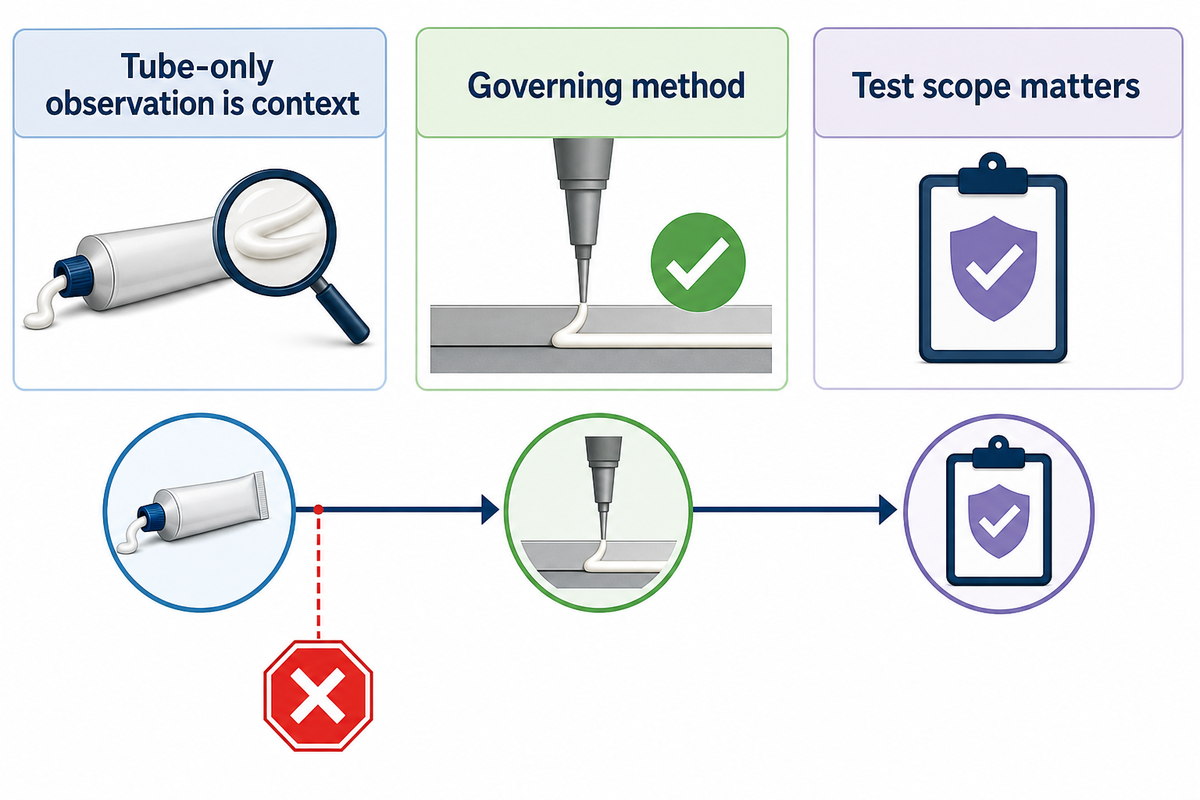
Verification should answer the question that matters for the actual application. Tube-only observation, surface feel, or a bulk sample may be helpful context, but none automatically establishes performance in the intended joint. For the actual application, the owner may need a specific inspection, cure check, test geometry, or acceptance criterion. That’s the method the record should name.
ASTM D5574’s published scope provides a useful caution: properties developed under its methods apply only to the actual adhesive formulation tested and analyzed, and the standard does not include production, inspection, or certification requirements. Its subject is wood-bonding structural joints, not mixing tubes, so it is not being presented here as a governing method. Accordingly, the transferable lesson is modest: test scope matters.
The risk of relying on an informal surface observation is that it can conflict with a defined acceptance method.
What should you do if adhesive cures in the mixing tube before the job is finished?
Don’t publish a generic salvage or reuse instruction. Record the event, identify the relevant material and process documents, determine whether affected work must be held under the governing procedure, and ask the qualified owner for the next action. Reactive-material handling, cleanup, and restart decisions depend on the actual product and application.
Use the 4-Record Tube Screen Log to Make Procurement Evidence Reusable

The following log is an editorial documentation aid. This log is not an ISO, ASTM, FDA, or supplier standard. Its purpose is to prevent a purchase or production discussion from being based on an unrepeatable verbal report.
| Record | Capture | Decision it can support | What it does not prove |
|---|---|---|---|
| 1. Configuration | Governing document/revision; available material lot; cartridge, tube, and equipment identity; operator/date; application; relevant owner-defined conditions. | What was actually screened. | Universal suitability or complete process validation. |
| 2. Comparison | Baseline or a documented absence of one; intended changed variable; uncontrolled or unknown conditions. | Whether the screen is interpretable enough for a next review. | All factor interactions or a root-cause finding. |
| 3. Observation | Factual dispense/process observation, sample or work reference, and any hold or affected-work disposition. | Whether to compare, pause, or seek a qualified decision. | Cure or intended-joint performance. |
| 4. Verification or escalation | Governing method and acceptance criterion, result source, unresolved variables, owner, and next action. | A release path or technical review route. | Supplier equivalence, a new specification, or a waived requirement. |
9-Category Configuration Vocabulary for a Controlled Screen
Search and purchase terminology does not define a configuration by itself. Use the following vocabulary as a translation aid: record a term only when it is actually part of the defined setup, and verify any specification against the governing material and application documents.
| Category | Terms that may appear in a request | What the screen record should preserve |
|---|---|---|
| Mixing interface | static mixer nozzle; mixing tip; nozzles for two-part | The actual interface identifier and condition, rather than an assumed equivalent. |
| Use-cycle label | disposable static; replacement | Whether the label is relevant to the defined screen and the governing handling instruction. |
| Material wording | epoxy; glue; silicone; two-part adhesive | The material identity and its current documentation, not a generic compatibility conclusion. |
| Package descriptor | adhesive cartridge; 50 ml; 50 ml cartridges; 400 ml cartridges; volume; size | The package label actually used; capacity wording alone does not establish fit. |
| Dispensing hardware | gun; tool; syringes | The identified device or tool and any owner-defined condition. |
| System description | meter mix; element | The system description used by the responsible owner, without assigning an unverified geometry or setting. |
| Operating context | mix two-part; combine; pressure; flow rate | The observed or owner-defined condition and any applicable limit; this guide supplies no universal value. |
| Attachment language | fit; attach; match; align | What was physically identified and what still needs confirmation before use. |
| Request context | manufacturer; dispensing experts; waste | The specific question for the responsible technical contact, not a blanket product recommendation. |
Once this log exists, a usable procurement conversation can begin. The log lets the team ask a supplier or internal technical owner a precise question about a defined application instead of asking for a blanket assurance that a tube will “work.”
In a review meeting, read the four records from left to right. First, decide whether the configuration is sufficiently identified to compare. Next, decide whether the stated change and the observation answer the narrow screen question. Then identify whether the governing verification method has actually been run, is pending, or hasn’t yet been defined. Finally, assign one owner and one next action. This sequence prevents a purchasing decision from silently becoming a technical release decision.
When the answer is “not enough information,” the log remains useful. A missing lot reference, unknown document revision, absent baseline, or undefined acceptance method isn’t a reason to make a negative product claim. That gap is a reason to preserve the question, avoid an unsupported comparison, and obtain the right instruction before more work is committed.
The risk is an unsupported procurement claim, especially when the record leaves an ambiguous field that needs an owner before a production decision proceeds. FDA documentation guidance is only a cross-industry boundary reference, not an adhesive-dispensing requirement.
Know When the Record Requires Escalation Rather Than Another Adjustment
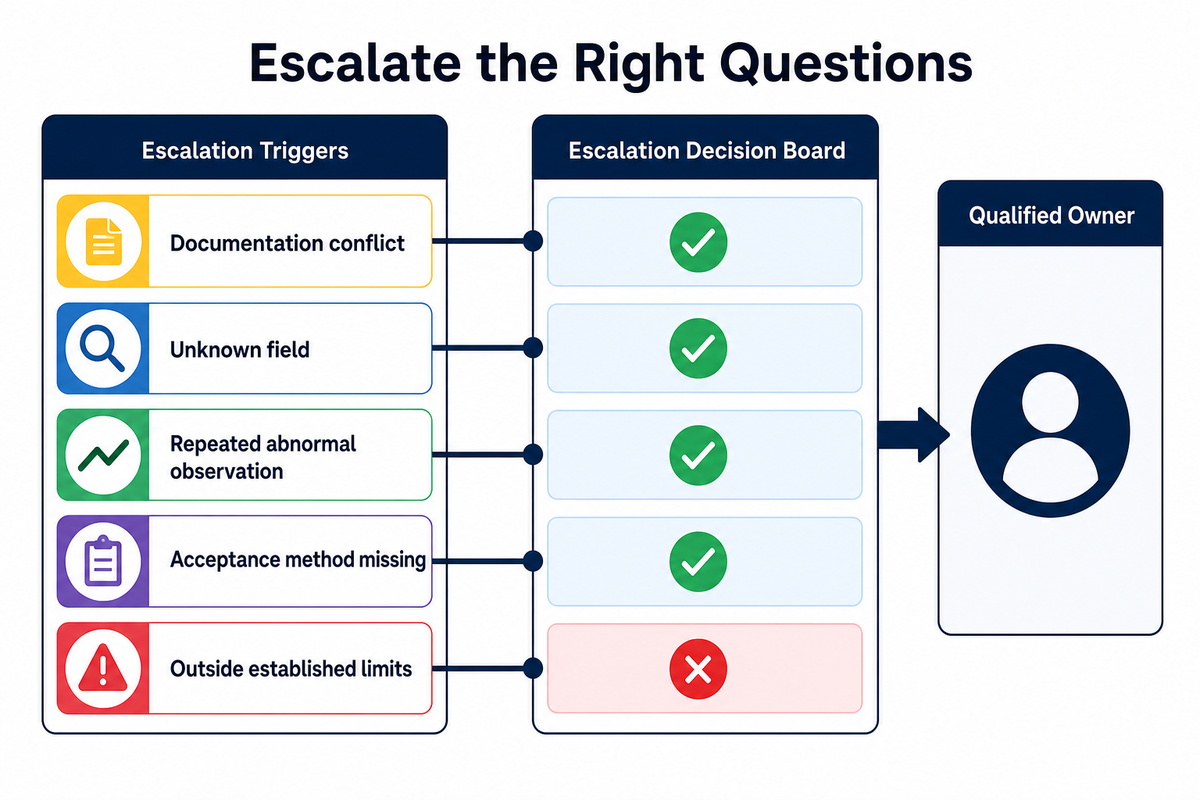
Escalation should be tied to a defined decision boundary, not to anxiety about every unusual bead. One observation may be handled inside an approved local procedure if that procedure defines the limit and action. Escalate when the record shows a conflict or gap that the local procedure can’t resolve, for example:
- the material documentation and the planned process instruction conflict;
- a key configuration field is unknown or can’t be verified;
- the same abnormal observation persists after the defined screen is repeated;
- the application requires a performance or joint-level acceptance method that hasn’t been identified; or
- a proposed adjustment would move outside established instructions or limits.
OSHA’s incident-investigation guidance isn’t adhesive troubleshooting, but it makes a useful reasoning point: stopping at an immediate cause can hide contributing equipment, procedure, training, or program factors. The same restraint is appropriate here. Preserve the observation and the known configuration, then send the unresolved question to the owner qualified to interpret the governing method.
What the Current Search Data Can, and Cannot, Say About Tube Screening
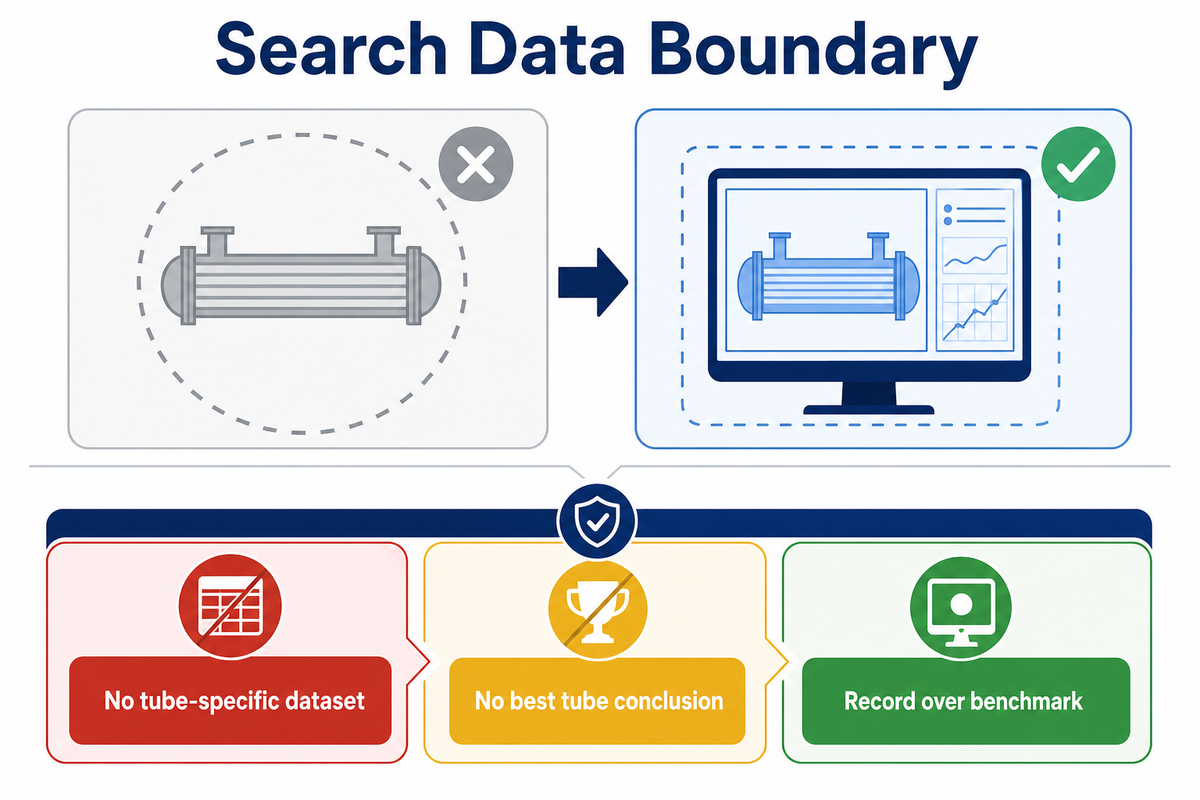
The current search set didn’t produce a transparent, tube-specific market dataset or an independent universal performance benchmark. Broad static-mixer forecasts and supplier-led savings claims aren’t enough to support a market-growth, cost-saving, or “best tube” conclusion for this guide. For a factory team, that limitation matters because ISO 10364 addresses a defined working-life method, not a universal selection benchmark. A reliable screen record is therefore more useful than an attractive number with the wrong scope.
Next Step: Bring a Defined Application to the Product-Solution Page
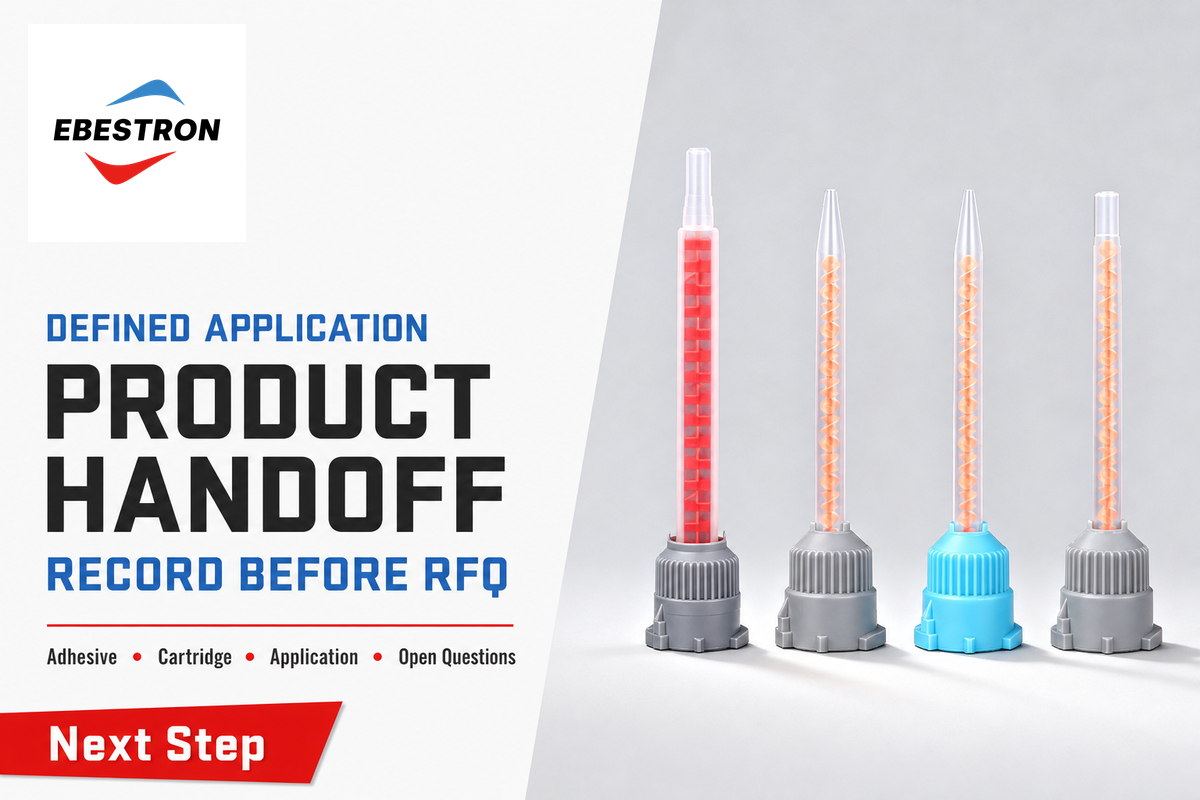
Once the record identifies the adhesive, governing document, cartridge format, defined application, and unresolved questions, use it to review the appropriate Static Mixing Tubes solution options. Request a specific application review from Ebestron’s customer-service team, providing the cartridge format and process record. That product page is the right place for a defined application discussion; this article remains the guide for making that handoff evidence-based.
FAQ
What are static mixing tubes used for?
Static mixing tubes are used in two-component dispensing setups to bring separate material streams together before application. For a process team, the next question is whether the complete defined setup has been screened against the governing adhesive and application requirements, including the stated configuration, application conditions, and acceptance method. General background information cannot replace those material and site instructions.
How do I run a controlled screen for a static mixing tube?
Record the defined configuration, identify the governing material and application documents, state the intended comparison, preserve observations, and name the verification or escalation path before drawing a conclusion. Keep the adhesive identity, tube identifier, equipment, application, and unresolved variables together. Treat the result as a limited screen, not as proof of every process interaction or production-level validation.
How do I know whether a static mixing tube caused a poor result?
Do not decide from appearance alone. Preserve the observation, affected-work disposition, and relevant configuration record, then use the governing material or application method to review possible causes. Material condition, ratio delivery, equipment, preparation, timing, and the tube can interact. The next qualified action should follow the documented acceptance method rather than a visual conclusion.
How much does a static mixer cost?
Price is not a validation or screening criterion. It varies with the defined cartridge and tube format, quantity, supplier terms, application requirements, and commercial arrangements. For that reason, this guide does not compare prices or recommend a purchase. A purchasing team can still use its normal supplier-quotation process after the technical configuration, governing document, application, and unresolved variables are recorded. That sequence keeps a commercial comparison separate from the controlled screen described here. Once those facts are available, move a defined application discussion to the relevant product-solution page.
Can I reuse a static mixing tube after adhesive has cured inside it?
Follow the adhesive maker’s current safety, handling, and cleanup instructions together with the site procedure. This guide does not provide a generic reuse or salvage method for reactive-material equipment because acceptable handling depends on the actual product and application. Record the event, identify any affected work, and obtain the qualified owner’s next action before restarting the process. If the record is being used for a purchasing or production decision, keep the cured-tube event separate from a product-selection discussion: note whether material remained in the tube, whether any work was affected, whether the site has an approved restart instruction, and who owns the decision before the next dispense starts.
References & Sources
- Peer-reviewed adhesive-bonding review application-dependence context; not a tube acceptance method.
- Assembly Magazine: real-time monitoring and two-part adhesive dispensing trade-process context; not a universal diagnostic procedure.
- NIST: One variable at a time general experimental-design limitation; not adhesive guidance.
- ISO 10364:2024 multi-part adhesive working-life method scope; verify current status before procedural use.
- Peer-reviewed static-mixer study on viscosity ratio – inline-mixer proof under defined states; not a cartridge-tube formula.
- ASTM D5574 scope page scope caution for adhesive-joint properties; not a tube standard.
- FDA medical-device process-validation inspection guide cross-industry record-design analogy only, not a requirement for adhesive dispensing.
- OSHA incident-investigation guidance cross-industry root-cause reasoning only, not adhesive troubleshooting instruction.
Related Posts



Trending now

![Dynamic Mixing Systems for 2K Sealants [Guide]](https://adhesivespackage.com/wp-content/uploads/2026/10/dynamic-mixing-systems-for-2k-sealants-guide-featured-1-150x150.png)