Get in touch with Ebestron Company
ISO 9001 & CE
Construction Anchor Adhesive Cartridges
Construction Anchor Adhesive Cartridges, Empty Dual & Coaxial Packaging Systems
Empty two-component cartridges, pistons and static-mixing nozzles engineered to hold chemical-anchor and injection-mortar resins on ratio — built for adhesive formulators and private-label fillers, not sold pre-filled.
TECH SPEC Solution Summary, Ebestron Anchor Adhesive Cartridge Systems
OEM READY
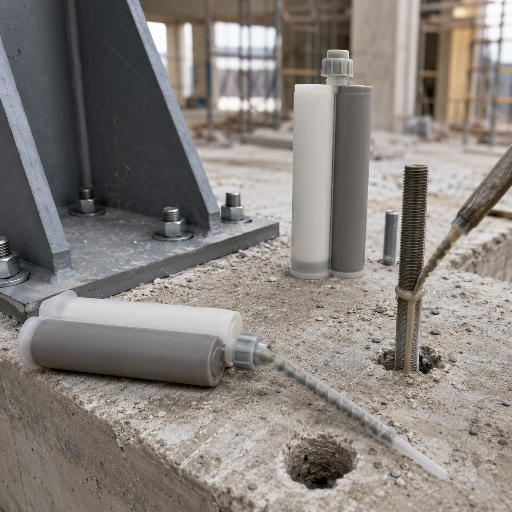
150–585 mL
Side-by-Side & Coaxial; cartridge volume 150–585 mL
1:1 · 3:1 · 5:1 · 10:1
Discrete anchor-resin ratios
PP · PA · PBT · PE
Body polymer matched to resin chemistry
Mixpac-Pattern fit
Standard 2K dispensing guns, mixing tube & bayonet mixers
Empty / Unfilled
Empty two component cartridge for formulators & fillers
CE · RoHS · REACH
OEM & private-label adhesive packaging manufacturer
Why Anchor-Resin Packaging Is a Compatibility Problem, Not a Container Choice
A chemical anchor cartridge fails its job long before an installer ever pulls the trigger if the empty two component cartridge was never matched to the resin inside it. Vinylester and unsaturated-polyester anchoring resins carry free styrene monomer, and methacrylate (MMA) systems are chemically aggressive in their own right. Drop one of those resins into a generic polypropylene body chosen only for price and you get a slow problem: styrene migration and wall swelling that shorten shelf life, let the piston seal creep, and skew the A:B ratio that the whole anchor depends on.
We engineer the other side of this chemical package
We engineer the other side of this chemical package–the empty cartridge shell, the internal sealing piston, the static-mixer nozzle–And it all comes specifically adapted for the resin it will carry. That’s why, rather than offering any “one size fit all,” you get our shells made from a spectrum of polymers–polypropylene, PBT, polyethylene, and polyamide (PA/nylon). You’re picking the correct material for wall to ensure 10:1 hybrid anchors retain their precise on-ratio formulation and the correct specifications for 24-month shelf life in our plant in Kunshan, Jiangsu. Ship to you empty, naturally.
The end application — a threaded steel bar dowelling rebar into cracked concrete
And the end application — a threaded steel bar dowelling rebar into cracked concrete, tested to a 0.012 in crack width under ICC-ES AC308 for a seismic rating — can fail well below its rated load if the resin inside a generic vessel drifts just half a percent off its A:B ratio through a swollen barrel wall, weakening the cured compound and stretching its final cure time. That generic-material interaction is not a packaging detail; it is a structural-anchoring failure with a built-in 24-month hideout. At Ebestron the body, plunger and mixing tube are not separate parts in a generic package — they are one engineered assembly, the honest version of “Mixpac-compatible.”
This text is intended to describe Ebestron’s capabilities to formulators determining a cartridge material to house their new 2-component, resin anchored structural components or to contract fillers selecting from various suppliers to dispense a well established structural resin with the correct 2K apparatus. If this isn’t describing packaging, rather finished product you purchased from hardware or Big box stores…please proceed elsewhere. Our focus on structural and seismic anchors goes far deeper than mere containment.
Ebestron Anchor Cartridge Range, Side-by-Side & Coaxial Models
To choose a cartridge for an anchoring resin, you’ll need three numbers – volume, mix ratio, and the resin chemistry – plus one tough constraint that most catalogs ignore: only discrete ratios come in hand-dispensed cartridge form. Order any ratio but 1:1, 2:1, 2.5:1, 3:1, 4:1, 5:1 or 10:1 and expect metered machine dispensing, not a cartridge, even in highly irregular shapes like 100:36. Fail to check the table, and you might as well not start. The following table uses real catalog dimensions – not theoretical – dimensions found on MIXPAC/medmix-pattern cartridges – to show what sizes you’re actually selecting when filling them.
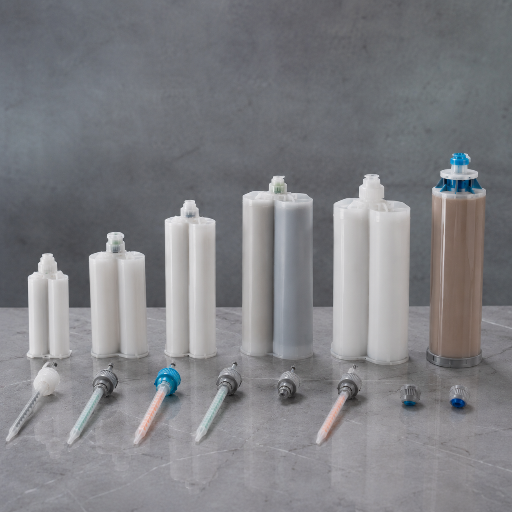
Anchor Cartridge Format Selector — Ebestron empty dual cartridge & two component cartridge systems for structural anchoring
| Format | Usable volumes | Mix ratios | Body polymer options | Best-fit anchor resin |
|---|---|---|---|---|
| Side-by-side (rectangular flange) | 150 · 200 · 300 · 345 · 385 mL | 1:1, 2:1, 3:1, 4:1 | PP, PA, PBT | Epoxy & epoxy-acrylate injection mortar |
| Side-by-side (high-volume) | 400 · 450 · 585 mL | 1:1, 2:1, 3:1 | PP, PA | Bulk rebar / threaded-rod dowelling |
| Coaxial (bayonet, Q-pattern) | 150 · 310 · 380 mL | 10:1 (1:1) | PA, PBT | High-ratio hybrid & styrene-bearing resins |
| Pistons & closures | All formats | — | PE (vented / sealing / low-friction) | Vented for fill de-aeration; sealing for shelf life |
| Static mixing nozzles | Quadro & helical | Matched to ratio | PP housing / PA element | Element count set by viscosity, not volume |
As an adhesive packaging manufacturer that builds the full side by side cartridge and coaxial range in-house, we keep every body in a format on the same external geometry, so one gun and one mixer family serve the whole size ladder — a filler standardizes tooling once and changes only the shell and resin. Whether the resin is a 1:1 two part epoxy or a 10:1 hybrid, the dual cartridge body and its piston are specified together — we confirm cartridge volume, ratio and body polymer as one dual cartridge specification before tooling. Pistons ship in vented, sealing-ring and low-friction variants because the piston, not the body, decides whether a filled cartridge de-aerates cleanly on the line and then holds its seal in the warehouse. Per-model wall thickness, flange dimensions and tolerance bands are on each spec sheet; request the sheet that matches your resin and we will confirm the body-polymer fit before you tool up.
Every Ebestron anchor cartridge ships as a dual cartridge body with a matched mixing tube and piston, engineered for structural anchoring resins (see material & chemical compatibility below) and produced by a single manufacturer in Kunshan.
The Anchor Resin Compatibility Grid
This is the selection logic competitors leave out entirely. Our grid maps each anchor-resin chemistry to a recommended body polymer and the failure mode you are avoiding — the difference between a shell that survives its shelf life and one that swells, weeps styrene, or drifts off ratio.
Anchor Resin Compatibility Grid — resin chemistry × cartridge body polymer
| Anchor resin | Reactive risk | Recommended body | Avoid / caution | Why it matters |
|---|---|---|---|---|
| Pure epoxy (no styrene) | Low — slow cure, low shrink | PP or PA | — | Forgiving; choose on volume & cost |
| Epoxy-acrylate / vinylester | Free styrene attacks thermoplastics | PA or PBT | Low-grade PP / thin PE | Styrene migration → wall swell, seal creep |
| Unsaturated polyester | Styrene + faster exotherm | PBT or PA | PE bodies | Shelf-life loss if wall absorbs monomer |
| Methacrylate (MMA) | Aggressive solvency | PA or PBT | Standard PP | Body must resist solvency, not just hold shape |
| Hybrid (epoxy-acrylate blends) | Moderate, ratio-sensitive (often 10:1) | PA coaxial | Mismatched piston seal | High ratio needs rigid wall + matched piston |
“We size the wall and pick the polymer around the resin, not the other way around. A cartridge that fits the gun but swells against its own styrene is a warranty claim waiting in the warehouse, so we validate the body against the customer’s resin chemistry before we quote the shell.”
Side-by-Side vs Coaxial vs Glass Capsule, Anchor Packaging Compared
Buyers often assume the three anchor-packaging formats are interchangeable and pick on price. They are not interchangeable, and the honest version of the trade-off is about ratio range, gun fit and partial-use waste — the costs that actually show up on a fill line and a job site. This table compares concrete behavior, not a Yes/No checklist.
Anchor packaging format comparison — dual cartridge vs coaxial vs glass capsule for threaded rod & rebar substrate anchoring
| Factor | Side-by-side cartridge | Coaxial cartridge | Glass capsule |
|---|---|---|---|
| Mix-ratio range | 1:1 to 5:1 (discrete) | Mainly 10:1, some 1:1 | Fixed, pre-dosed per hole |
| Usable volume | 150–585 mL | 150–380 mL | Single-hole dose only |
| Gun compatibility | Standard 2K cartridge guns | Bayonet / Q-pattern guns | Setting tool / rotary hammer |
| Partial use after opening | Yes — re-cap, new mixer next shot | Yes — new mixer next shot | No — one capsule per hole |
| Best application | Many anchors, bulk injection | High-ratio & styrene resins, precision | Single stud, no dispensing gun |
| Filler relevance | Broadest private-label demand | Premium/technical resins | Niche; not a cartridge product |
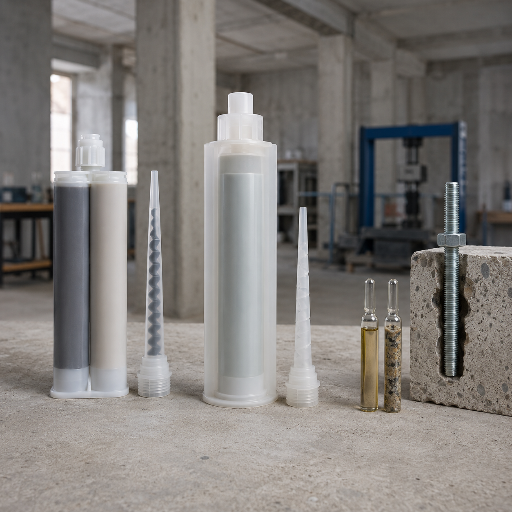
So what do we as a formulator or a filler come away with?
The side-by-side cartridge hits the widest demand across the widest range of ratio, the coaxial cartridge wins its position on high-ratio and styrene applications, and the glass capsule anchors aren’t technically even in the category. Ebestron manufactures both and will advise you based on the chemistry of the resin and the gun base – there in fact is the real cost.
Material & Chemical Compatibility for Anchoring Resins
There is one other mixer trap worth stating plainly, because it contradicts a common buyer assumption: more static mixer elements is not always better.
As dispensing specialists put it, simple guidelines like “all epoxies need 24 elements” can be dangerous — element count has to match the resin’s viscosity and ratio, or you either under-mix a thick hybrid or waste resin purging an over-long nozzle. We size the nozzle to your resin, not to a rule of thumb, and document it on the spec sheet so your installers are not guessing in the field.
Cartridge-wall rigidity is no different:
plastic cartridges with stiff, thick walls resist back-pressure and keep the resin streams on ratio as they flow through the static mixing nozzle — the mixing tube that blends Part A and Part B. A flexing wall lets a two part epoxy or polyester resin surge off ratio under load. This is the kind of high-strength polymer cartridge-casing engineering documented in the patent literature — the reason “Mixpac-compatible” should mean dimensional and structural compatibility, not just a shell that snaps into the gun.
Built for Production Fill Lines, Consistency, Not Just Containers
A filler’s real question about any new cartridge supplier is not “does it look right” — it is “will every cartridge in a 50,000-unit run behave the same on my line and in my customer’s gun.”
That is a manufacturing-consistency question, and we answer it at the mold and the piston.
Anti-bulge body geometry resists the deformation that throws off fill volume; vented pistons let entrapped air escape during filling so the first dispensed shot is on-ratio rather than spitting; and sealing-ring pistons hold that fill through storage without the slow weep that ages a styrene-bearing resin.
As a 2023-founded manufacturer building this category factory-direct, we earn trust with specification transparency rather than a long brand history:
published body-polymer options, piston variants, tolerance bands on every spec sheet, and a sample before you commit a production order. Where a competitor leaves “high quality” undefined, we would rather show you the wall-thickness spec and let your incoming QC measure it.
“Send us the resin and the gun base you have to fit. We would rather requalify a body polymer up front than have a filler discover a styrene-swell problem three months into a shelf-life study.”
Certifications & Compliance
The finished product of a cartridge come under a regulated chain; your customer’s end product must pass a concrete anchor test to be validated for use, and the contents of your anchor packaging must pass those same tests when opened in order to have validation. If you’re formulating or filling anchor adhesives, two general certification standards will apply.
CE
RoHS
REACH (SVHC)
Material data sheets
CERTIFIED
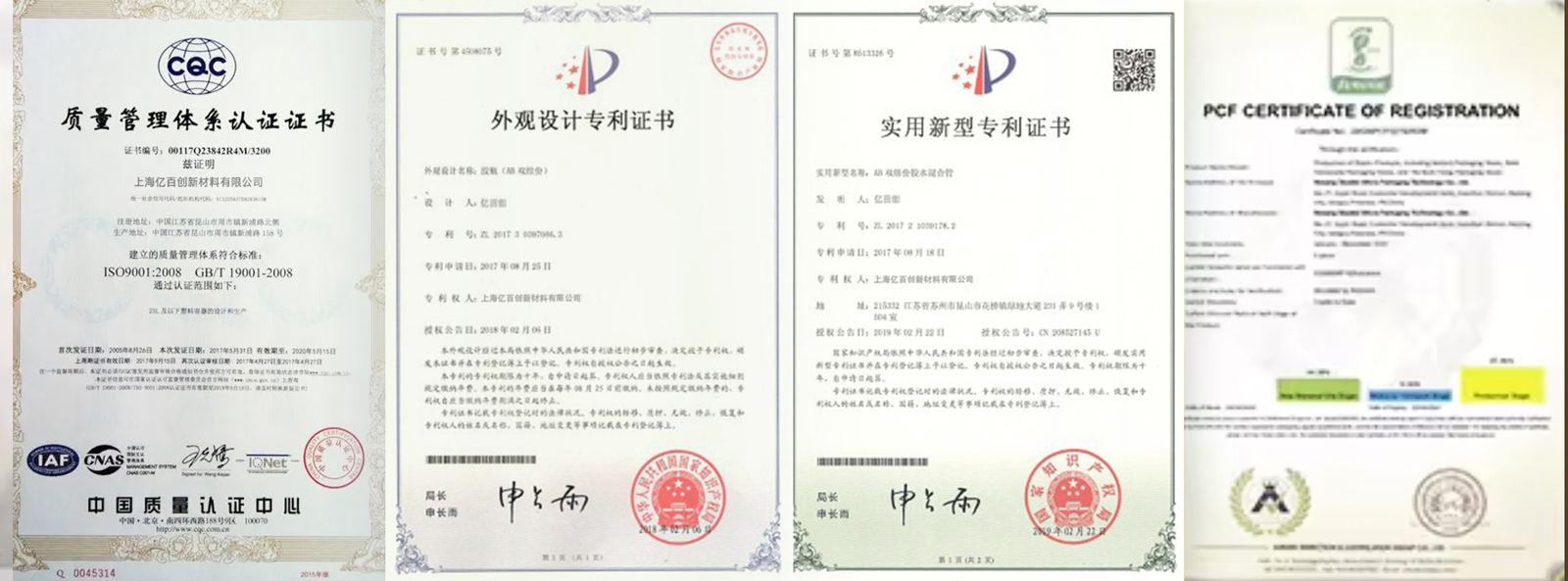
In North America, the test standard used for evaluating post-installed adhesive anchors is ICC-ES AC308. This certification applies to both uncracked and cracked concrete and references ACI 355.4 — and it will put a cartridge in all kinds of extreme (seismic, freezing/thawing, saturated) stress conditions to perform a qualification. In Europe, equivalent test criteria can be fulfilled via EAD 330499 to meet the requirements of an ETA under Construction Products Regulations. Ebestron supplies the empty cartridge, piston, and mixer, complete with the material declarations (RoHS, REACH, SVHC, CE and polymer-specific test data sheets) your resin formulation will require-but only the finished product is subject to an anchor evaluation, and our material performance and consistency will support it.
Construction Anchor Adhesive Cartridge Selection Tools
Anchor Resin → Cartridge Body Selector
Pick your anchoring resin chemistry. We map it to a recommended cartridge body polymer, format and the failure mode you’re avoiding — the logic behind Ebestron’s Anchor Resin Compatibility Grid.
Use SelectorCartridge Volume & Ratio Finder
Tell us the mix ratio and shot volume your anchor adhesive needs. We return the matching Ebestron cartridge format and confirm whether it’s a standard, gun-compatible geometry.
Find Volume & RatioMixpac Gun & Nozzle Compatibility Checker
Check whether an Ebestron cartridge body drops onto the dispensing gun and static mixer your customers already run — dimensional and structural fit, not just a shell that snaps in.
Check CompatibilityAdvanced Manufacturing & R&D Excellence
 Anchor Adhesive Showcase
Construction Anchor Adhesive Showcase
01
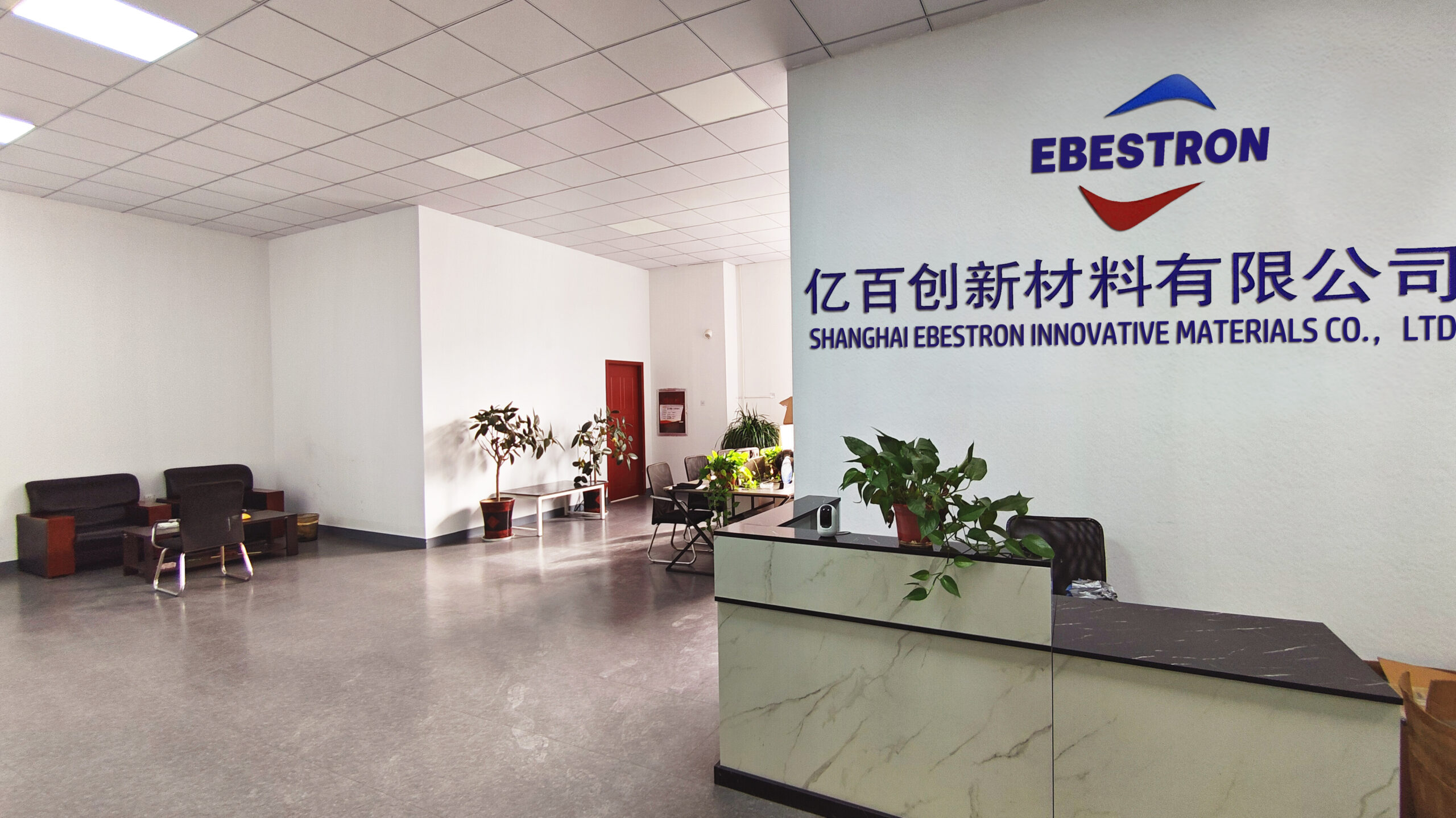 Corporate Headquarters
Corporate Headquarters & Reception
02
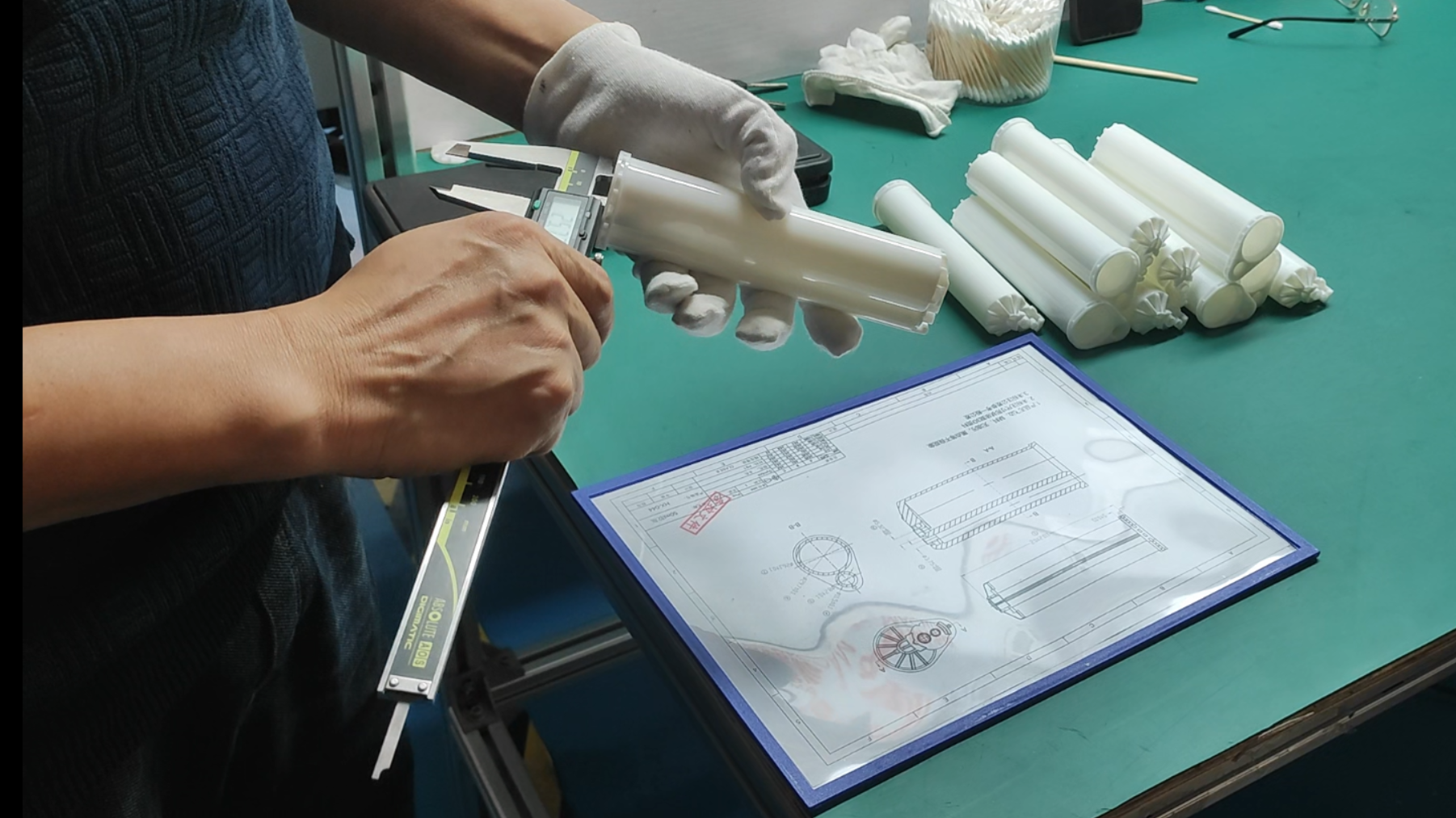 Operation Process
Automated Cartridge Operation Process
03
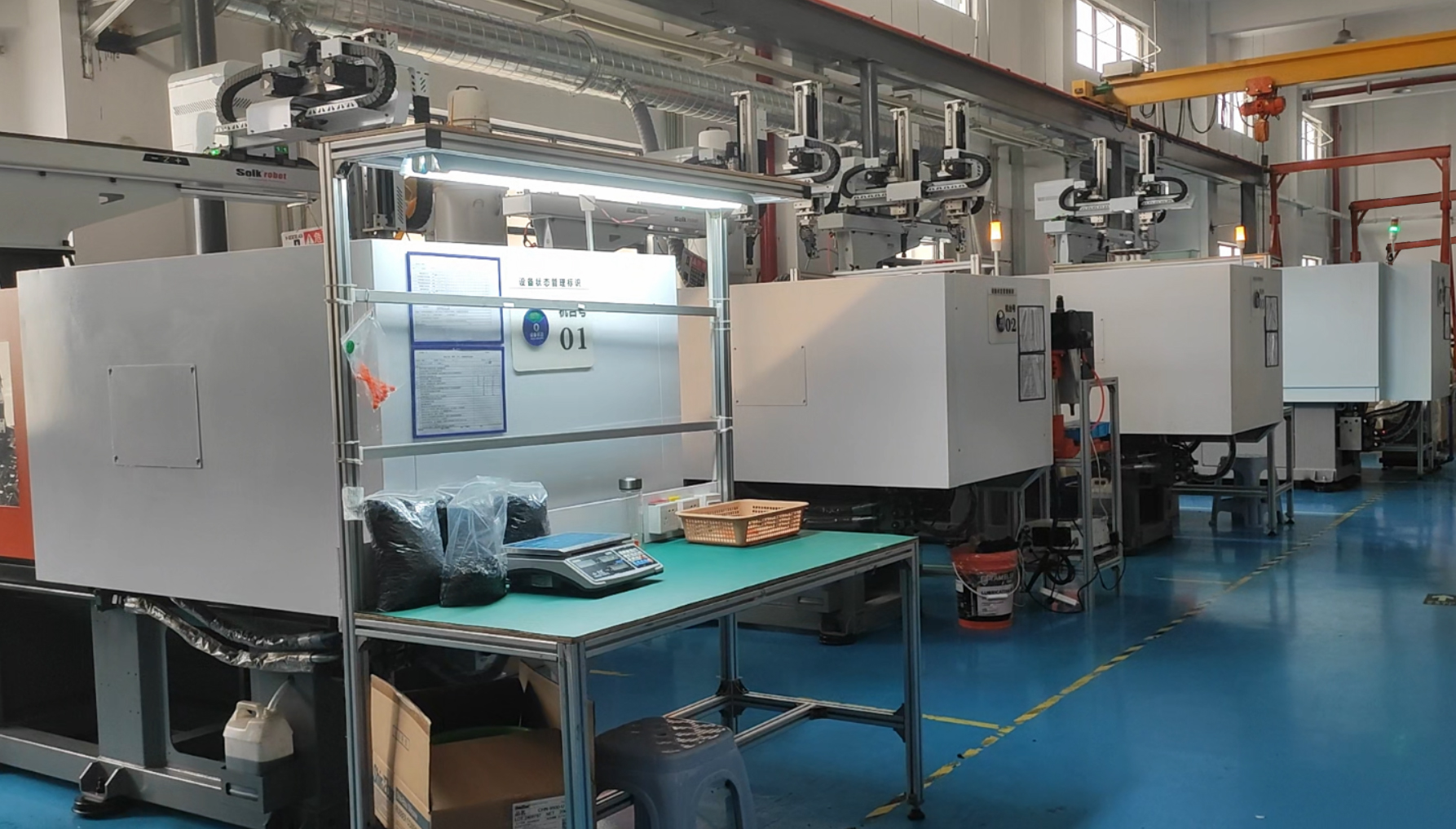 Precision Equipment
Precision Manufacturing Equipment
04
 Advanced R&D Center
Advanced Research & Development Center
05
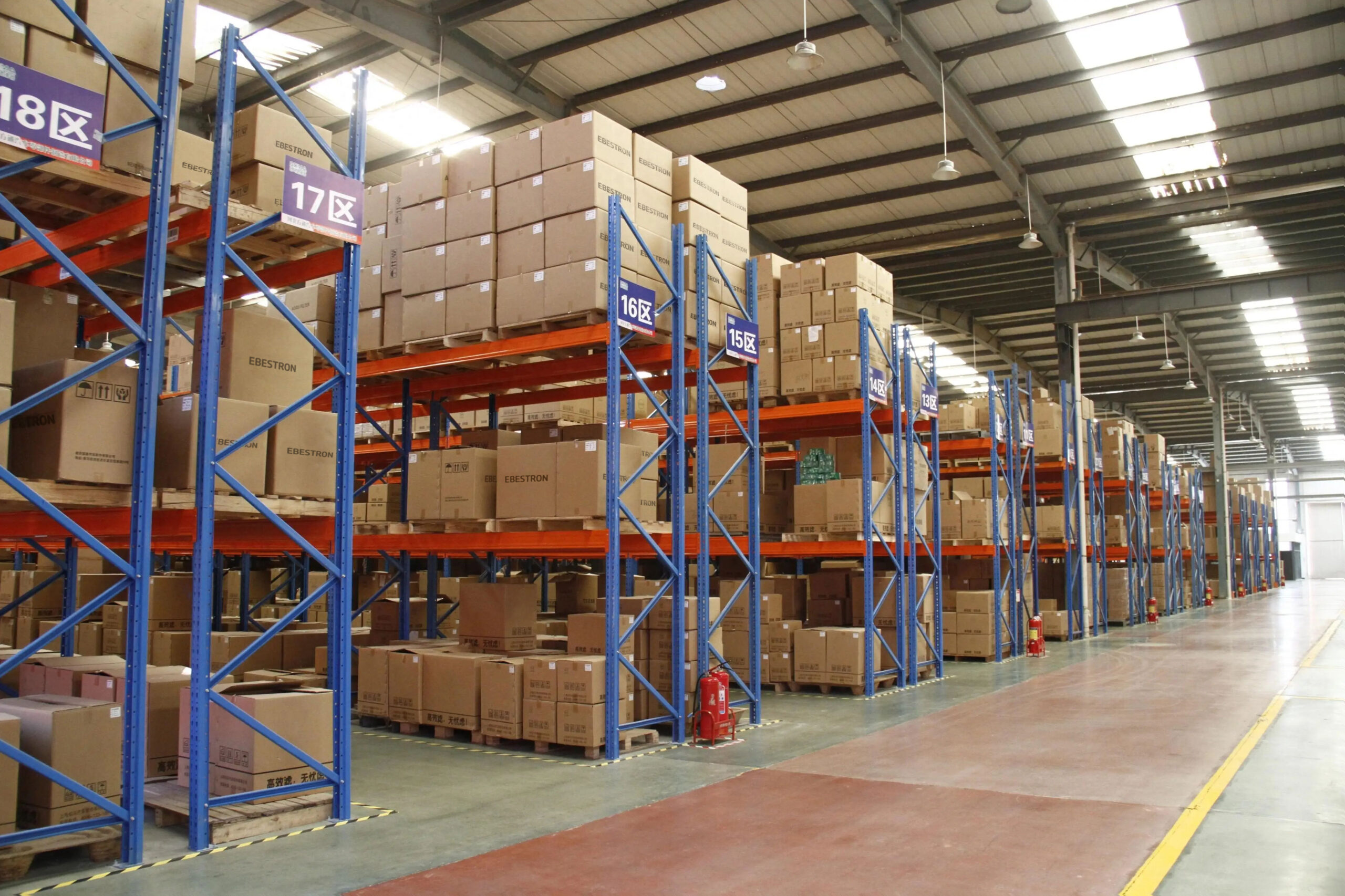 Cartridge Solutions
Comprehensive Cartridge Solutions
06
FAQ: Frequently Asked Questions
Our side-by-side and coaxial bodies are built to standard MIXPAC/medmix-pattern geometry, so they fit the common 2K cartridge guns and bayonet mixers your customers already own. “Compatible” here means dimensional and structural fit, the wall is engineered to hold ratio under the gun’s thrust, not just to snap into the carrier. Send us the exact gun base you must match and we confirm fit before quoting.
For styrene-bearing chemistries (vinylester, unsaturated polyester), we recommend a polyamide (PA) or PBT body rather than commodity polypropylene or thin polyethylene, because free styrene can migrate into and swell susceptible thermoplastics over shelf life. See the Anchor Resin Compatibility Grid above; final selection is validated against your specific resin.
Hand-dispensed cartridges come in discrete ratios, 1:1, 2:1, 2.5:1, 3:1, 4:1, 5:1 and 10:1. Most epoxy and epoxy-acrylate injection mortars run at 1:1 to 3:1 in side-by-side bodies; high-ratio hybrids run 10:1, usually in a coaxial body. Odd ratios that fall outside this set require metered machine dispensing rather than a cartridge.
They can ship as a complete kit, body, piston and a matched static-mixing nozzle, or as separate line items if you stock your own mixers. We size the nozzle (helical or quadro, element count) to your resin’s viscosity and ratio rather than to a default, because over-long mixers waste resin and under-mixed thick resins fail to cure on ratio. Need a replacement nozzle for a Sika- or Hilti-pattern cartridge, or a matching two component adhesive dispenser? We stock cross-compatible nozzles and recommend a gun base.
Yes, private-label and OEM printing is standard. MOQ and lead time depend on format, body polymer and print complexity; send your run size and we’ll scope an estimate. Samples for incoming QC are available on request before you commit a production order.
Factory-direct from Kunshan removes the distributor markup on a rebadged Western shell, and we compete on specification transparency: published polymer options, piston variants and tolerance bands, plus a validated body-to-resin recommendation and samples before commitment. For a filler optimizing a real cost program, the right body for the resin matter more than the logo on the shell.
Spec the Right Cartridge for Your Anchor Resin
Provide us with your resin chemistry and the gun that the base will be fitted into. We’ll confirm the body polymer, piston and mixer – and quote you sample MOQ & lead-time for your program.