Get in touch with Ebestron Company

ISO Compliant Manufacturing
Dynamic Mixing Nozzles for 2K Sealants & Adhesives
Ebestron manufactures factory-direct dynamic mixing nozzles for 2K sealants and adhesives.
A dynamic mixing nozzle is the disposable, motor-driven mixing element that homogenizes two-component materials at mix ratios up to 50:1, where a static nozzle channels and under-cures. Ours are drop-in compatible with the 3M Dynamic Mixing System, supplied at OEM and bulk cost.
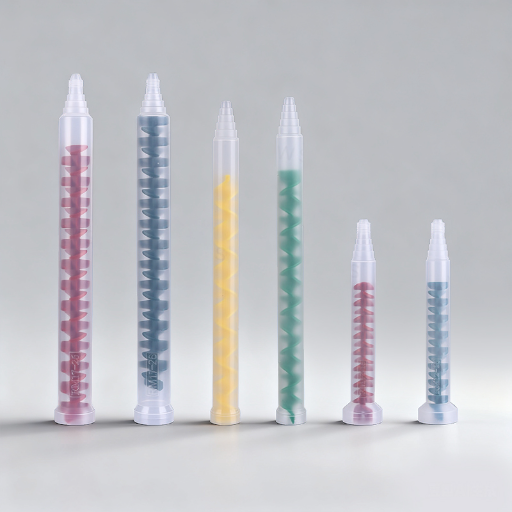
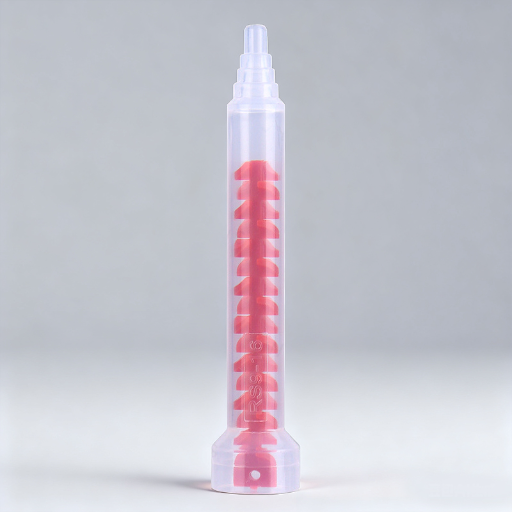
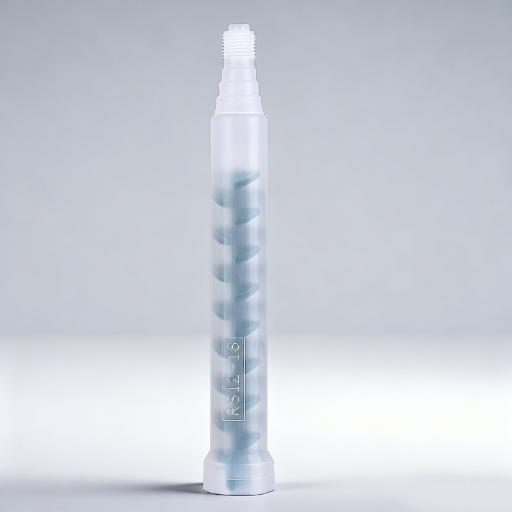
1:1–50:1
Mix ratios supported
3M DMS
Drop-in compatible (red & purple)
Bell / Bayonet / Threaded
Connection types
SYS.INTRO
When Static Mixing Isn’t Enough: Dynamic Nozzles for Difficult 2K Materials
A dynamic mixing nozzle is the disposable consumable that sits between your two-component cartridge and the bead, a short tube with a motor-driven rotor that spins the resin and hardener together to blend them thoroughly, unlike a static mixing nozzle whose fixed helical elements only fold the stream as it’s pushed through. That spinning action isn’t a marketing detail; it’s the difference between a homogeneous bond and a hidden failure.
(TWI, The Welding Institute)
! ALERT_MODE
Here’s the failure mode buyers rarely see coming.
When static mixing meets a high mix ratio or a large viscosity gap between the A and B sides, the thicker component compresses the thinner one into narrow channels that shoot through the mixer almost unmixed, the joint looks dispensed but cures off-ratio and weak, with no warning at the nozzle tip.
Pinholes after sanding are the body-shop version of the same problem: swirling air into a hand or static mix leaves voids that resurface as pinholes after sanding and refinishing, forcing a re-skim, re-sand and re-paint.
Half-full cartridges of expensive 2K product that sit around and dry out, and off-ratio hardener that techs tweak to buy working time, only to get brittle filler from too much catalyst or soft, shrinking filler from too little, round out the recurring cost of getting the mix wrong. A self-metering dynamic nozzle takes the ratio out of human hands and the air out of the mix. It doesn’t erase every defect (technique still matters, and we say so plainly below), but it removes the channeling, the back-pressure stall, and the guesswork that static nozzles can’t.
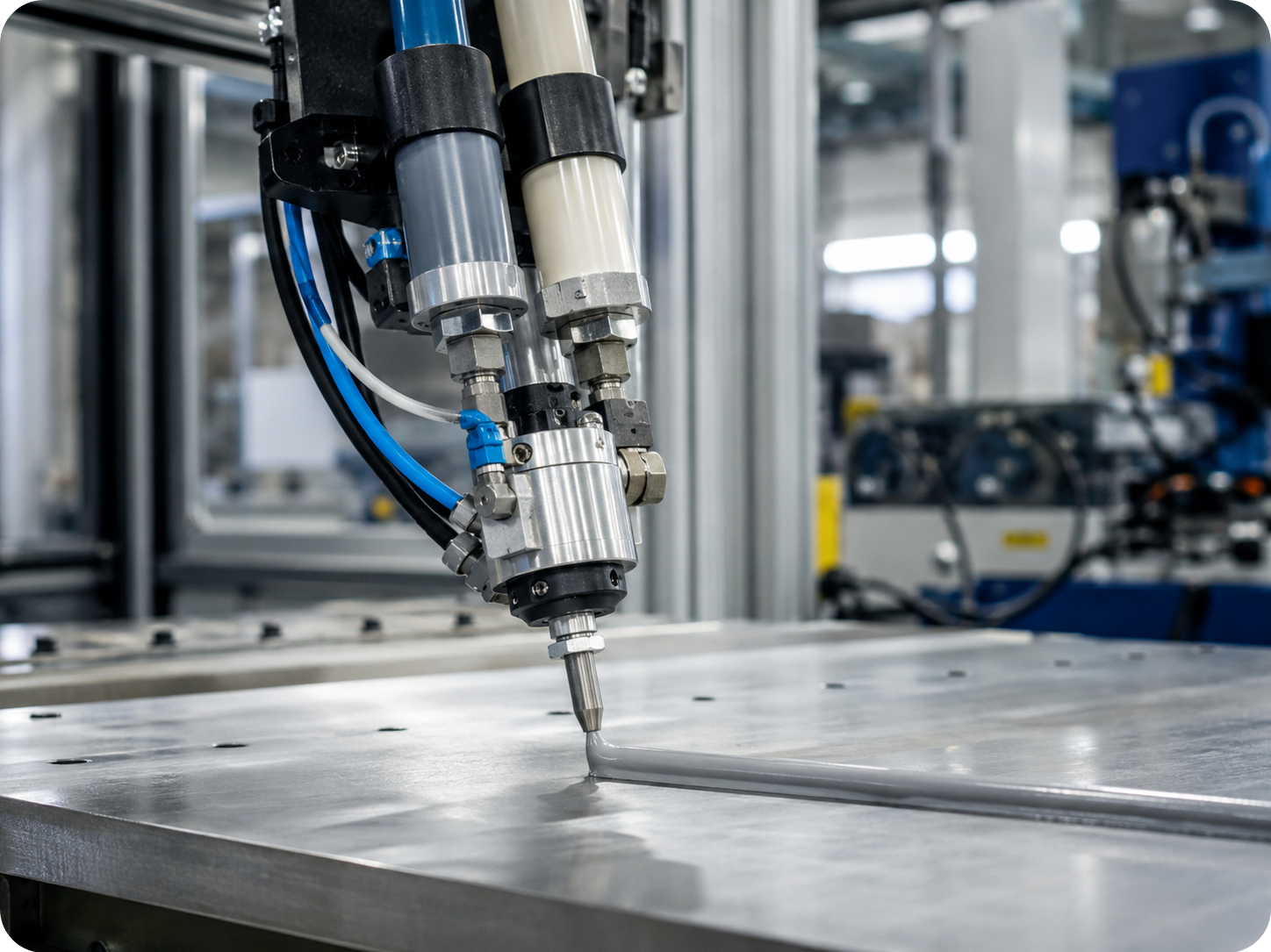
Engineering Standards
Technical Specifications: Dynamic-Mix Thresholds & DMS Compatibility
Buyers can’t tell exactly when static mixing stops being good enough and a dynamic nozzle become necessary, the crossover is undocumented across the industry, so shops either over-spec (and pay for dynamic they don’t need) or under-spec (and ship inconsistent cures). The threshold is actually governed by two measurable axes plus chemistry. Static mixing fails when there’s (1) a large viscosity difference between the components, or (2) a high mix ratio of one component to the other, and additionally when the material is very high-viscosity or strongly thixotropic (AZoM / Huntsman).
A useful proxy is how many static elements a chemistry need before it mixes: the more elements, the closer that chemistry is running to the static ceiling. Nordson EFD’s selection data puts acrylics at 8–10 elements, epoxies at 15–24, silicones at 20–30, and polyurethanes at 24–36, with 1:1 ratios at the low end and higher ratios pushing the high end. Past roughly 24 elements, a static tube is long, lossy and back-pressure-limited; a dynamic rotor reach the same homogeneity in a shorter body. This table maps the threshold so you can place your own material on it.
Threshold Selection Matrix
| 2K material / condition | Typical ratio | Static element demand | Static nozzle | Recommended mixer |
|---|---|---|---|---|
| Acrylic / MMA, matched viscosity | 1:1 – 2:1 | 8–10 | OK | Static |
| Epoxy, unfilled, matched | 1:1 – 2:1 | 15–24 | OK | Static |
| Epoxy, filled / paste, moderate Δviscosity | 2:1 – 4:1 | 24+ | Strained | Dynamic recommended |
| Silicone sealant | 1:1 – 10:1 | 20–30 | Strained | Dynamic recommended |
| Polyurethane, wide ratio | >10:1 (up to 50:1) | beyond practical | Fails (channels) | Dynamic essential |
| Foaming PU / silicone | any | n/a | Fails (voids) | Dynamic essential |
| Large viscosity gap (thin cat + thick base) | any | n/a | Channels unmixed | Dynamic essential |
| Extreme ratio sealant (e.g. Sika PowerCure class) | up to 50:1 | impossible | Impossible | Dynamic essential |
Practical Threshold Criteria
Two thresholds do the most work in practice. First is ratio: purpose-built dynamic mixers handle up to 50:1, while meter-mix 2K runs 1:1 to 12:1, anything above about 10:1 is dynamic territory. Second is foaming: in chemically blown urethanes and silicones the reaction is the structure, so an off-ratio dispense bakes striations and voids straight into the cured cell pattern, which is why Graco specifies dynamic mixing with controlled ratio, flow rate and rotor RPM for those materials. If your material lands in the bottom four rows, a static nozzle is not a budget choice; it is a reject waiting to happen, the failed mix surfaces as shortened working life under ISO 10364 pot-life testing.
Compatibility with the 3M Dynamic Mixing System isn’t one decision, it’s four that all have to line up, and the most common buyer error is assuming the first one cover the rest. The wrong nozzle won’t fit and will leak at the cartridge interface, so connection type is the first thing to verify, not an afterthought; the three disposable inlets in this market are bell, bayonet and integral-nut (threaded), and proprietary systems such as Sulzer/medmix B-system and F-system aren’t cross-compatible (gluegun.com mixer guide).
Ratio is the second axis, and 3M color-codes it for you. The red 05847 nozzle is a 50:1 element built for DMS 1.0 fillers, glazes and other two-part body repair products; the purple 55847 is a 1:1 and 2:1 element for adhesives and sealers, and 3M deliberately gives them different ports so a technician can’t mount a 50:1 nozzle on a 1:1 product. An Ebestron drop-in has to reproduce that keying exactly, because physical fit and ratio fit are two different things: a nozzle that clips on but carries the wrong element ratio doses off-ratio just as surely as a leak ruins the bead.
Component Compatibility Factor
| Compatibility factor | 3M DMS reference | Why it matters | Ebestron drop-in match |
|---|---|---|---|
| 1. Connection / interface | Keyed clip-on port | Wrong inlet = leak / won’t seat | Port-matched to applicator |
| 2. Mix ratio (element) |
Red 05847 = 50:1 Purple 55847 = 1:1 / 2:1 |
Off-ratio = brittle / soft cure | Ratio-matched element by color class |
| 3. Product class | DMS 1.0 fillers/glazes vs adhesives/sealers | Pot life & viscosity differ | Bore & pitch tuned per class |
| 4. Bead / extension | 58207 nozzle extension | OEM seam-sealer bead profile | Extension-compatible body |
System Integration Parameters
Driving all of this is the 3M 05846 pneumatic gun (adjustable RPM, 3M ID 7100077827); the consumable that wears out is the nozzle. Nozzle extensions are available to reduce bead size and reproduce OEM seam-sealer profiles. That split, reusable powered tool, disposable mixing element driven by it, is exactly the model modern patents describe, where “a dynamic mixer configured for insertion into an applicator and to be driven by the applicator” defines the part (US 10,258,946, Sika Technology). Because aftermarket sellers list by internal codes (RM17-26, RS13-12, SEC13-25) with no 3M cross-reference, we publish a plain red/purple cross-reference so you can confirm both physical fit and ratio fit before you order.
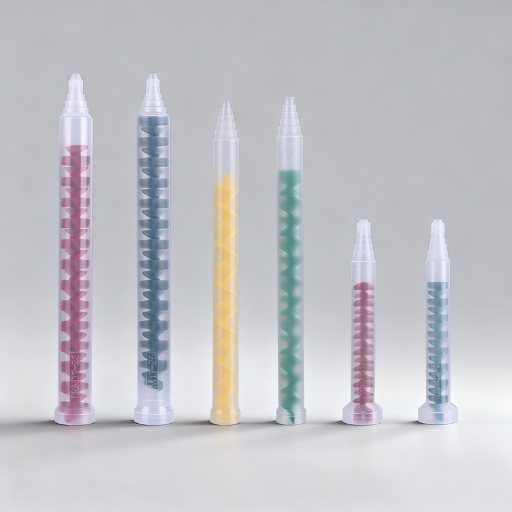
Drop-in for 05847 (red) & 55847 (purple)
3M Dynamic Mixing System Compatible
A drop-in dynamic mixing system nozzle for the 3M DMS pneumatic applicator, red-class geometry for 50:1 fillers & glazes, purple-class for 1:1 and 2:1 adhesives & seam sealers, with the keyed ports that stop a wrong-ratio mount. Short body to limit material left in the tip.
View 3M-compatible line →
Generic bell-mouth · cartridge & meter-mix
2K Polyurethane Dynamic Mixing
A generic 2 part epoxy mixing nozzle and PU/silicone/MMA dynamic mix nozzle with a bell-mouth or threaded inlet for two-component cartridges and meter mix dispensing equipment, engineered for wide-ratio, high-viscosity and foaming 2K polyurethane where a static tube channels or stalls.
View 2K polyurethane line →Rotor-Stator Shear Profile
What makes a dynamic nozzle work is the rotor speed inside the stator tube. Patent-grade applicators turn the impeller anywhere from 1,000 to 35,000 RPM, with 2,500–10,000 RPM the practical band for two-component adhesives (US 8,197,122). Speed is matched to viscosity and flow: too slow under-mixes a thick PU, too fast on a foaming system whips in gas. The profile below is how we tune element pitch and recommended drive speed to the material class.
| Rotor speed band | Shear regime | Best-suited 2K material | Risk if mismatched |
|---|---|---|---|
| 2,500–4,000 RPM | Low–moderate shear | Foaming PU / silicone (protect cell structure) | Too fast = collapsed/irregular cells |
| 4,000–8,000 RPM | Moderate shear | Structural PU, polysulfide, filled epoxy | Too slow = streaks / soft spots |
| 8,000–12,000 RPM | High shear (shear-thinning gain) | High-viscosity / thixotropic sealant | Heat build-up on small bores |
| Static (0 RPM) | Fold-only | Matched-viscosity 1:1 acrylic/epoxy | Channels above 10:1 or wide Δviscosity |
High rotor shear also does something a static mixer can’t: for shear-thinning sealants it drops viscosity and metering force by orders of magnitude, so a thick material that would stall a static tube dispenses cleanly. That’s the engineering reason a short dynamic nozzle out-performs a 30-element static tube on hard 2K, captured in the dynamic-helical-mixer patent claim of “high shear in a very small hold-up volume” (US 2008/0225638 A1, BayOne Urethane Systems).
[SPEC-01] OEM Evaluation
Ebestron vs 3M OEM vs Generic: Compared
Static vs dynamic mixing usually arrives wrapped in a price objection: a branded dynamic nozzle costs real money per shot, so why not run a cheaper static tube? Honestly, they aren’t interchangeable above the crossover threshold, and where dynamic is required, the meaningful comparison is between equivalent dynamic nozzles, not between dynamic and static.
3M’s own catalog settles the “is dynamic obsolete?” question by itself: 3M ships and prices both static and dynamic DMS nozzles, with dynamic carrying a per-each premium over its own static line, the motor-driven impeller that defines a dynamic nozzle runs 2,500–10,000 RPM (US 8,197,122).
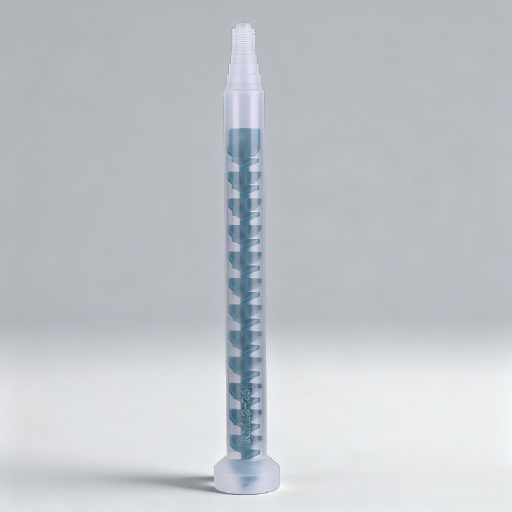
| Option | Per-nozzle cost | Mix type | Ratio range | 3M-DMS fit | OEM / bulk |
|---|---|---|---|---|---|
| 3M OEM dynamic (05847 / 55847) | $2.86–$4.06/ea | Dynamic (spinning) | 50:1 · 1:1 / 2:1 | Native | No |
| Aftermarket generic (btektech RM/RS) | $54–$81 / pack | Dynamic | varies | Partial / unclear | Limited |
| Ebestron factory-direct dynamic | OEM/bulk — request quote | Dynamic (spinning) | 1:1 – 50:1 (made-to-order) | Drop-in, keyed | Yes, private-label |
| Generic static tube | $2.71–$3.46/ea | Static (no moving parts) | fails >10:1 / wide Δ | n/a | Yes |
(Pricing above is published distributor data for 3M and btektech; Ebestron sells factory-direct at OEM/bulk pricing, request a quote for your volume.)
[DATA-02] Waste Analysis
Dynamic Nozzle Purge-Cost Curve
What buyers underestimate isn’t the nozzle, it’s the cured 2K left inside it. A mixing nozzle is purged by roughly one internal volume before use and retains about two internal volumes after, so legacy designs throw away up to 20 mL (about 19.1 mL on average) of mixed adhesive per nozzle, while optimized short-body designs cut that to around 5.0 mL, a ~74% reduction (Adhesives & Sealants Industry). Multiply across a shop’s annual nozzle count and the curve get steep fast.
| Annual nozzle use | Legacy waste (≈19.1 mL) | Short-body (≈5.0 mL) | Mixed-adhesive saved |
|---|---|---|---|
| 1,000 nozzles/yr | 19,100 mL | 5,000 mL | 14,100 mL/yr |
| 5,000 nozzles/yr | 95,500 mL | 25,000 mL | 70,500 mL/yr |
| 20,000 nozzles/yr | 382,000 mL | 100,000 mL | 282,000 mL/yr |
VIEW EFFICIENCY & WASTE DISCLAIMER
One caution so the math stays honest: a better nozzle doesn’t zero out 2K waste. Across a whole line, container residue, repackaging and changeover purge put realistic total waste around 5% by weight at best and up to 10% typically, with changeover, not the nozzle, the single biggest culprit. A short, low-dead-volume Ebestron nozzle attacks the slice you control; it isn’t a claim to eliminate the rest.
Where Dynamic Mixing Nozzles Deliver: Applications & Outcomes
~74%
less mixed-adhesive dead-volume waste per nozzle when legacy designs (≈19.1 mL) are replaced by short, low-hold-up bodies (≈5.0 mL).
Industry data — Adhesives & Sealants Industry, “The Next Generation of Static Mixing Nozzles.” Figures are category benchmarks, not an Ebestron-specific guarantee.
Two-component dispensing is the workhorse across automotive and collision repair, engineering machinery, appliances, LED and solar, anywhere a reactive 2K chemistry needs to cure fast and bond or seal harder than a single-part product can (Adhesives & Sealants Industry). Dynamic mixing nozzles earn their place in the subset of those jobs that live below the crossover line: high-ratio structural polyurethane, foaming urethanes and silicones, filled and thixotropic sealants, and any pairing with a wide viscosity gap.
In collision repair the outcome buyers care about is finish quality and throughput: a spinning nozzle introduces less air than a hand or static mix, so body filler shows noticeably fewer pinholes, fewer re-skims, less re-sanding, faster panels. In industrial 2K lines the outcome is yield: controlled ratio and RPM hold foam cell structure and bond strength inside spec, the lap-shear strength measured under ISO 4587, where an off-ratio static dispense would scatter voids through the part. Because mixing begins the cure the instant A meets B, a pause past pot life cures the nozzle solid, which is exactly why a disposable, correctly-sized nozzle (not a reused one) is the lower-cost path over a run.
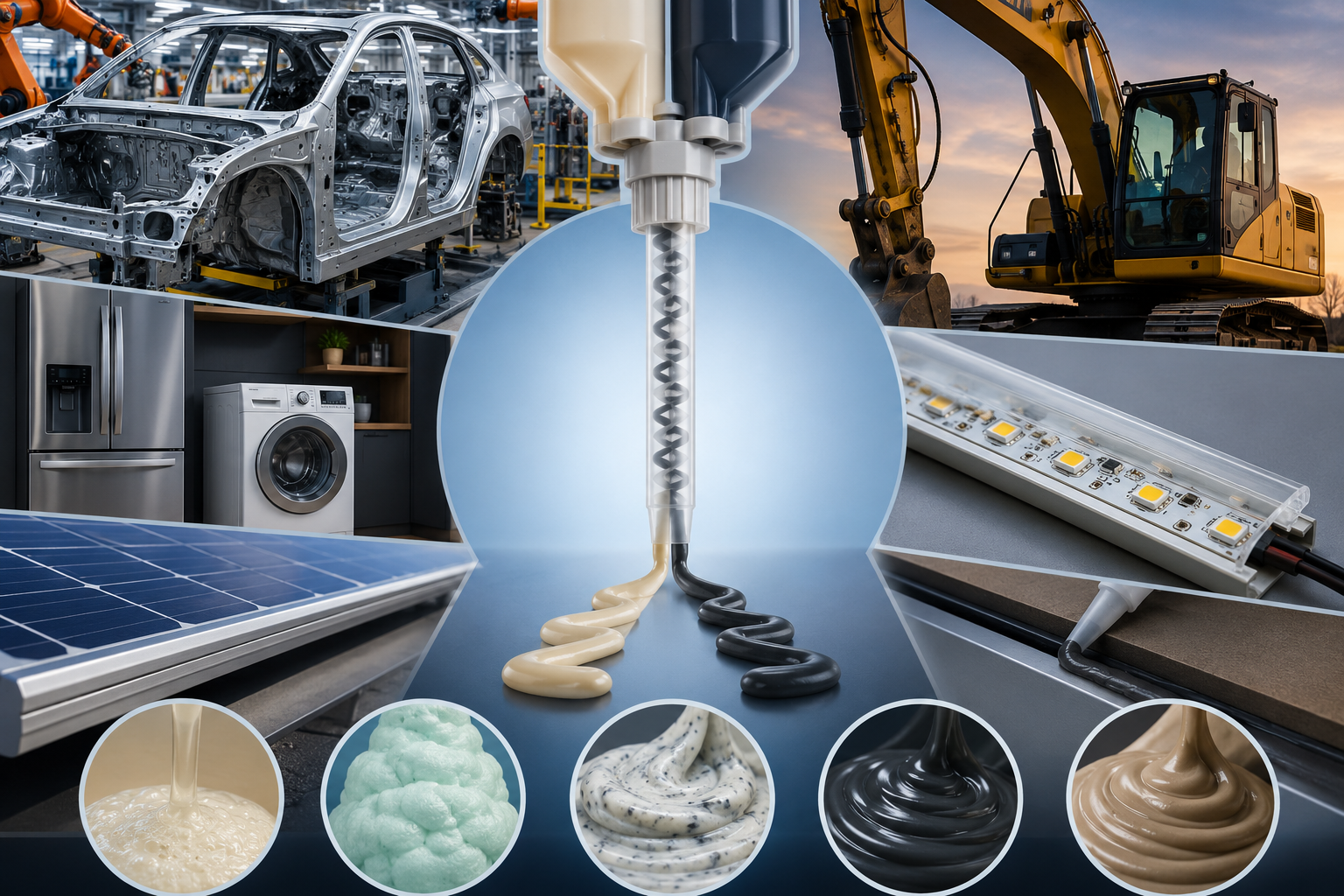
“We size a dynamic nozzle backward from the failure we want to prevent. For a wide-ratio PU we cut element pitch for shear, not length, so the rotor reaches full homogeneity in a shorter body, that holds dead volume near 5 mL instead of the ~19 mL a long static tube loses, and it keeps back-pressure low enough for a meter-mix pump to hold flow.”
One trade-off we’ll state plainly:
a dynamic nozzle removes channeling and air, but it doesn’t cancel operator technique. Most pinhole and off-ratio failures in the field trace back to swirling air into the mix or altering hardener ratios by hand, habits a self-metering nozzle reduce but can’t fully police.
Quality & Standards
For a 2K consumable, “quality” is verifiable against published standards, not adjectives. The mix a nozzle produces is validated by pot-life and bond-strength tests; the plastic it’s molded from is governed by substance-restriction law. Ebestron builds and documents to the references below.
ISO 10364:2024
Pot life / working life of multi-component adhesives (ISO)
ISO 4587
Tensile lap-shear strength (Method 8 bond check) (ISO)
ASTM D638
Tensile properties of the cured 2K material
RoHS 2011/65/EU
10 restricted substances incl. phthalates (EU)
California Prop 65
OEHHA-listed substance warnings (OEHHA)
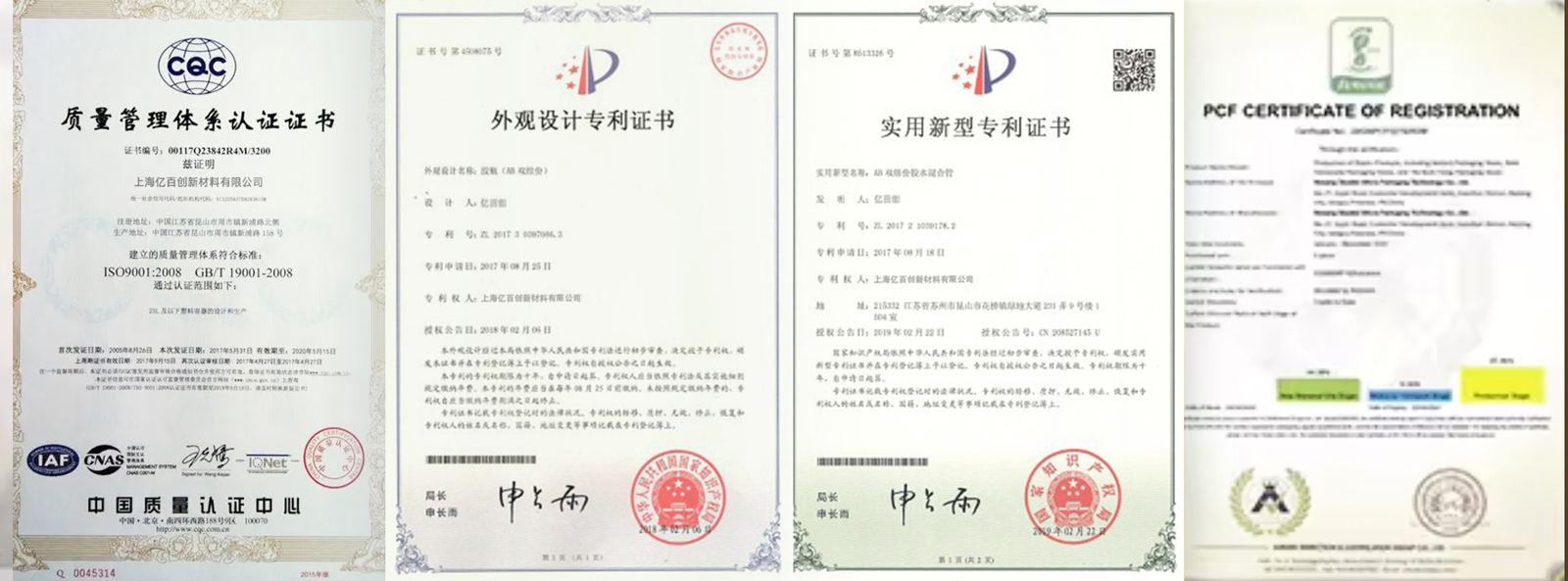
ISO 9001 QMS
Manufacturing quality management system
Why these standards bind a nozzle, not just a glue
A mixing nozzle has no spec sheet of its own, it is judged by the mix it delivers. ISO 10364 Method 8 determines a multi-component adhesive’s working life using lap-shear specimens prepared to ISO 4587, which means an under-mixing nozzle shows up as shortened working life and degraded shear strength. That is the objective hook: a nozzle that holds ratio and homogeneity lets the adhesive hit its rated pot life and bond, and one that channels does not. This category is recognized in patent classification too, under CPC B05C17/00566 — “discharge of two different components with a dynamic mixer in the nozzle.”
Get Instant Quote
Supply Integration Module
Request bulk pricing
Procurement Guide: OEM Bulk Pricing & Lead Time
Branded dynamic nozzles are a recurring line item, not a one-time buy. A 50-count box of 3M 05847 lists around $180–$203 and a 300-count around $857. As a factory-direct manufacturer, Ebestron prices against that recurring spend rather than a retail box, supporting private-label and OEM programs that brand-name consumables can’t.
What drives your quote
Pricing on a made-to-order dynamic nozzle is set by a handful of factors rather than a shelf SKU: connection type (bell / bayonet / threaded / 3M-DMS-keyed), bore and element count, volume tier (carton vs case vs pallet), private-label vs blank, and material grade (standard POM vs higher-temperature PBT).
Send your cartridge platform, mix ratio, and monthly volume, and we quote against those, with no shelf markup.
Procurement Notes
Sample before you standardize: because aftermarket nozzles list by internal codes with no published 3M cross-reference, confirming physical and ratio fit on a free sample pack avoids a stalled order. What you buy is the consumable mixing element of a reusable-applicator system (US Patent 10,258,946).
Additionally, don’t under-order to save cost. Reusing a nozzle to stretch a box leaves cured adhesive that forms permanent blockages, erratic dispensing pressure, and sudden mid-job failure—which costs more in scrap than the nozzles saved.
2K SEALANTS DYNAMIC MIXING | INTEGRATED TOOLS
2K Static-vs-Dynamic Crossover Selector
Specify your two-component material parameters. Our system cross-references TWI / AZoM criteria and Nordson EFD element-count data to determine the optimal mixing nozzle architecture.
Dynamic Nozzle Purge-Cost Calculator
Most 2K nozzle waste is the cured adhesive left inside the tube. Calculate your annual material waste and discover the recovery potential of migrating to optimized short-body architectures.
3M Dynamic Mixing System Nozzle Finder
Match your product class to the correct DMS nozzle — red or purple — and the Ebestron factory-direct drop-in. The two are keyed differently on purpose: the wrong one will not fit and will leak. “Compatible with” only; Ebestron is independent of 3M.
FAQ
Knowledge Base
Dynamic Mixing Nozzles for 2K
Expert answers and technical insights regarding the applications, benefits, and specifications of dynamic mixing systems.
What is the difference between a static mix and a dynamic mix?
A static mixing nozzle has fixed helical elements and no moving parts, it folds the two-component stream into more and more layers as the gun push it through. By contrast, a dynamic mixing nozzle carries a motor-driven rotor that actively spin resin and hardener together, generating shear rather than passive folding. Static is cheaper and fine for matched-viscosity, low-ratio chemistry; dynamic becomes necessary when the components differ widely in viscosity, run a high mix ratio, or foam during cure.
When do you need a dynamic mixing nozzle instead of a static one?
Cross over to dynamic once the mix ratio climbs past about 10:1, when the two sides have a large viscosity gap, when the material is very high-viscosity or thixotropic, or whenever it foams. A static tube of the right element count handles everything below that threshold.
Are Ebestron dynamic mixing nozzles compatible with the 3M Dynamic Mixing System?
Yes, our 3M-compatible line is a drop-in for the 3M Dynamic Mixing System pneumatic applicator, built to match the keyed red nozzle (50:1, for fillers and glazes) and the purple nozzle (1:1 and 2:1, for adhesives and seam sealers) by both port and element ratio. We’re an independent manufacturer, so “compatible with” doesn’t imply any 3M affiliation. Request our cross-reference sheet to confirm both physical fit and ratio fit before you place an order.
What mix ratios do dynamic mixing nozzles support?
Across the made-to-order range, from 1:1 all the way up to 50:1. Structural polyurethane usually runs 4:1 to 10:1, meter-mix 2K spans 1:1 to 12:1, and extreme-ratio sealants reach 50:1. Each element is matched to your exact mix ratio, because a nozzle that clips on with the wrong ratio still doses off-ratio.
Can you reuse a dynamic mixing nozzle to save cost?
No, and it’s a false economy. Reusing a nozzle leave residual adhesive that cures into hard, permanent blockages, which then cause erratic dispensing pressure and sudden failure in the middle of a job, and any pause past pot life cures the mix solid inside the tube, ruining both the nozzle and the shot. Disposable nozzles are sized so that buying the right quantity, not stretching a box, stays the lower-cost path over a production run.
Will a dynamic mixing nozzle eliminate pinholes and off-ratio cures?
Dynamic mixing removes the hardware causes, channeling and air entrainment, and self-meters the ratio, so pinholes and off-ratio defects drop sharply. It doesn’t cancel technique: swirling air into a top-up or hand-altering the hardener still create voids that surface later.