Get in touch with Ebestron Company

ISO 80369-7 COMPLIANT
Industrial Dispensing Needles & Precision Tips
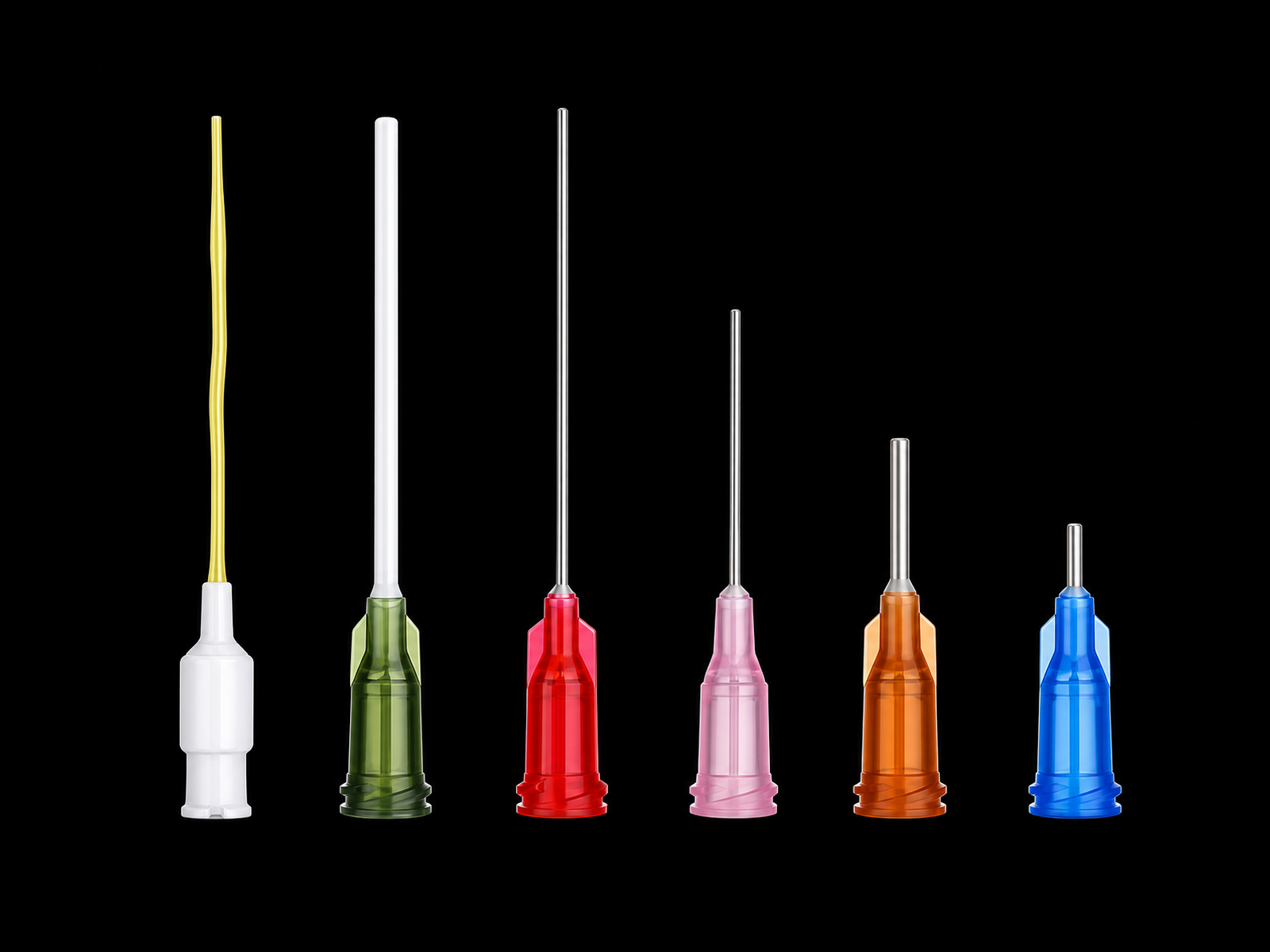
A dispensing needle is a blunt-tipped stainless-steel, plastic, or PTFE-lined cannula seated in a Luer-Lock hub that meters adhesives, epoxies, solder paste, and other assembly fluids onto a part, it is industrial-only and, unlike a hypodermic needle, has no sharp bevel. Ebestron builds the full range, 8G to 30G, across five tip families, with Luer dimensions held to the ISO 80369-7 small-bore standard so every tip seats cleanly on the syringes, cartridges, and valves you already run.
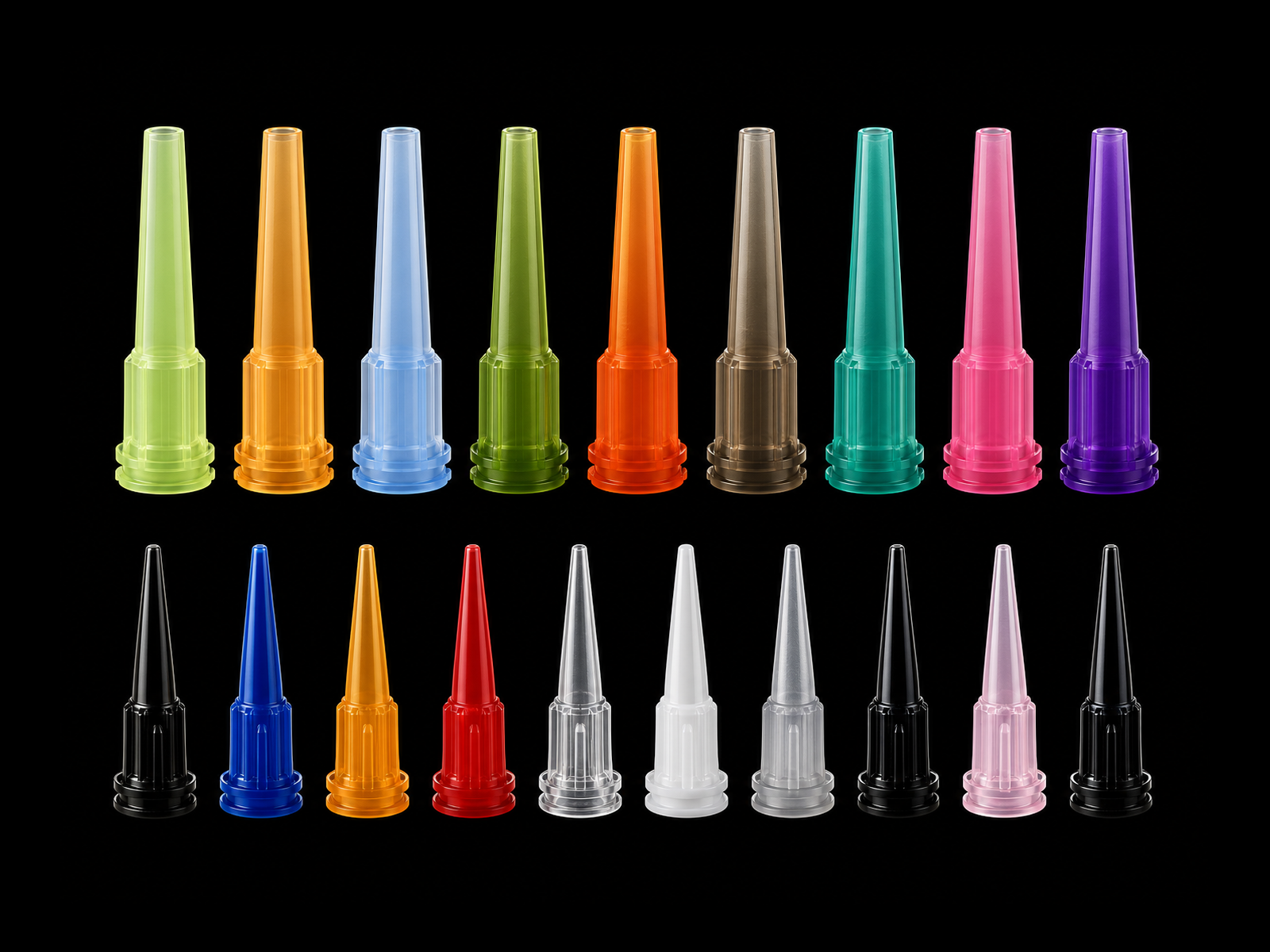
Engineered Tip Matrix
8G–30G
Gauge range, 5 tip families
¼”–1.5″
Cannula lengths in stock
304 SS
Passivated · burr-free · latex-free
Luer Lock
ISO 80369-7 compatible hubs
Bulk / OEM
Private-label, factory-direct
−62%
Dispense pressure with tapered tips
Clogging, Stringing & Substrate Damage Start at the Tip, Not the Fluid
Most dispensing defects engineers chase upstream, at the pump, the pressure regulator, or the operator, actually begin at the cheapest part in the line: the needle. A dispensing needle that’s the wrong gauge or material for the fluid turn a stable process into a stream of rework. Thin cyanoacrylate is the classic example. As one electronics assembler put it on a maker forum, a super-glue syringe “works two or three times, then it seizes the plunger and clogs the needle.” The fluid didn’t change; the tip was simply not built for a fast-curing adhesive.
Mechanically, the cause is no mystery. Cyanoacrylates and anaerobics cure on contact with metal ions and trapped moisture, so a bare stainless cannula becomes a curing chamber between shots. Low-viscosity solvents wick up the outside of an uncoated cannula and drool onto the part. High-viscosity epoxies and filled pastes need so much pressure through a straight bore that filler separates inside the barrel and the bead spits. Each failure look different on the line, but the fix is the same discipline: match the gauge, the cannula material, and the bore geometry to the fluid you’re actually dispensing.
That is what this page is built to do. The Fluid-to-Tip-Material Match Matrix below pairs every tip family to its fluid class, the Gauge-to-Viscosity Selection Grid converts gauge to real inner diameter and a recommended viscosity band, and the five Ebestron blunt-tip dispensing needle families, including the glue dispensing needles most assembly lines run daily, cover the full set of fluids and substrates. Get the tip right and clogging, stringing, and scratched substrates stop being recurring tickets.
ISO 9626 SPEC
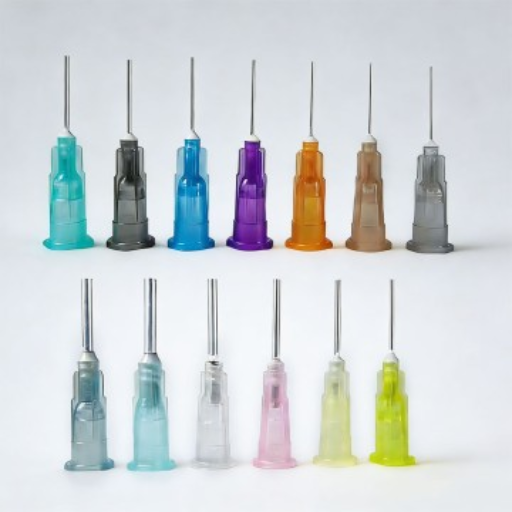
The payoff is concrete, not theoretical.
On an LED-module line dosing thin cyanoacrylate through a 25G tip, swapping a bare stainless cannula for a PTFE-lined one ended a recurring two-shot clog cycle and the rework tickets that came with it, the fluid never changed, only the tip.
When using water-based assembly adhesives, operators get short-term relief by parking the tip in water between runs, but the durable fix is tip selection, not workarounds.
Fighting a specific fluid? Build a free sample kit and test the right tip on your own line →The Ebestron Range, Five Tip Families, 8G To 30G
Ebestron manufactures dispensing needles and precision tips as a single coordinated range so you can standardize one supplier across every fluid on your bench or automated line. Each family below is a live product page with its own gauge table, pricing, and selection tool; the 5-Series Tip Family Map shows where each one belongs in your process. Buyers in procurement (PROC) will find MOQ and lead-time notes on each child page; engineers (EN) get the full gauge and material spread here.
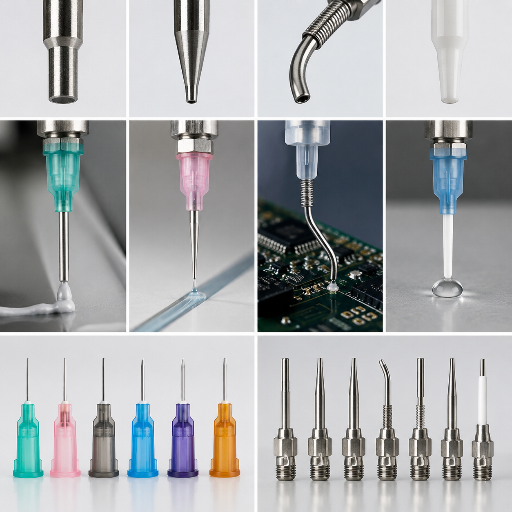
Blunt Tip Dispensing Needles
8G–25G · ¼”–1.5″ · SS + PP hubThe workhorse blunt needle for general adhesives, epoxies, and greases. Burr-free 304 cannula in a leak-resistant double-helix polypropylene hub.
View blunt tip dispensing needles →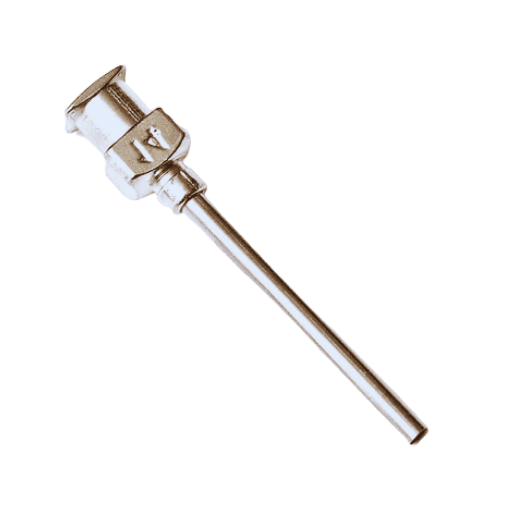
Luer Lock Dispensing Needles
8G–27G · all-metal & SS-with-hubThreaded Luer-Lock hubs that stay locked under valve and pneumatic pressure. ISO 80369-7 dimensions fit standard Luer syringes, valves, and cartridge adapters.
View luer lock needle tips →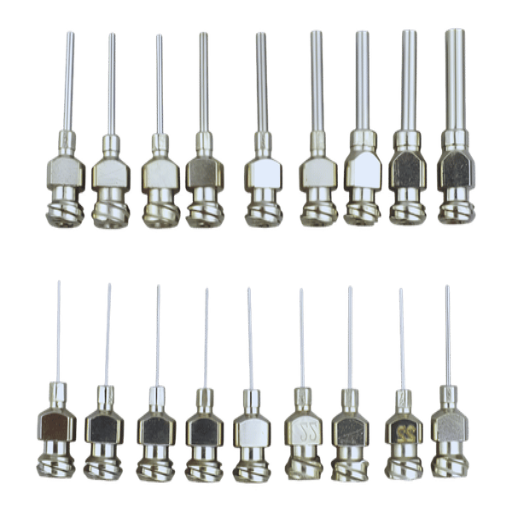
Stainless-Steel Precision Tips
14G–30G · passivated 304 · robotic-gradePassivated, corrosion-resistant cannulas held to tight concentricity for automated dispensing where deposit repeatability is the spec.
View stainless steel precision tips →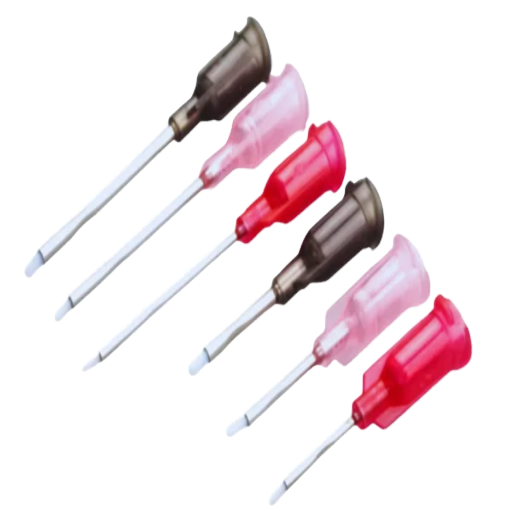
Plastic, Flexible & Teflon-Lined Tips
14G–30G · PP / PE / PTFE-linedFlexible polypropylene for delicate substrates and PTFE-lined tips that keep fast-cure cyanoacrylates from setting inside the bore.
View flexible & PTFE-lined tips →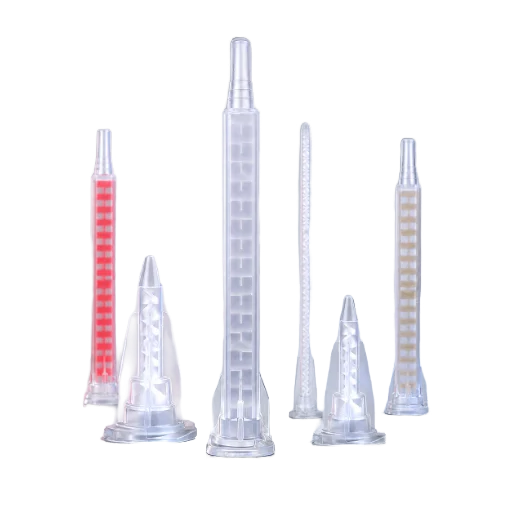
Nordson / Fisnar / Loctite Compatible
OEM cross-reference · drop-in fitDimensionally matched, factory-direct replacements that drop into Nordson EFD, Fisnar, and Loctite dispensing systems at OEM-replacement cost.
View compatible dispensing tips →The 5-Series Tip Family Map
| Series | Shaft / hub material | Gauge span | Best for | Avoid for |
|---|---|---|---|---|
| Blunt Tip (SS, plastic hub) | 304 SS cannula + PP hub | 8G–25G | General adhesives, epoxy, RTV, grease | Fast-cure cyanoacrylate |
| Luer Lock (all-metal & hub) | 304 SS, Luer-Lock thread | 8G–27G | Pressurized valves, robotic cells, solvents | Delicate scratch-prone substrates |
| Stainless-Steel Precision | Passivated 304 SS, robotic-grade | 14G–30G | Silver epoxy, automated micro-dot, high repeatability | High-pressure filled paste (use tapered) |
| Plastic / Flexible / Teflon-Lined | PP / PE / PTFE-lined | 14G–30G | Cyanoacrylate, low-viscosity, scratch-sensitive parts | UV-cured & solder paste |
| Tapered (SmoothFlow-type) | Moulded polymer taper, UV-blocking | 14G–25G | Thick/filled fluids, UV-cure, fast deposits at low pressure | Ultra-thin solvents (use coated) |
Not sure which family fits your fluid?
Build a free sample kit across all five series →Precision Tip Selection Matrix
Material Compatibility & The Sizing Science
How to Choose a Dispensing Tip: Match Material to the Fluid First
Choose the tip material before the gauge: a fluid’s cure chemistry and viscosity decide which of the four cannula materials will survive, and only then does gauge set the bead size. Favour tapered tips for thick fluids, PTFE-lined for fast-cure cyanoacrylate, PTFE-coated for thin solvents, and stainless steel for silver epoxy.
One counter-intuitive rule trips up most first-time buyers, a tapered tip is for thick fluids, not fine work. Its converging bore promotes flow, so you can cut dispense pressure roughly from 80 psi (6 bar) with a straight general-purpose tip to about 30 psi (2 bar) with a tapered tip, which keeps filled pastes from separating in the barrel.
The second rule engineers miss: PTFE-coated and PTFE-lined aren’t the same tip. Coated cannulas keep low-viscosity solvents from wicking up the outside and drooling; lined cannulas keep fast-curing cyanoacrylate from curing on the inside. PTFE-coated versus PTFE-lined is a genuine trade-off, confuse the two and you either fight drool or fight clogs. This matrix collapses the whole decision into one read; it adapts the same fluid-to-tip logic dispensing engineers have used for decades, expressed against the Ebestron range. A modern reference point for flexible Luer-connected tips is USPTO patent US6162202A.
The Fluid-to-Tip-Material Match Matrix
| Fluid class | Flexible (PP) | Stainless Steel | Tapered | PTFE-lined / coated |
|---|---|---|---|---|
| General adhesive | OK | OK | OK | OK |
| Light-cured / UV | avoid | OK + shield | best (UV-block) | OK + shield |
| Fast-cure glue | good | OK | good | good |
| Cyanoacrylate (thin) | good | avoid | good | best (PTFE-lined) |
| Cyanoacrylate (gel) | OK | OK | best | best |
| General epoxy | avoid | good | good | good |
| Silver epoxy | avoid | SS only (chamfered) | avoid | avoid |
| Solder / braze paste | avoid | good | good | OK (not rec.) |
| Thin solvents / inks | OK | OK | OK | PTFE-coated (anti-wick) |
By application, not just fluid: for spreading or smearing, tapered and PTFE tips are easiest; for clean beading and striping, tapered, flexible, and stainless all work; on scratch-prone substrates, flexible and tapered protect the surface where a rigid stainless tip would gouge it. PTFE earns its place wherever a fluid fights back.
Gauge, Inner Diameter & Viscosity, The Sizing Science
Gauge is the single number that confuses buyers most — “I have no idea what size dispensing needles to order” is the most common opening line we hear from new engineers, and the needle gauge you pick decides every downstream result. The confusion is fair, because gauge is inverse: the higher the number, the smaller the bore.
What matters for a clean deposit is the inner diameter (ID), not the gauge label, and ID is fixed by standard. Ebestron cannula dimensions follow ISO 9626, which specifies stainless-steel needle tubing from 3.4 mm (10G) down to 0.18 mm (34G) in Regular-Wall, Thin-Wall, and Extra-Thin-Wall variants. This grid is the chart competitors keep locked inside a JPEG, published here as real, copyable numbers.
The Gauge-to-Viscosity Selection Grid
| Gauge | OD (mm) | ID (mm) | Hub colour* | Fluid viscosity band | Typical deposit |
|---|---|---|---|---|---|
| 8G | 4.19 | 3.40 | — | Very high (grease, mastic) | Large bead / fill |
| 10G | 3.40 | 2.69 | — | High (RTV, thick epoxy) | Heavy bead |
| 13G | 2.41 | 1.80 | — | High | Thick bead |
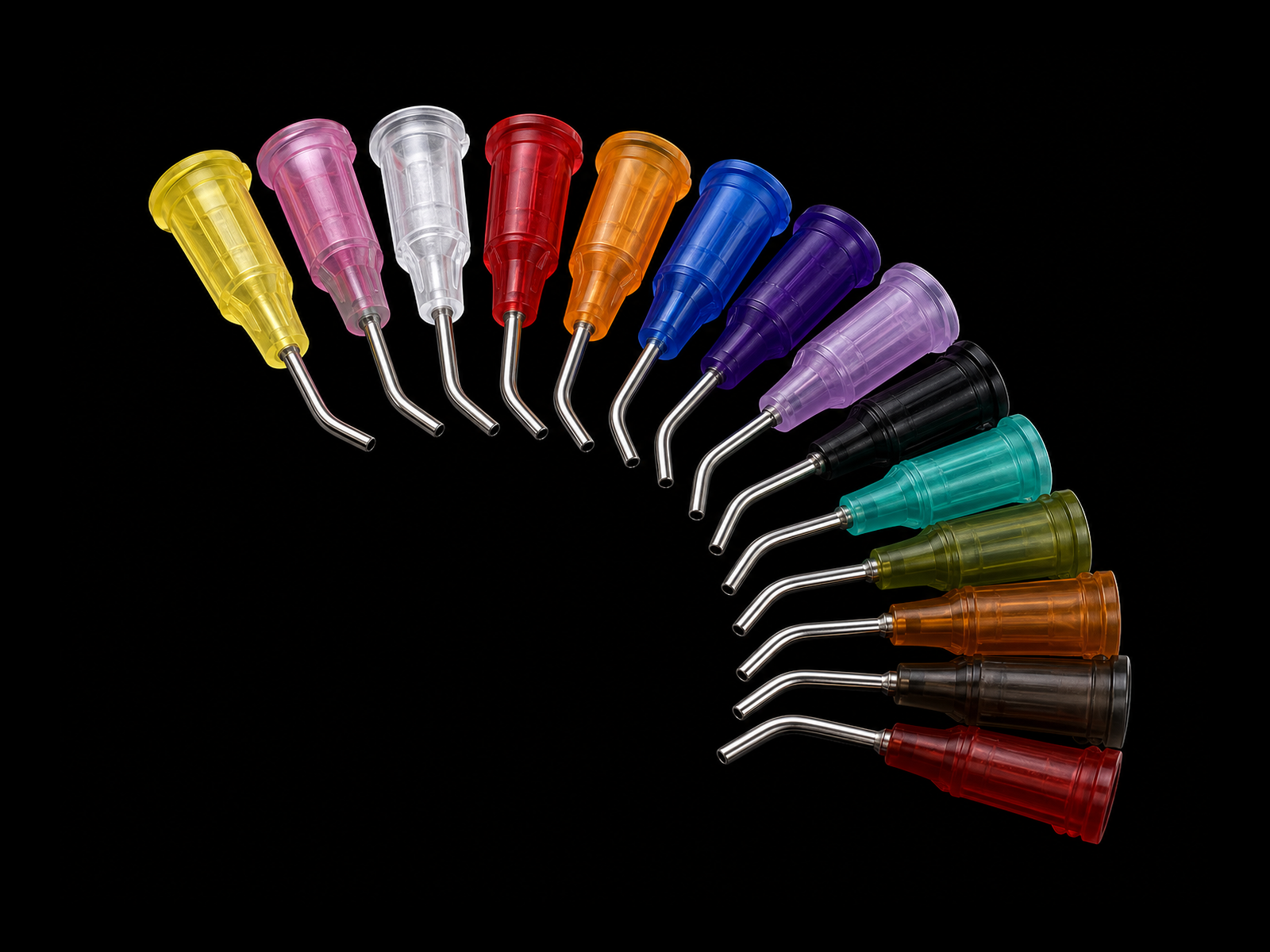
| 14G | 2.11 | 1.60 | olive | Med-high (wood glue, epoxy) | Wide bead |
| 15G | 1.83 | 1.37 | amber | Med-high | Bead |
| 16G | 1.65 | 1.19 | grey | Medium | Bead |
| 18G | 1.27 | 0.84 | green | Medium (general workhorse) | Standard bead |
| 20G | 0.91 | 0.60 | pink | Low-medium (solder paste) | Fine bead |
| 21G | 0.82 | 0.51 | purple | Low-medium (flux) | Fine bead |
| 22G | 0.72 | 0.41 | blue | Low | Fine dot |
| 23G | 0.64 | 0.34 | orange | Low | Fine dot |
| 25G | 0.51 | 0.26 | red | Very low (thin CA, ink) | Micro-dot |
| 27G | 0.41 | 0.21 | clear | Very low (solvents) | Micro-dot |
| 30G | 0.31 | 0.16 | lavender | Ultra-low | Ultra-fine |
*Hub colour is a widely-used industry convention for fast gauge identification and can vary by maker; dimensions follow ISO 9626 and are the authoritative reference.
Engineering note: viscosity beats gauge intuition
Going smaller isn’t the lever for thin fluids. A larger bore run at low pressure often lays a cleaner micro-bead than forcing a thin fluid through a tiny gauge, because excessive back-pressure makes a thin fluid spit and tail. For thin solvents, control comes from a choke point or a PTFE coating, not from chasing the smallest gauge. This is why the grid pairs gauge with a viscosity band, not a one-size rule. As a field rule, an 18 gauge works as the medium-fluid workhorse, while a tapered dispensing tip moves you into thick, filled fluids at a fraction of the pressure.
Blunt vs Tapered vs Flexible vs PTFE, and Disposable vs Reusable
Rework ↓
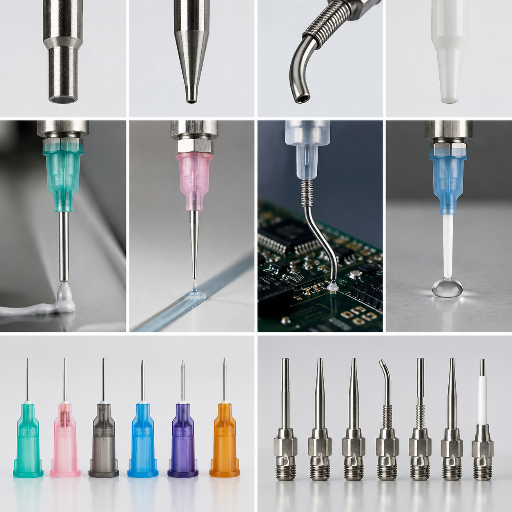
The wrong dispensing needle drives up rework, rejects, and cycle time. Matching tip geometry to fluid is the lowest-cost lever for deposit consistency and material-waste reduction on an assembly line.
Silver-tier estimate based on general industrial dispensing practice; exact savings vary by fluid, volume, and line. Request a custom analysis.
Compare Reusable vs Disposable Estimator →
When two tips look identical, the differences that matter are pressure, accuracy, and what they do to your substrate, not the photo. The matrix below compares the four cannula geometries on the variables an engineer (EN) and an operations manager (MGR) actually budget around. Read the pressure column first: dropping a filled epoxy from a straight bore to a tapered tip lets a pneumatic dispenser run at roughly a third of the pressure, which both speeds the cycle and stop filler separation.
| Tip geometry | Typical dispense pressure | Best deposit accuracy | Substrate risk | Reusability |
|---|---|---|---|---|
| Straight blunt (SS) | ~80 psi (6 bar) | Good | Can scratch | Disposable / reusable |
| Tapered (polymer) | ~30 psi (2 bar) | High on thick fluids | Low (no metal edge) | Disposable |
| Flexible (PP) | ~60–80 psi | Good | Lowest (bends, no scratch) | Disposable |
| PTFE-lined SS | ~70–80 psi | High on CA / thin | Low | Disposable |
Disposable versus reusable is a cleanliness-and-labour trade-off, not just a unit-price one. Disposable tips are designed for one-time use so the cannula, hub, and bore stay contamination-free shot to shot, the reason high-accuracy and high-cleanliness lines run them by default. Reusable passivated stainless needles earn their place only where a solvent-cleanable fluid and a manual bench let you amortize the higher unit cost over many cycles.
A modern multi-fluid dispensing architecture is described in USPTO/EPO patent EP4389305A1, underscoring how tip geometry is engineered around the fluid path rather than treated as a generic accessory.
Compatibility: Luer Lock, Luer Slip & OEM Cross-Reference
Fitment is the first thing a procurement buyer (PROC) checks, and the honest answer is that compatibility is a dimensional standard, not a brand promise. A Luer-Slip tip pushes onto a syringe by friction; a Luer-Lock tip threads on with a collar and stays put under valve and pneumatic pressure. Luer Lock vs Luer Slip comes down to pressure: lock for valves and automation, slip for low-pressure manual work. Both seat on the same tapered geometry, the taper inside the female hub seals against the male Luer connector. Ebestron holds its hubs to the ISO 80369-7 small-bore connector standard, which is precisely why a factory-direct tip drops into the systems you already own rather than requiring a leap of faith on an unknown supplier.
Buyer advisory, verify fitment before you commit volume
Because Luer dimensions are standardized, an Ebestron tip mates with standard Luer-Lock and Luer-Slip syringes, valves, and cartridge adapters, including a ¼” Male-NPT-to-Male-Luer adapter for cartridge guns. The lowest-risk path for a first order is a free sample kit: verify the seal and the deposit on your own fluid and fixtures, then scale to bulk.
OEM Cross-Reference (drop-in compatibility)
MATRIX_SYNC
| OEM system | Typical OEM series | Ebestron compatible family | Fit |
|---|---|---|---|
| Nordson EFD | Optimum® general-purpose / tapered | Blunt Tip · Tapered · Luer Lock | Luer-Lock drop-in |
| Fisnar | PTFE-lined · flexible PP · SS | PTFE-lined · Flexible · SS Precision | Luer drop-in |
| Loctite | Luer-Lock dispensing tips | Luer Lock dispensing needles | Luer drop-in |
> Brand names are referenced for compatibility identification only; Ebestron isn’t affiliated with Nordson, Fisnar, or Loctite.
Industries & Applications, Electronics, Medical, Automotive & Lab
Precision Meets Viscosity
Teams that try to standardize on a single needle for every line usually hit the opposite wall, a 20G that beads epoxy cleanly will clog on solder paste and drool a thin solvent, so the family has to flex with the fluid. The same five families serve very different lines because the selection logic travels with the fluid. In electronics and SMT, solder-paste and flux dispensing reward short, large-ID needles: short needles are easier to push viscous paste through, and bent tips let an operator work under a microscope; conformal coating and potting move to PTFE-coated and tapered tips. In electronics potting and meter-mix work, the needle is the last component in the cartridge-gun-mixer chain, so its bore has to match the mixed-resin viscosity. Medical-device assembly and laboratory dosing lean on passivated stainless precision tips for repeatable micro-deposits on valve and positive-displacement systems; automotive and general industrial work runs the blunt and tapered families for adhesives, sealants, lubricants, and grease.


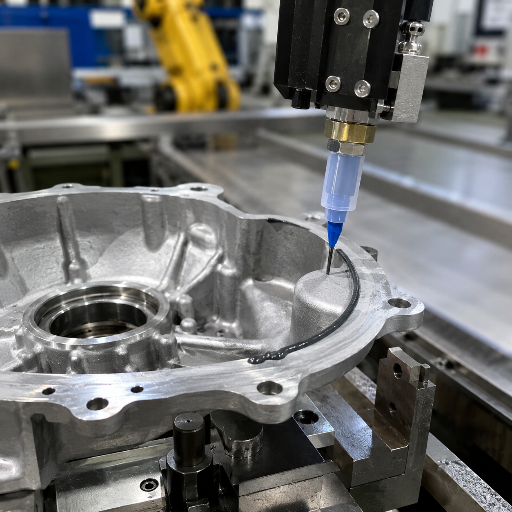
Because needles are consumables that sit downstream of your dispensing guns, dual cartridges, and static mixing nozzles, standardizing the tip across departments simplifies both inventory and operator training. For regulated work, food-contact and low-extractable plastics are covered under 21 CFR 177, and Ebestron offers latex-free, silicone-free options where contamination control is the spec.
Across a high-mix bench the blunt tip vs tapered tip decision repeats on every fluid, which is why the 5-Series Tip Family Map, not a single default gauge, is the real tool here.
Advanced Production Line Automation





×
![Zoomed View]()
Material, Quality & Compliance
Not all dispensing needles are of equal quality even when they look identical, and the difference show up as inconsistency, not as an obvious defect. Burrs or traces of molding flash at the cannula cutoff alter every deposit and can contaminate the fluid; a hub that doesn’t seat flush traps air and causes dripping and drooling. Ebestron’s answer is process control: our stainless steel dispensing needles use 304 cannulas that are passivated for corrosion resistance, deburred and inspected so the bore run clean, and pressed into hubs with flush mating to keep the fluid path air-free.
“We hold cannula concentricity and the hub-to-cutoff flush as inspected specs, not aspirations, because on an automated cell a tenth of a millimetre of runout is the difference between a repeatable dot and a reject. That is the part of a dispensing needle a datasheet rarely shows you.”
304 SS
Passivated, corrosion-resistant cannula
Burr-free
Deburred & inspected bore
Latex-free
Silicone-free options
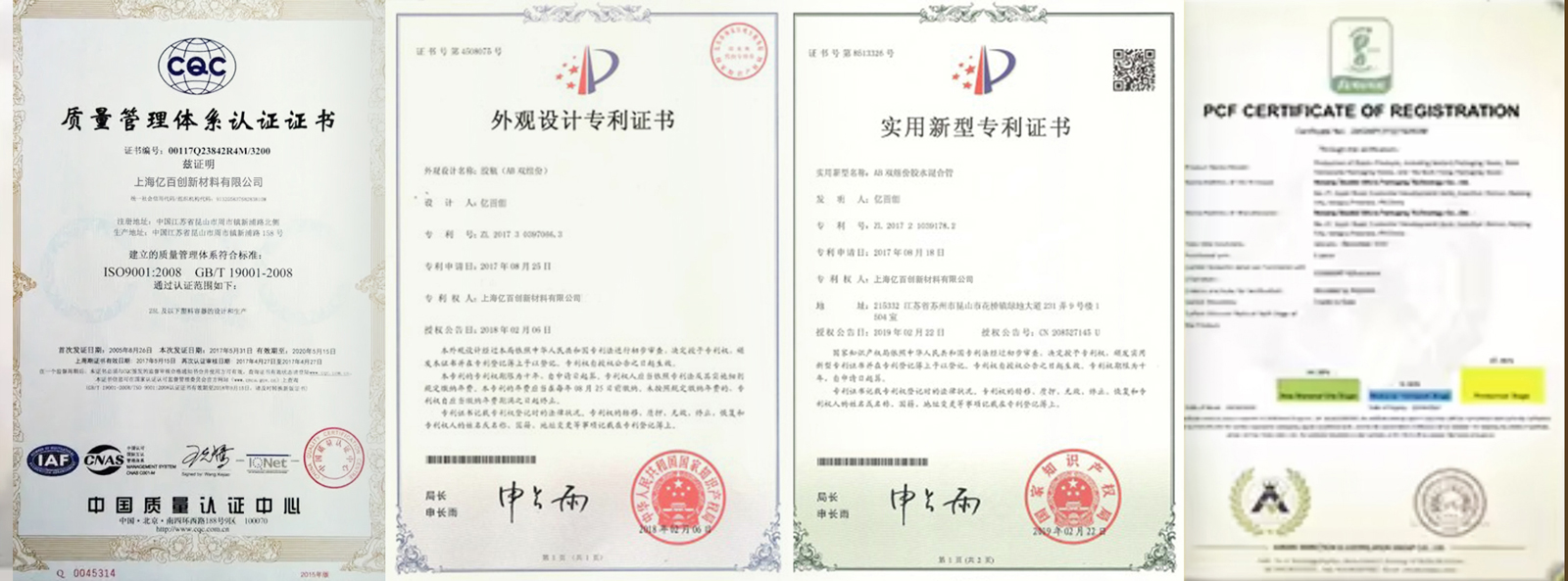
ISO 9001
Quality-managed production
RoHS / REACH
Compliant materials
×
![Zoomed Image]()
Procurement: MOQ, Bulk Pricing, OEM/Private-Label & Lead Time
Buyer advisory, how Ebestron pricing is structured
Buying factory-direct removes the distributor markup that makes branded tips expensive without changing the dimensional standard your line depends on, the same Luer geometry, at OEM-replacement cost. Pricing scales with a few clear factors rather than a single list number: gauge and material mix, cannula length, pack size, hub colour-coding, and whether you need private-label printing. The practical entry path is a sample kit; the practical scale path is a tiered bulk order.
Quotes are built from your gauge/material spread, order quantity (standard packs through bulk), length selection, and any OEM private-label requirement. Sample kits let a new line validate fit and deposit before committing volume, and bulk tiers bring unit cost down as quantity rises. Contact Ebestron for a quotation based on your application parameters and target volume.
/// PRECISION DISPENSING UNIT
MATERIAL: SS304
TOL: ±0.01MM
FLOW CTRL: ACT
Industrial Dispensing Selection & Optimization Tools
Dispensing Needle Gauge & Viscosity Selector
Pick your fluid and deposit — get the recommended gauge, inner diameter, and tip material. Dimensions follow ISO 9626.
Use Selector
Fluid-to-Tip-Material Matcher
Tell us the fluid; we’ll name the tip material to use — and the one to avoid.
Match Material
Build a Free Dispensing-Needle Sample Kit
Pick the families and gauges you want to trial. Verify fit and deposit on your own line before committing to bulk.
Build Sample Kit
What is the difference between a dispensing tip and a dispensing needle?
A dispensing tip and a dispensing needle are the same component. A dispensing tip is a metal or plastic cannula bonded into a Luer hub that meters fluid in industrial assembly. When the cannula is narrow it resembles a medical needle, so it’s often called a dispensing needle, but it’s blunt, has no sharp bevel, and is made for industrial use only, never for injection. Ebestron uses the two terms interchangeably across its range.
What gauge dispensing needle do I need for my fluid?
Match gauge to viscosity, not to habit. Thick fluids such as grease, RTV, and filled epoxy need a large bore (8G–16G); medium adhesives run on the 18G workhorse; solder paste and flux suit 20G–21G; thin cyanoacrylates, solvents, and inks need 22G–30G. Because gauge is inverse, higher number, smaller bore, use the Gauge-to-Viscosity Selection Grid above to convert gauge to real inner diameter, then confirm the tip material against the fluid matrix.
Which tip should I use for cyanoacrylate (super glue)?
Use a PTFE-lined tip. Cyanoacrylates cure fast on contact with metal ions and moisture, so a bare stainless cannula clogs within a few shots. The PTFE lining keeps the adhesive from setting inside the bore, and a flexible polypropylene tip is a good second choice. Avoid plain stainless steel for thin CA.
Are Ebestron needles compatible with Nordson, Fisnar, and Loctite systems?
Yes. Ebestron hubs follow the ISO 80369-7 Luer standard, so they seat on standard Luer-Lock and Luer-Slip syringes, valves, and cartridge adapters, including the systems sold under those brands. Use the OEM cross-reference to match a series, or request a sample kit to verify fit on your own equipment first.
Luer Lock or Luer Slip, which do I need?
Choose Luer Lock for any pressurized, automated, or valve-fed line, where the threaded collar prevent blow-off under pressure. Luer Slip is fine for low-pressure manual work, snapping on by friction. Both share the same sealing taper, so the Ebestron tip range is identical across either fitting.
Are these dispensing needles sterile or for medical use?
No. These are blunt, non-sterile, industrial-only tips for adhesives and assembly fluids, not hypodermic needles, and never for medical, injection, or any clinical use. The blunt end is engineered to place fluid precisely on a part, not to pierce skin or a septum.
Trending now