Get in touch with Ebestron Company

Contact Form using
ISO 10993 / USP Class VI Standards

Medical-Grade Adhesive Cartridges

Medical-Grade Adhesive Cartridges: Two-Component Cartridge Systems

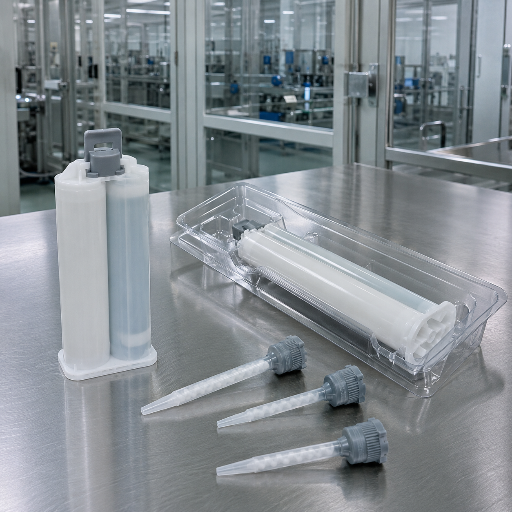
Ebestron builds two-part adhesive cartridges, static mixing nozzles, and dispensing gun that match the side-by-side footprints your line is already set up for-using USP Class VI-capable materials and full lot traceability for medical and other regulated manufacturing environments.

A medical-grade adhesive cartridge is not a new product category; it is the same two-part geometry built to higher standards for materials, cleanliness, and lot traceability. Since no regulatory body has a standard for “medical grade” alone, that standard has to live in the cartridge that packages, measures, and dispenses your chemistry. It must dispense the same ratio every shot, separate chemistries until the static mixing nozzle, and supply a level of documentation on par with a medical device manufacturer’s ISO 10993 or FDA submission. That is what an Ebestron cartridge offers.

  • Drop-in standard gun & mixer fit
  • Lot-traced documentation on request
Request a Quote
LOT TRACEABLE
Medical-Grade Adhesive Cartridges: Two-Component Cartridge Systems
01
50–1500 mL

Cartridge volumes

02
1:1 · 2:1 · 4:1 · 10:1

Volumetric mix ratios

03
Side-by-Side

+ coaxial footprints

04
USP Class VI

capable materials

Why Medical & Regulated Adhesives Demand a Different Cartridge

One common failure, a failure many engineers don’t attribute to the packaging, occurs when a two-part adhesive remains soft, tacky or simply lacks adhesion because the mix ratio is slightly off. A cartridge mix ratio is by volume. Many highly filled adhesives, however, get a ratio designated by weight because measuring a high ratio (20:1 by weight) would require vast amounts of one component. The equivalent for this type of formulation could be a 12.5:1 ratio by volume, which wouldn’t effectively cure joints when delivered by a cartridge. In applications like a wound closure device or a catheter hub, this isn’t merely a quality control issue -it can become a costly product recall.

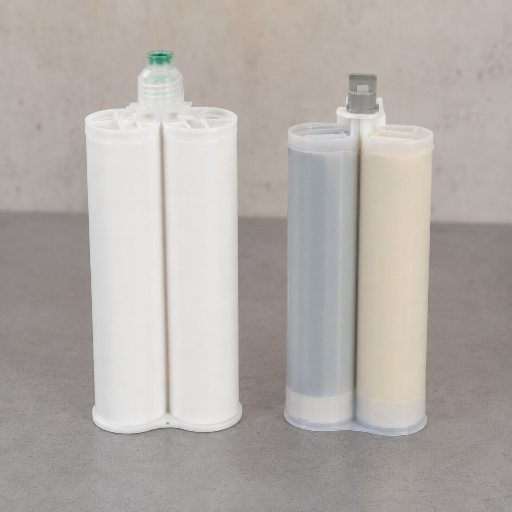
The solution lies in a two-part cartridge that dispenses two separate chambers containing a fixed volumetric ratio directly to a static mixing nozzle. This ensures the materials only begin mixing when they’re to be used and eliminates the need for manual mixing or weighing and all of the inconsistencies and material waste associated with it. “ Slow and imprecise” are among the more common descriptions used in the trade press for manually poured and mixed adhesives. A custom, mold-manufactured cartridge from Ebestron that controls the volumetric ratio within precise tolerance limits eliminates these inefficiencies. The first common mistake in ordering an adhesive cartridge is to assume one size fit all; in fact, your supplier must be able to demonstrate lot-to-lot control over your ratio as well.
Engineering Note, the ratio is volumetric

The simple volumetric ratios in cartridgeable medical adhesives include:

1:1
2:1
4:1
10:1

If your current data sheets lists the ratio by weight, divide the weight of each component by the respective densities of the components to establish the volume ratio. When densities differ – as is often the case with heavy-fill medical resins or those with conductive properties-volume ratio and weight ratio don’t correlate.

Ebestron Medical-Grade Cartridge Systems, Sizes, Ratios & Compatibility

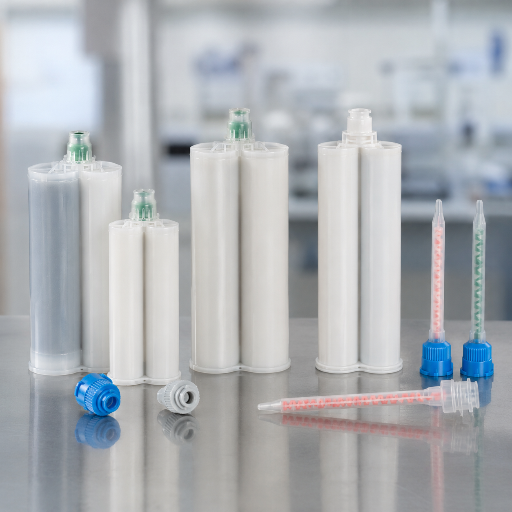
The number one thing that keep buyers anchored to an incumbent cartridge company: Re-tooling anxiety. We already wrote about it before. Your dispenser gun, your static mixer, and more times than not, all of your automation tooling, is based on a very specific cartridge footprint. Dental is running 50mL side by sides, Auto is running 200-300mL’s, and anchoring is running 600mL’s. Change your cartridge and change it all, seems to be the consensus fear. Ebestron stands for the opposite, as we produce all of the classic, side-by-side, and coaxial formats and so all that you change is your cartridge.

We manufacture the most commonly used volume-and-ratio combinations into single body pieces with virtually no bulge so that they retain on-ratio dispensing with an under-plunger force in either polypropylene and nylon materials with medical-grade resins when material documentation is requested.

Ebestron Medical-Grade Cartridge Systems
VolumeCommon ratiosFootprintTypical applicationBest fit
50 mL1:1, 2:1, 4:1, 10:1Side-by-sideDental, diagnostics, needle & small-device bondingMedical assembly
200 mL1:1, 2:1Side-by-sideSub-assembly, device housingsMid-volume
400 mL1:1, 2:1Side-by-sideStructural bonding, pottingHigh-volume
1–30 mL1:1, 2:1, 10:1Dual syringeUnit-dose, R&D, low-volume clinicalSingle-use
600–1500 mL1:1, 2:1Side-by-sideIndustrial potting, large-areaBulk

Here’s the chart you’ll want to bring to your next supplier meeting! Every Ebestron cartridge has it paired with its corresponding standard system name, both of the dispensers and static mixers to which it’s qualified, and where it’s most commonly supplied – ensuring an engineer can be confident in a “drop-in” replacement.

Ebestron cartridgeVolumeRatioSystem classStandard gun / mixerMaterial optionsTypical industry footprint
EB-A50-1150 mL1:1A-system50 mL 1:1 manual gun + bayonet mixerPP / medical-grade PPDental, diagnostics
EB-A50-2150 mL2:1A-system50 mL 2:1 manual gunPP / nylonDental, electronics
EB-A50-4150 mL4:1A-system50 mL 4:1 manual gunPPDiagnostics, optics
EB-A50-1050 mL10:1A-system50 mL 10:1 manual gunPP / nylonDevice potting
EB-B50-1150 mL1:1B-systemB-system 50 mL gunPP / medical-grade PPMedical sub-assembly
EB-C200-11200 mL1:1C-system200 mL pneumatic gunPP / nylonAutomotive aftermarket, devices
EB-C200-21200 mL2:1C-system200 mL 2:1 pneumatic gunPP / nylonIndustrial sub-assembly
EB-F400-11400 mL1:1F-system400 mL pneumatic gunPP / nylonStructural, potting
EB-F400-21400 mL2:1F-system400 mL 2:1 pneumatic gunPP / nylonStructural bonding
EB-DS-series1–30 mL1:1, 2:1, 10:1Dual syringeHand plungerPP / medical-grade PPUnit-dose, R&D, clinical
EB-F1000-111000–1500 mL1:1F-systemBulk pneumatic gunPP / nylonLarge-area potting
EB-MIX-bayonetn/amatchedStatic mixerBayonet / bell mixersPP housingAll systems above
The system class determines the form that’s used as the standard for the standard design of every cartridge. When you share the cartridge or dispenser, we’ll inform the same before the order.

Material & Chemistry Compatibility

No two part chemistry is any good unless it stays in the cartridge until it wants to leave it and meet another chemical! Our Ebestron cartridge bodies – available in polypropylene and nylon – hold the two-component adhesive chemistries commonly found in assembly of our systems such as epoxies, urethanes, silicones, methacrylates (acrylic), cyanoacrylates and UV-curables for our syringe and catheter assemblies. These bodies will also be used for two part adhesives and sealants. In fact, even when working in the areas adjacent to implants or with patients, we provide a biocompatible, USP Class VI-ready medical-grade resin for the cartridge, which the assembly would otherwise bring into a patients environment.

It all depends on two properties that ensure a resin passes evenly through a cartridge and static mixer: pot life and viscosity. High-viscosity filled epoxies, for instance, demand both the longest static mixer you can get, and a dispensing gun with ample power to maintain your desired on-ratio mix. Short pot life demands a one-time static mixer and resealing between dispensed amounts. Two-part adhesive, with its contents separate in dual compartments until in the mixer, protects shelf life in the packaging far longer than mixed adhesives shipped or transferred in bulk containers. Ebestron’s shipments in the empty cartridges that you fill with your formulated adhesive ensures the resin and hardener don’t encounter each other until the time of your actual dispensing.

Engineering Note, dispensing mechanics

Within each Ebestron dual cartridge, two pistons are pushed at the ratio at which the dispense gun plunger strikes against the fixed capacity of the cartridge. The applicator (either manual, pneumatic, or battery-driven) provides the force. The static mixer, static mixing tube, does the work; folding together the resin and hardener through its inner elements into one single homogeneous bead. Match three items and the dispensed joint is repeatable: the ratio of the dual cartridge, the number of mixer element and the mechanic advantage of the dispensing gun (see chart below). A 10:1 2k dispense or a 2k of high viscosity material requires more mechanical advantage than a 1:1-always design for the cartridge, not the other way around. For a dual cartridge epoxy at 50ml, 200ml, and 400ml, only a matched static mixer and good seal ensure a repeat ratio every dispense.

Ebestron vs. Incumbent Cartridge Brands, Performance & Cost

The status quo for the segment; The global players (in cartridge terms) and their local channel partners make good hardware, period. They make little in the way of a “medical grade position”, and virtually no “China direct price transparency”. Their product pages are more like category listings-a size and ratio, a price per package and some kind of a contact form. Here's a direct comparison against the selection criteria that actually drive sourcing decisions, not some abstract description like “low / medium / high”:
Dimension Ebestron Global cartridge brand (via distributor) Generic / off-brand
On-ratio body design One-piece, bulge-resistant One-piece, bulge-resistant Varies; bulging reported on some lots
Footprint compatibility Standard A/B/C/F + dual syringe Standard A/B/C/F Often standard, not always verified
Medical-grade material option USP Class VI–capable resin Catalog standard; medical on request Rarely documented
Compliance documentation Lot traceability + material docs on request Available, often paid / slow Typically none
Pricing model Factory-direct, quantity-tiered Pack price + distributor margin Lowest unit cost, lowest assurance
Mixer / gun supply Cartridge + mixer + gun, one supplier Often split across SKUs / brands Mixed sourcing
Ebestron vs. Incumbent Cartridge Brands
Here's an objective look at the true cost of sourcing this kind of dispensing material: The second column is the honest competitive landscape: major brands fit the standard engineering requirements, offer medical materials (if you order and wait and pay extra for distributor margin), and can generally provide support for their offering. The third column represents a different trap: a low-cost generic cartridge that could have hidden cost as an unsupported, off-brand static mixer becomes “unavailability” with little notice; and precise tolerance specifications simply aren't always guaranteed with these units. Ebestron fits in the middle; it's the factory, the known geometry you can verify, the certified medical material you need and it all come with no distributors markup.

The Real Cost of Switching, and Why It’s Lower Than You Think

The switching cost that actual material sourcing teams fear, in reality, is the changeover; the dispense guns, replacement mixers and any automation cells engineered and set up for that specific cartridge geometry and size. It sounds scary - and it should, because cartridge makers purposefully spec sizes to lock a customer into specific guns to prevent sourcing flexibility. But that isn't required. Because an Ebestron dual cartridge fits the same dimensions, uses the same ratio and bayonet interface as the incumbent you're replacing, you're changing just one item on your BOM, not re-engineering a process around your tool set. The ‘qualification’ process that you run instead of a full tool rebuild simply consist of incoming material testing, (what you should be doing anyway), and a dimensional review of the mating hardware on the cartridge. The actual ‘cost to switch’ then, is largely the sample order itself, the simple fit check, and the 1st article, beyond which, very little in your overall dispensing cost or tool set has changed.

Medical-Grade Materials & Compliance: USP Class VI, ISO 10993 & ISO 13485

That’s where “medical-grade adhesive cartridge” either wins or loses the claim. Here’s the honest to goodness starting point from the material literature: there is no regulatory definition of a medical grade polymer, and there are no such things as ‘FDA-approved plastics’, the FDA approves a finished device not the material it’s made of. Anyone who sells you an “FDA-approved cartridge” is selling you a phrase, plain and simple. What is available to you is material that has met specified biocompatibility testing requirements and a company whose quality system can document exactly what lot number it came from.

USP Class VI → ISO 10993 Material Crosswalk

Buyers, usually in volume, often treat those two conditions as the same. That condition isn't met and the differences matter come audit time.

Here’s what that implies for your cartridge: it’s a very safe, reliable starting point to use a USP Class VI-capable resin, but that’s it - compliance lies in the actual device level. Your role at Ebestron is to contribute the piece of the puzzle that has a perfectly clean input so that it doesn’t become the Achilles heel of your ISO 10993 evaluation, and your quality system for it.

The scope of compliance for the material used in the cartridge is per material and per order number so make sure to ask for the specific documentation pack associated with the exact cartridge and material you’re considering.

Medical-Grade Materials & Compliance
Audit Passed ISO 10993 VERIFIED
Aspect USP Class VI ISO 10993
Core question Does the material show low biological reactivity? Is the material biologically safe for its specific use?
Defined tests Systemic Injection + Intracutaneous + Implantation Biological evaluation matched to contact type & duration
Risk management Not included — tests only Included — requires risk analysis of materials, additives, residues
Contact-time logic By category (limited / prolonged / permanent) By exposure: <24 h, 24 h–30 d, >30 d
Relationship A Class VI material can also meet ISO 10993… …but Class VI alone is not ISO 10993 compliance

USP CLASS VI

Capable resin options

ISO 10993

Material data to support evaluation

ISO 13485

Built to serve medical supply chains

21 CFR

Food/medical-contact material options

LOT TRACE

Documentation on request

“When a customer’s device fails a biocompatibility audit, the first thing we trace is whether the cartridge material and lot can be documented. A cartridge that meters perfectly but has no paper trail still fails the audit. We built our medical line so the documentation arrives with the parts, not three weeks after.”

Ebestron Engineering Team, Adhesive Packaging Systems

× Enlarged View

Applications: Medical Device Assembly, Dental & Diagnostics

Adhesives have become a preferred method of device joining because they join materials that are dissimilar-such as polymers and metals or polymers and ceramics-with minimal heat or stress compared to thermal welding or brazing. A two-part cartridge is the delivery vehicle for these adhesives, metering them at exact ratios, every time, to your line at higher volume.

Needle & syringe bonding

Cyanoacrylate and UV-cure adhesives are dispensed at precise ratios for the assembly of high-volume and high-speed syringe medical devices. The cartridge can deliver the desired volume through a mixer to achieve a precise bond from a 50mL cartridge delivering to a static mixer with inline validation of dispensing ratio.

Catheter assembly

Catheter bonds using PVC, polyurethane, stainless steel, and polycarbonate components is often accomplished using a reactive, two-part medical adhesive dispensed using a 10mL or 30mL dual-syringe configuration that protects pot life by keeping the adhesive components separate until dispensing.

Applications Medical Device Assembly, Dental & Diagnostics

Dental

The two-part, side-by-side cartridge is the universally recognized industry standard (50 mL dual-syringe format) for bonding and impression materials at dental facilities and therefore must be compatible with existing dispensers.

Diagnostics & wearables

Custom or standard small-volume cartridges (often syringe format) are ideal for unit-dose dispensing, high precision, and low extractables in diagnostic cartridges and wearable devices, where bio-acceptability is essential.

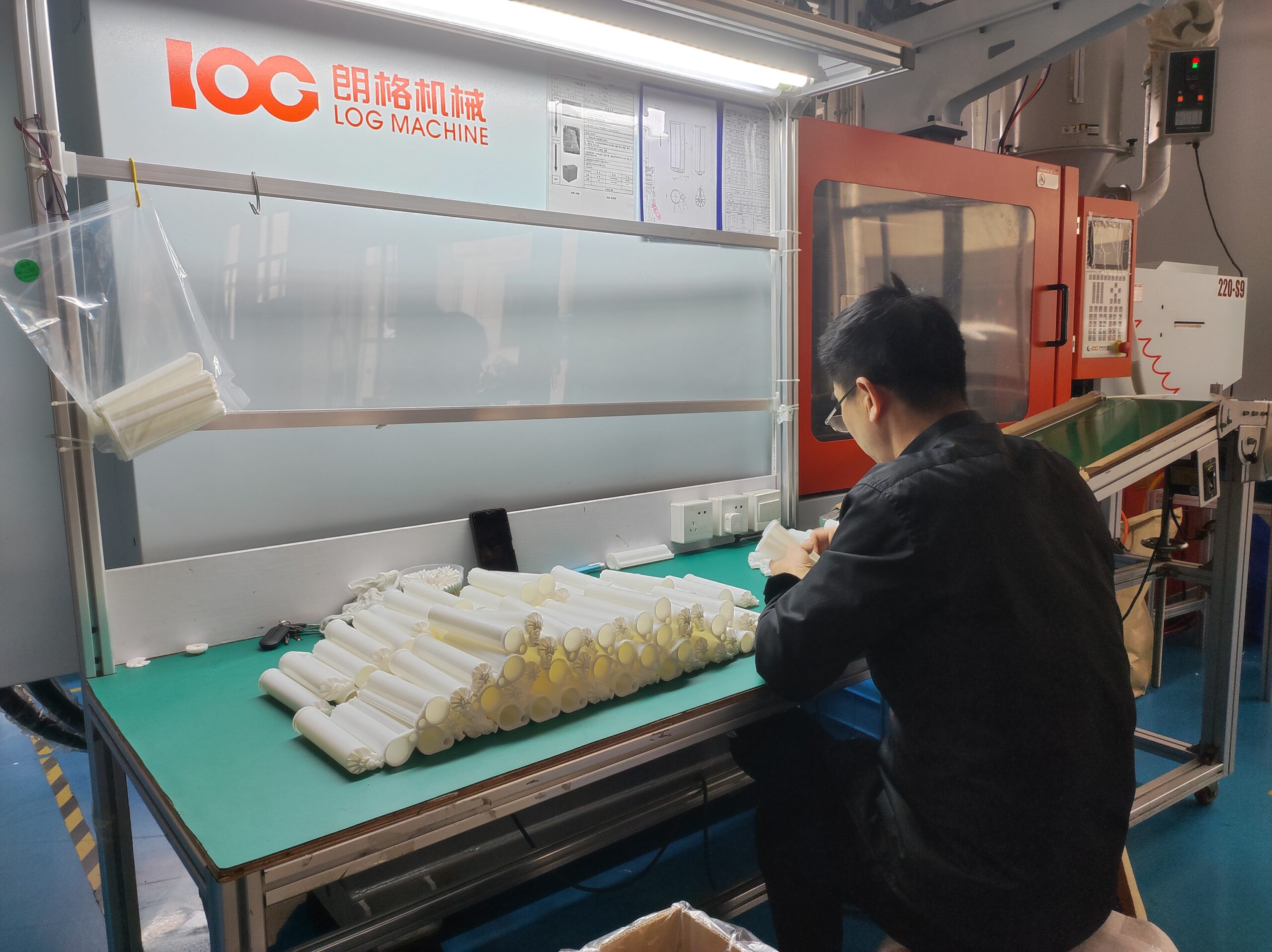
The honest division of labor: Ebestron supplies the empty cartridge, static mixer, and gun built in-house to your footprint; your adhesive partner owns cure and bond performance. Unlike a generic package, ours arrives with the lot documentation your device file needs, so a mis-bonded needle hub or catheter joint never traces back to the cartridge.

Procurement Guide: MOQ, Lead Time, Lot Traceability & Private Label

Adding a cartridge to a medical supply chain is a qualification before it is a price negotiation. Manufacturers conduct rigorous supplier audits - including assessments for compliance with ISO 13485 guidelines and Good Manufacturing Practices (GMP), and often an on-site inspection - before approving a new part supplier. For a supplier directly from China, this auditing process simply qualifies rather than disqualifies. This article details what information to include in your Request for Quotation (RFQ) to expedite the evaluation.

Pricing Factors Framework, what drives your quote

Unlike a list price that offers little value without your specific parameters, cartridge cost is influenced by: 1. Material Grade - standard PP versus USP Class VI-compatible resins; 2. Volume and Ratio - footprint may require a different tooling configuration; 3. Order Quantity - factory-direct pricing structured around volume tiered levels; 4. Documentation - standard compliance documents versus a full lot trace and compliance packet; 5. Customizations - your brand (private label) and specific logo or text (custom print); 6. Bundling Options - the cost of a combined cartridge with a static mixer and dispensing gun. Provide us with your product footprint, material grade, and annual volume requirements, and we’ll send a detailed quote. You can buy the cartridge alone or as a complete cartridge assembly kit - the two part adhesive cartridge, matched Mixpac nozzles, and the dispensing gun - so a side x side cartridge, its mixer, and its 2K dispensing gun clear incoming inspection as one line, not three. The honest trade-off most buyers miss is that single-sourcing here removes a validation headache rather than adding one.

RFQ line item What to specify Why it matters
Footprint & system class Cartridge size, ratio, A/B/C/F or dual syringe Confirms drop-in fit, no re-tooling
Material grade Standard PP / nylon / USP Class VI–capable Sets compliance path & cost
Documentation CoC, lot trace, material data sheet Feeds your supplier qualification file
Mixer & gun Matched static mixer, gun count Single-source bill of materials
Label Ebestron / private label / custom Brand & regulatory marking

You can obtain your cartridge as an individual component or as an integrated system that includes the two-part adhesive cartridge, compatible static mixing nozzles, and the dispensing gun - all covered under a single part number and certificate. A side-by-side cartridge, mixer, and dispensing gun are received and processed through your incoming inspection as one integrated product line item, rather than as three separate SKUs.

A cartridge system earns its cost back where manual mixing bleeds it — in eliminated weighing and stirring labor, in scrap from off-ratio or under-mixed batches, and in the rework a failed medical joint triggers. Independent dispensing guidance places automated and cartridge metering at a lower total cost of ownership than manual handling, even where the upfront unit price is higher.

Qualitative TCO framing — sources: Adhesives & Sealants Industry; Atlas Copco dispensing guide. No client-specific ROI figure is claimed.

Frequently Asked Questions

Typically, yes. As we use the standard A/B/C/F side-by-side and dual-syringe footprints, an equivalent Ebestron cartridge that’s the same size and ratio will fit directly into the dispensing gun and static mixer you already employ. However, as niche tooling can differ significantly, please supply us with your current cartridge or dispenser so we can confirm an exact match before you order - eliminating guesswork.

By volume. Cartridge ratios (e.g., 1:1, 2:1, 4:1, 10:1) refer to volumetric proportions and are determined by the cartridge's geometry. If your adhesive data sheet specifies a ratio by weight, remember to convert it to a volume ratio using the specific gravities of both components - a ratio by weight of A to B may not be equivalent to a volume ratio of A to B.

This is not a possible claim by any reputable supplier, as the FDA approves only finished medical devices, not raw materials like plastics or empty cartridges. We supply a USP Class VI-compatible material, complete with the lot documentation you’ll require for your internal ISO 10993 evaluations and the FDA’s review of your completed device. Any supplier suggesting they offer "FDA-approved cartridges" warrants caution.

USP Class VI is a series of tests specifically addressing a material's biological reactivity via systemic injection, skin contact (intracutaneous), and implantation. ISO 10993 is a broader framework for biological evaluation, incorporating materials risk management (including additives and residues). While a Class VI material may meet the criteria for ISO 10993, simply passing the Class VI tests does not ensure it meets the full ISO 10993 requirements.

No. Since our cartridges are manufactured to industry-standard footprint dimensions, your existing guns and static mixers will continue to operate without modification. As an alternative option, we can also provide a single-source bill of materials that includes a static mixer and dispensing gun, though this is an option, not a mandatory requirement.

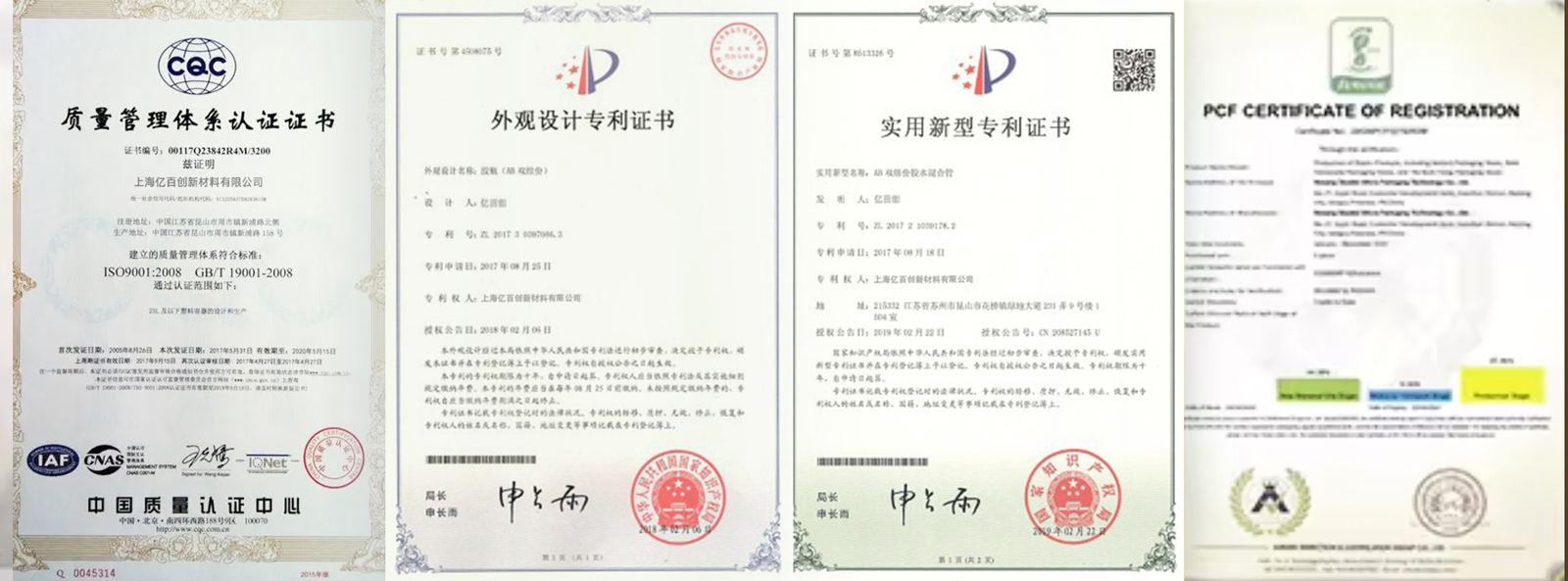
To support your supplier qualification and biocompatibility file, a certificate of conformance, lot traceability and material data can be supplied. The level of detail will vary with the order - please ask for the documentation pack relating to the specific cartridge and resin you're testing.