Get in touch with Ebestron Company
Static Mixing Systems
2K · Collision Repair
Automotive Panel Bonding Adhesive Tips, Static Mixing Nozzles for 2K Collision-Repair Cartridges
Disposable static mixing tips and dual-cartridge hardware engineered by Ebestron to mix two-component panel bonding adhesive at the exact ratio your repair needs — from headlight sealing to structural panel replacement.
Request a Quote→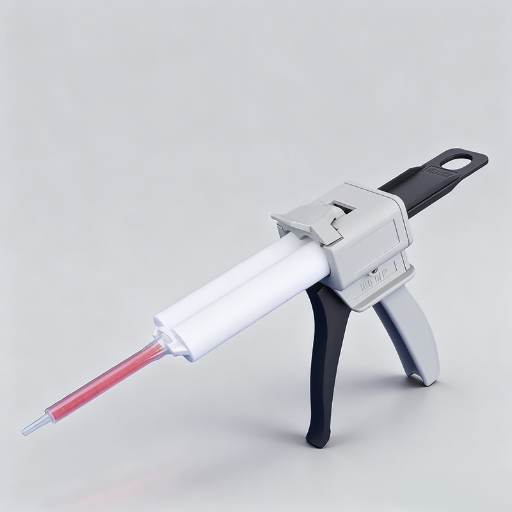 FIG. 01
Dual-Cartridge Mixing Systems
Ebestron
Engineered Mixing System
Module · 2K BondingTechnical Specifications
- 0150–400 mLDual-cartridge fit
- 021:1 · 2:1 · 4:1 · 10:1Mix ratios served
- 0321–32Mixing elements per tip
- 042²⁴ ≈ 16.7MStriation layers (24-element)
- 05Manual + pneumaticApplicator compatibility
- 06DisposableNo clean-up, no cross-cure
Buyer roles: All
Why Under-Mixed Panel Bonds Fail, and How the Right Tip Prevents It
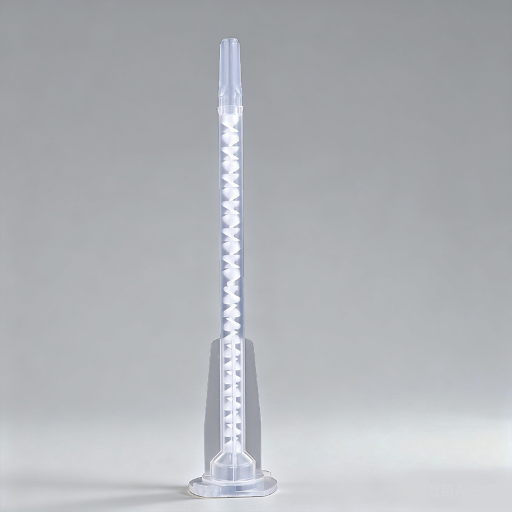
A static mixing nozzle is the disposable spiral tube that screws onto a dual cartridge and blends both parts of a two-component adhesive as you dispense. It has no moving parts: the resin and hardener split and recombine at every internal element. Skip it, shorten it, or pick the wrong element count, and the panel bonding adhesive that lands on the flange isn't the adhesive the chemist designed.
System Failure Analysis
Two failure stories show up again and again on body-shop benches.
- First, a technician stop mid-panel, the adhesive cures inside the tip, and the next bead has to wait for a fresh nozzle, the two tips packed with the cartridge cover a single panel, not a full day.
- Second, a leak or a half-mixed first bead wastes a slug of expensive 200 mL adhesive before the real bond even starts.
Both are tip problems, not adhesive problems, and both are fixable with the correct disposable static mixing tips and a few spares on the shelf.
The Ebestron Solution
Ebestron tips solve the mix-quality root cause directly: every nozzle ship with the element count matched to the adhesive chemistry it serves, so the bead that exits the static mixer tube is fully reacted resin, not a streaky two-tone paste. Panel bonding adhesive tips are a small line item that protects a structural bond, that's the trade you're actually buying.
See how the element math work against the bond-line read-out problem documented in USPTO patent US7811405.
Buyer roles: Engineering (primary) · Procurement (RFQ match)
Ebestron Panel Bonding Adhesive Tips, Models, Elements & Cartridge Fit
Ebestron groups its automotive adhesive mixing tips by the cartridge they seat on and the element count they carry, because those two variables, not brand badges, decide whether a bond mix correctly. Each tip is a disposable static mixer; each dual cartridge hold the two parts unmixed until you pull the trigger on a manual or pneumatic applicator. The decision matrix below maps tip families to the job most shops reach for them.
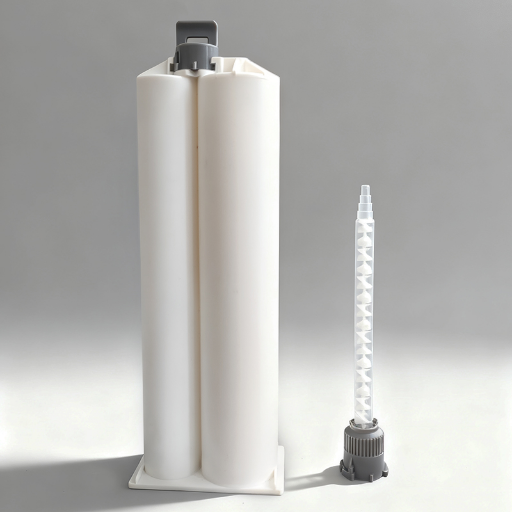
| Tip family | Cartridge | Mix ratio | Elements | Outlet Ø | Best-fit job |
|---|---|---|---|---|---|
| EB-Tip 50 | 50 mL dual | 1:1 / 2:1 | 21 | 4.2 mm | Headlight & taillight housing seal, small gap repair |
| EB-Tip 200 | 200 mL dual | 1:1 / 2:1 | 24 | 5.4 mm | Structural metal panel replacement bonding |
| EB-Tip 400 | 400 mL dual | 2:1 / 4:1 / 10:1 | 32 | 6.5 mm | Large quarter / roof skins, high-volume lines |
| EB-Tip Q (square-element) | 200 / 400 mL | 1:1 – 10:1 | square 18 | 6.5 mm | High-viscosity metal repair paste, fast purge |
Element counts above follow the chemistry-matched ranges in the Match Chart below.
SPECIFICATIONS / PROCESS
Engineering Note, Adhesive-to-Element Match Chart
Element count isn't a marketing number. Field practice and supplier data converge on chemistry-specific ranges: epoxy panel adhesives need 15–24 elements, polyurethane 24–36, methacrylic/acrylic 18–20, silicone 20–30, and polysulfide 24–32. Ebestron stocks tips across this whole span so the nozzle matches the adhesive, not the other way around.
This Adhesive-to-Element Match Chart is the asset most thin product listings skip, they sell one nozzle and hope it fits every cartridge. For a structural panel bond, that gap is the difference between a 24-element epoxy tip that fully reacts the bead and a generic 12-element tube that streaks it. Mixing elements are the product; the plastic around them is just the carrier. Authority on the multicomponent mixer geometry: USPTO patent US10786790.
Buyer roles: Engineering · Manager (quality assurance)
The Doubling Rule: Why 24 Elements Beat 12, and Why More Is Not Always Better
Here's the honest version of static mixer marketing. Every element a bead passes doubles the number of material layers. Twelve elements give 2¹² ≈ 4,096 striation layers. Twenty-four elements give 2²⁴ ≈ 16.7 million. That exponential climb is why a properly specified tip turns two viscous pastes into one uniform adhesive, and why a tip that's too short never gets there.
Honestly, though, we won't claim that more elements is always better, because field data and supplier engineering say otherwise. Past the count the chemistry need, extra elements mostly add back-pressure, trap material inside the tube, and waste adhesive on every purge. That trade-off is real: a longer nozzle raises dispensing resistance and leaves more cured adhesive behind. Matched is the whole game, enough elements for full reaction, no more. That's a selection problem, and it's exactly what the Match Chart above solves.
Each element splits and recombines the bead, doubling the striation layers inside the nozzle.
| Spec (epoxy panel bond) | Ebestron matched tip | Under-spec generic | OEM-branded tip |
|---|---|---|---|
| Elements | 24 | 12–16 | 24 |
| Striation layers | 2²⁴ ≈ 16.7M | 2¹⁴ ≈ 16,400 | 2²⁴ ≈ 16.7M |
| Cartridge fit | 50 / 200 / 400 mL | limited | brand-locked |
| Ratios served | 1:1 → 10:1 | 1:1 only | per system |
| Bond strength (lap-shear) | matches OEM | variable | baseline |
| Unit cost vs OEM | lower | lowest | baseline |
Lap-shear strength is the test that settles the argument; the method is defined in ISO 4587. A 24-element Ebestron tip and a 24-element OEM tip put the same number of striation layers into the bead, so the cured bond behaves the same on the test coupon, the saving is in the tip, not in the joint.
Buyer roles: Engineering + Manager · Procurement (cost)
Ebestron Tips vs Generic and OEM Nozzles, A Data-Driven Comparison
Body technicians are right to be cautious about swapping nozzles on warranty work, collision shops on r/Autobody consistently reach for the OEM brand on high-line vehicles, and that habit exists for a reason. That habit is about consistency of element count and fit, though, not a magic property of the badge.
That distinction matters because independent hammer-and-lap testing of quality generic nozzles has shown bond strength equal to the OEM tip they replace, with no measured difference in impact resistance on cured samples. The honest answer is that what wrecks a generic bond is an under-spec element count, not the fact that it is generic. Match the element count and the ratio, and a quality tip lands on the same lap-shear number. Ebestron's whole position is built on that fact: a correctly specified tip, priced below the OEM line, that still reacts the adhesive fully. Failure-mode language for adhesive joints is standardized in ISO 10365.
"We spec our panel-bond tips to the published element range for each chemistry, 24 elements for a structural epoxy, not 14. We tested short tips against full-length ones on lap-shear coupons before we shipped a single box, because a generic tip is only a problem when someone cuts the element count to hit a price. We won't."Ebestron Application Engineering Team
Buyer roles: Manager · Engineering (technical validation)
Three Automotive Panel-Bonding Jobs These Tips Are Built For
Panel bonding adhesive tips earn their keep across the repair bay, not in a single application. Three jobs cover most of what crosses a body shop or an assembly line, and each one asks something different from the static mixing tip.
01
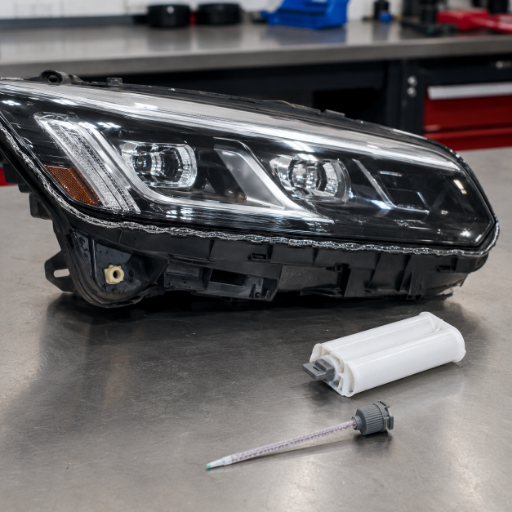
Headlight and taillight housing sealing
On the assembly line and in repair, small-capacity adhesive packs and a 50 mL tip seal lamp housings against moisture so the internal circuit stays dry. Because the bead is thin and the shot small, a higher element count in a narrow 4.2 mm outlet gives the uniform mix a fine seal need. A 21-element EB-Tip 50 is the working default here.
02
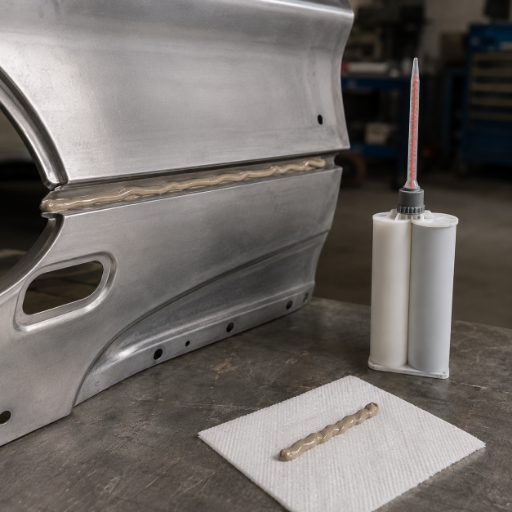
Structural metal panel replacement
When a quarter panel or door skin gets replaced, a two-component metal repair adhesive carries the structural load. Even mixing through a 24-element 200 mL tip raises the joint's strength and tightness and keeps corrosion out of the bond line, the read-out problem addressed in USPTO patent US8657366. Purge a short bead first, then bond bare metal to bare metal, ratio held the whole pull.
03
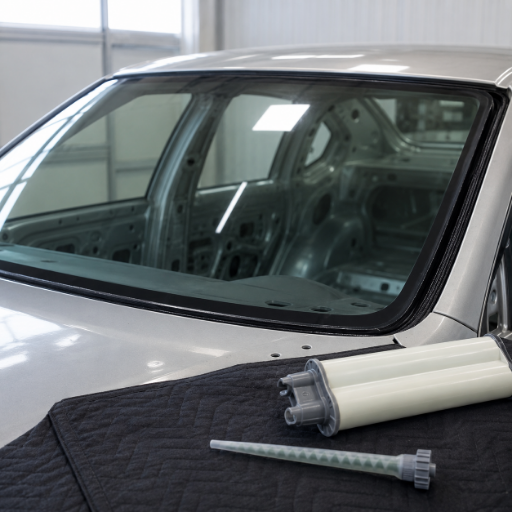
Windshield and bonded-glass installation
Setting glass is a structural bond too. A glass adhesive dispensed through an applicator gun and a matched tip lays an even bead so the glass seats tight to the body, blocking air and water leaks and keeping the bonded assembly within spec, the two-component glass bonding approach in USPTO patent US6319344. Larger 400 mL cartridges and pneumatic applicators carry the volume these beads need.
Buyer roles: Procurement (primary) · Engineering
Cartridge-Nozzle-Gun Fitment Trio: Match All Three Before You Order
Buyers' most common ordering mistake is reaching for a tip that won't seat. A static mixing tip is one leg of a three-part system, cartridge, nozzle, and gun, and all three have to agree on size, ratio, and mounting before any adhesive flows. The Cartridge-Nozzle-Gun Fitment Trio below is the check Ebestron runs on every quote so a shop never receives 400 mL tips for 200 mL cartridges.
| Cartridge | Common ratios | Matched tip | Applicator (gun) |
|---|---|---|---|
| 50 mL dual | 1:1 / 2:1 | EB-Tip 50 (21 el.) | Manual 50 mL gun |
| 200 mL dual | 1:1 / 2:1 | EB-Tip 200 (24 el.) | Manual or pneumatic 200 mL gun |
| 400 mL dual | 2:1 / 4:1 / 10:1 | EB-Tip 400 (32 el.) | Pneumatic 400 mL gun |
Match all three: 50 / 200 / 400 mL cartridge, the right tip, and a manual or pneumatic gun.
Mixing elements, cartridge volume, and gun thrust ratio have to line up, which is why Ebestron sells the dual cartridges and the manual and pneumatic applicators alongside the tips, one supplier, one fitment check, no mismatched parts arriving on a Friday. Quality-management discipline behind that fitment process follows ISO 9001.
Buyer Advisory
Order tips in the same box quantity as your cartridge throughput, and keep a sleeve of spares: two nozzles packed with a cartridge cover one panel, and a cured tip mid-job stops the line until a fresh one is on. Confirm cartridge volume, mix ratio, and gun type together, not one at a time.
2 tips ≠ 1 day
The nozzles packed with a cartridge cover a single panel. Correct element match plus a shelf of spares cuts purge waste and prevents a cured-in tip from scrapping a full 200 mL adhesive charge.
Source: body-shop field reports; tip cost is a fraction of a 200–450 mL adhesive cartridge. Exact savings vary by throughput — request a usage estimate.
Buyer roles: Procurement · Engineering (standard applicability)
Quality, Compliance & What Stands Behind the Tip
A bond that fails a warranty audit cost far more than the tip that mixed it. Corrosion creeping into an under-mixed bond line shows up months later as a comeback, a repaint, and a customer who doesn't return, which is why a structural panel bond is the wrong place to gamble on an unverified nozzle. Ebestron answers that risk with a published-method paper trail, not adjectives.
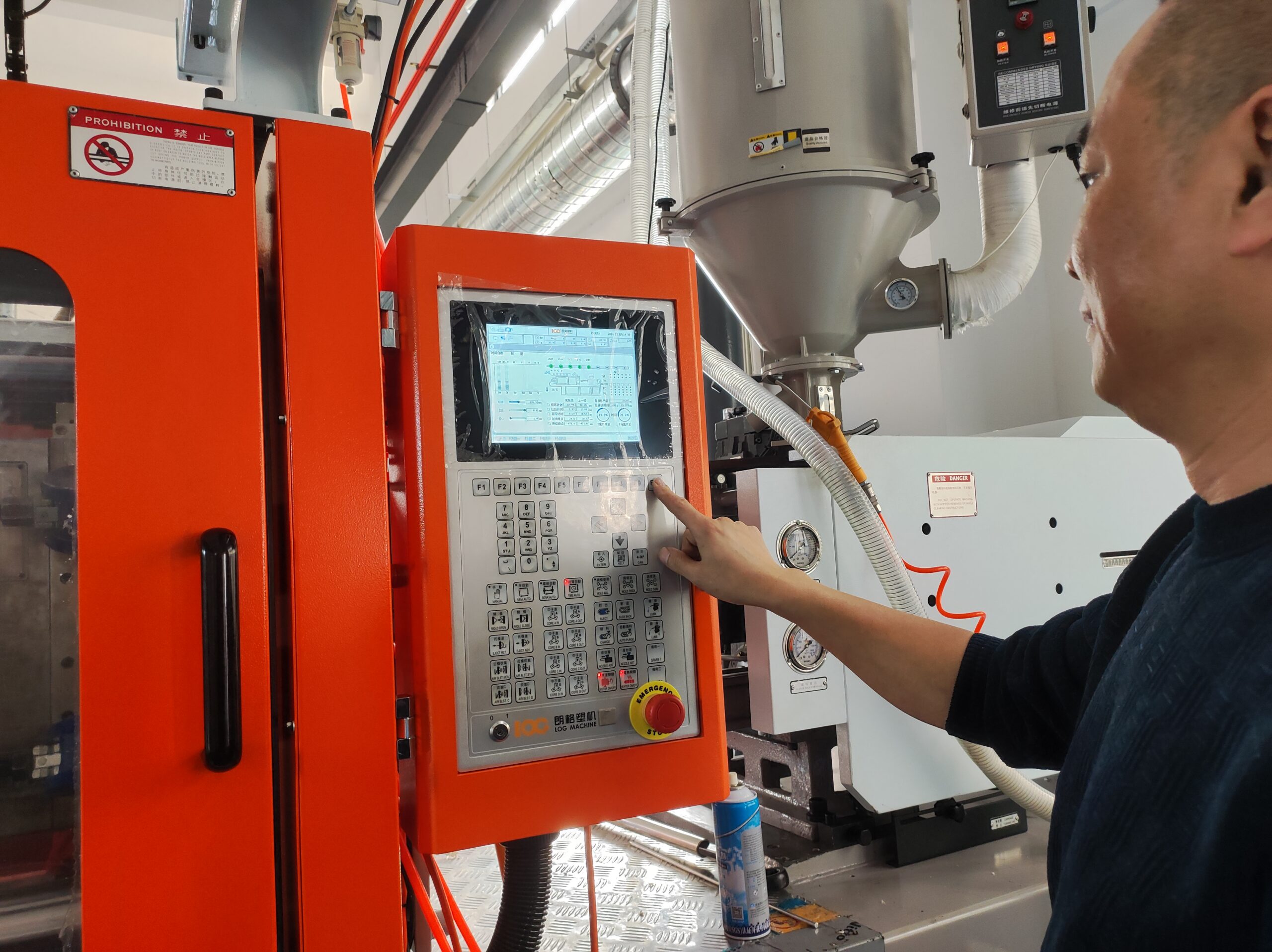
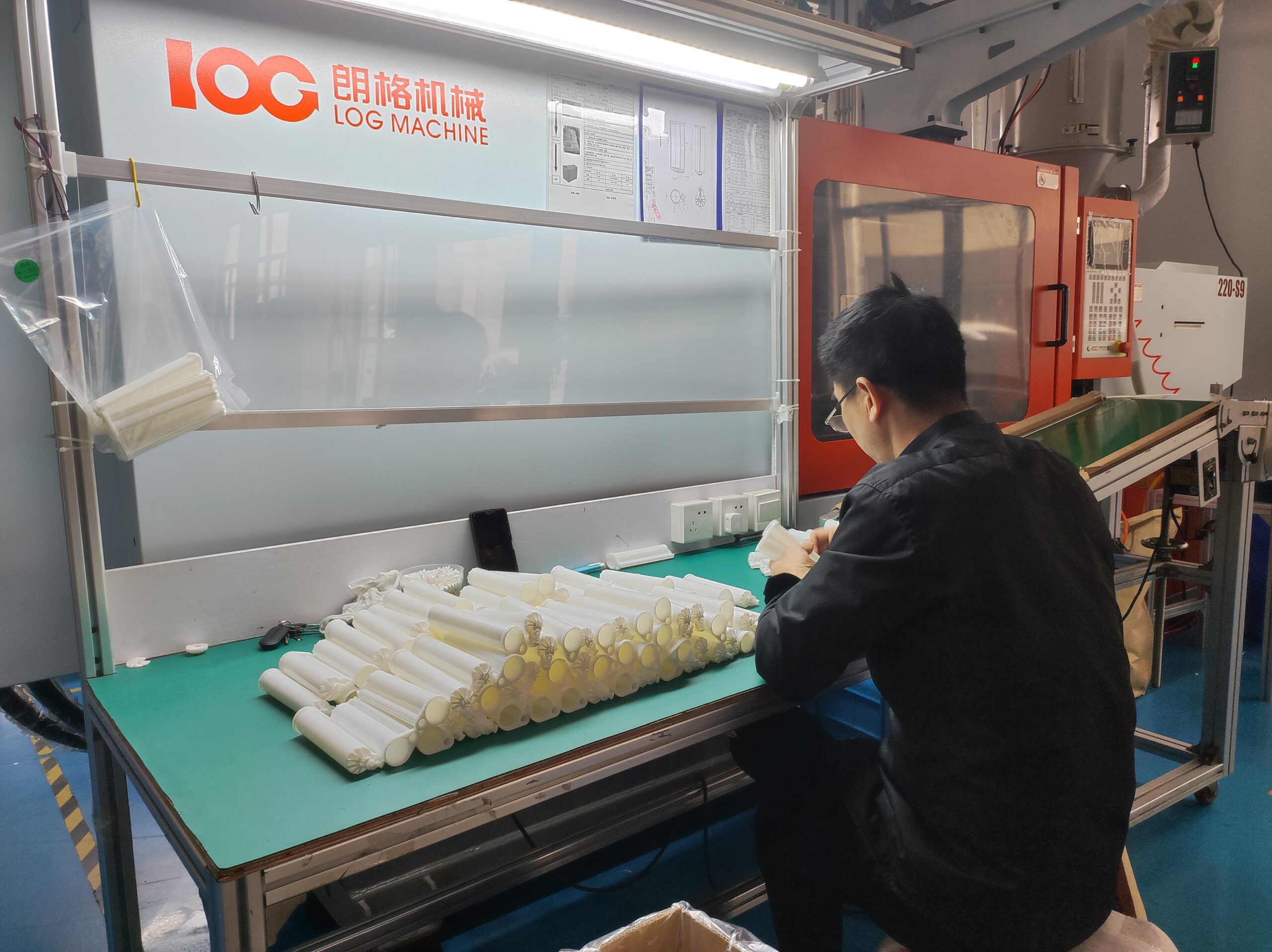
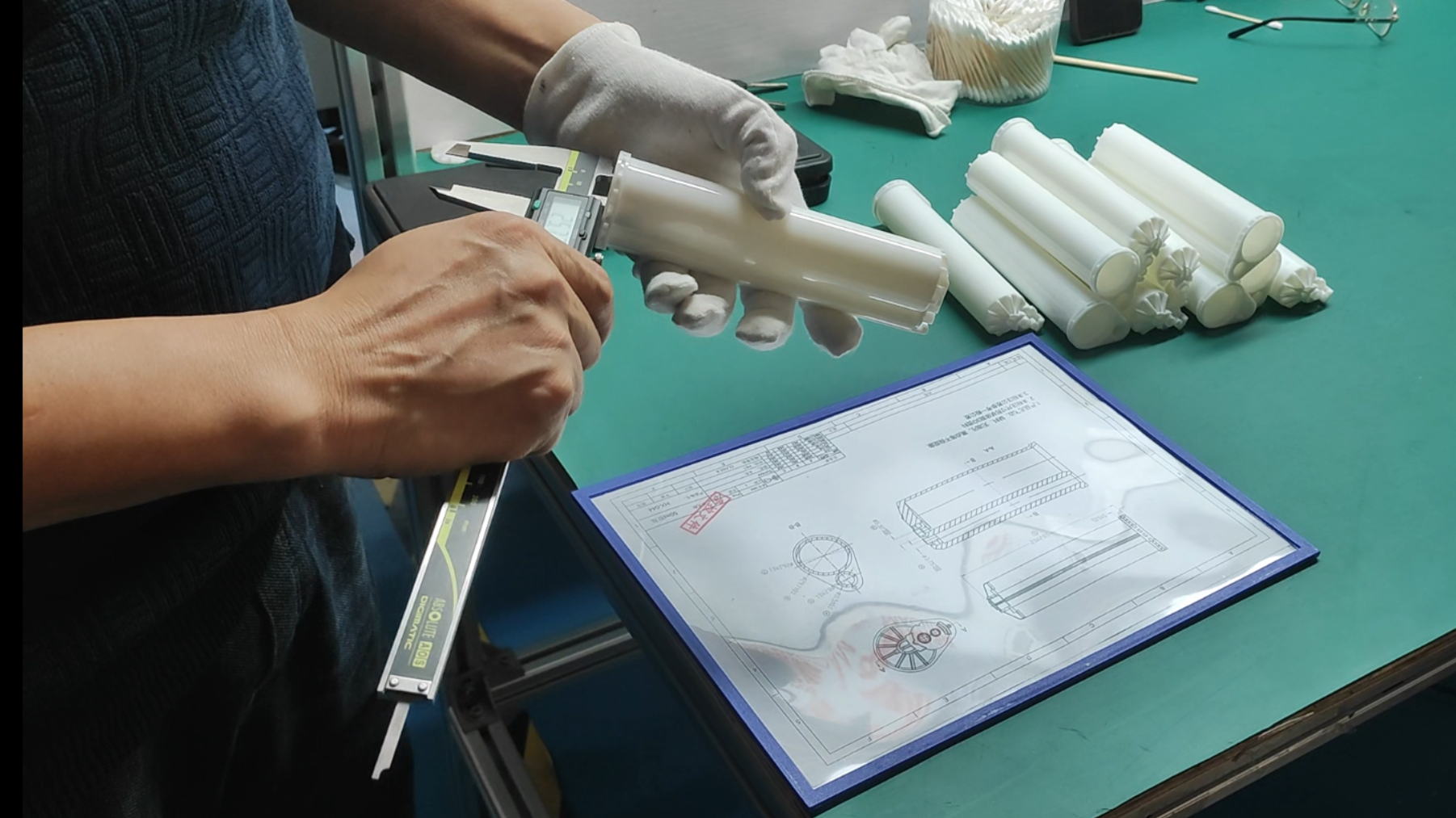
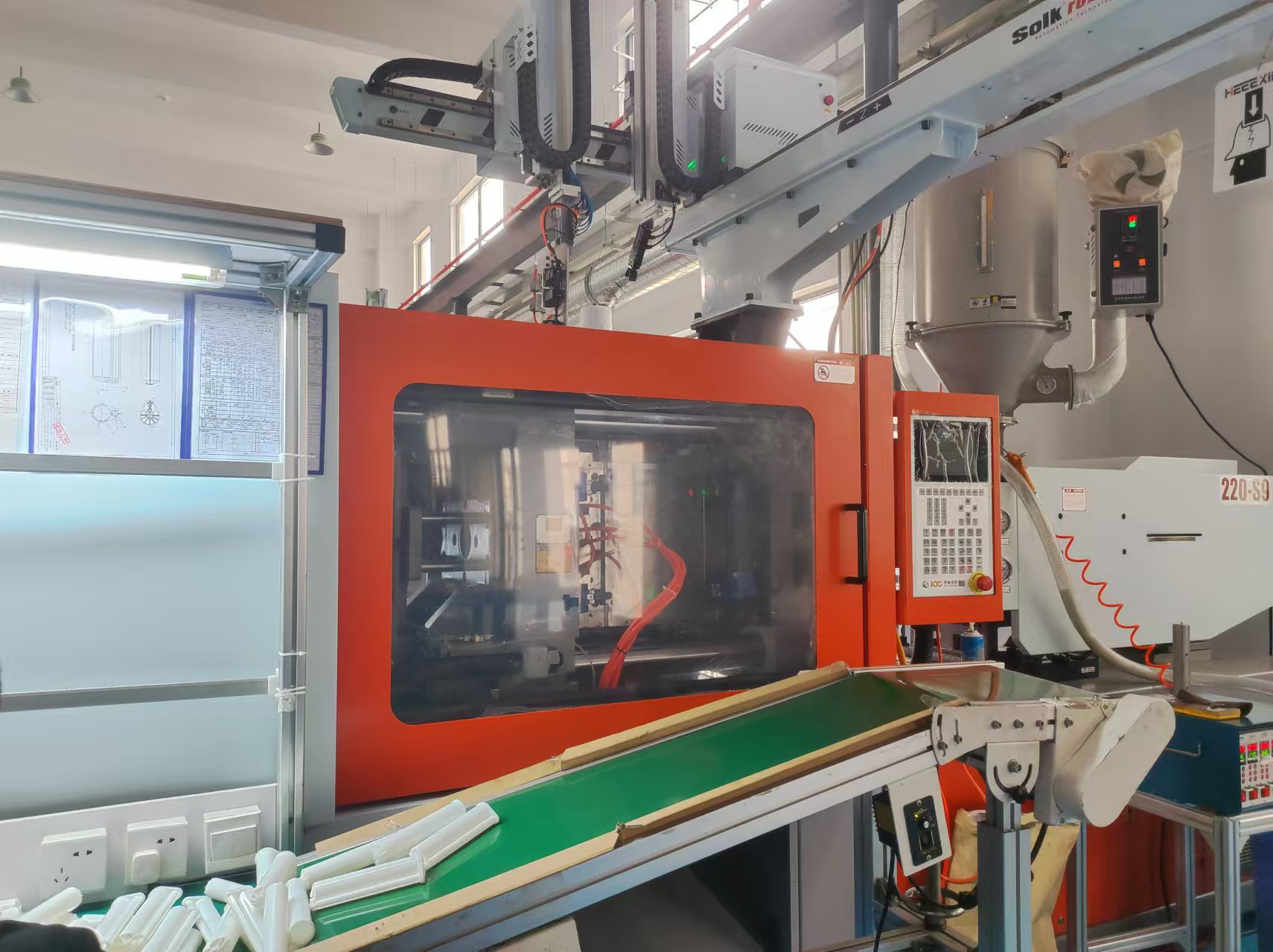
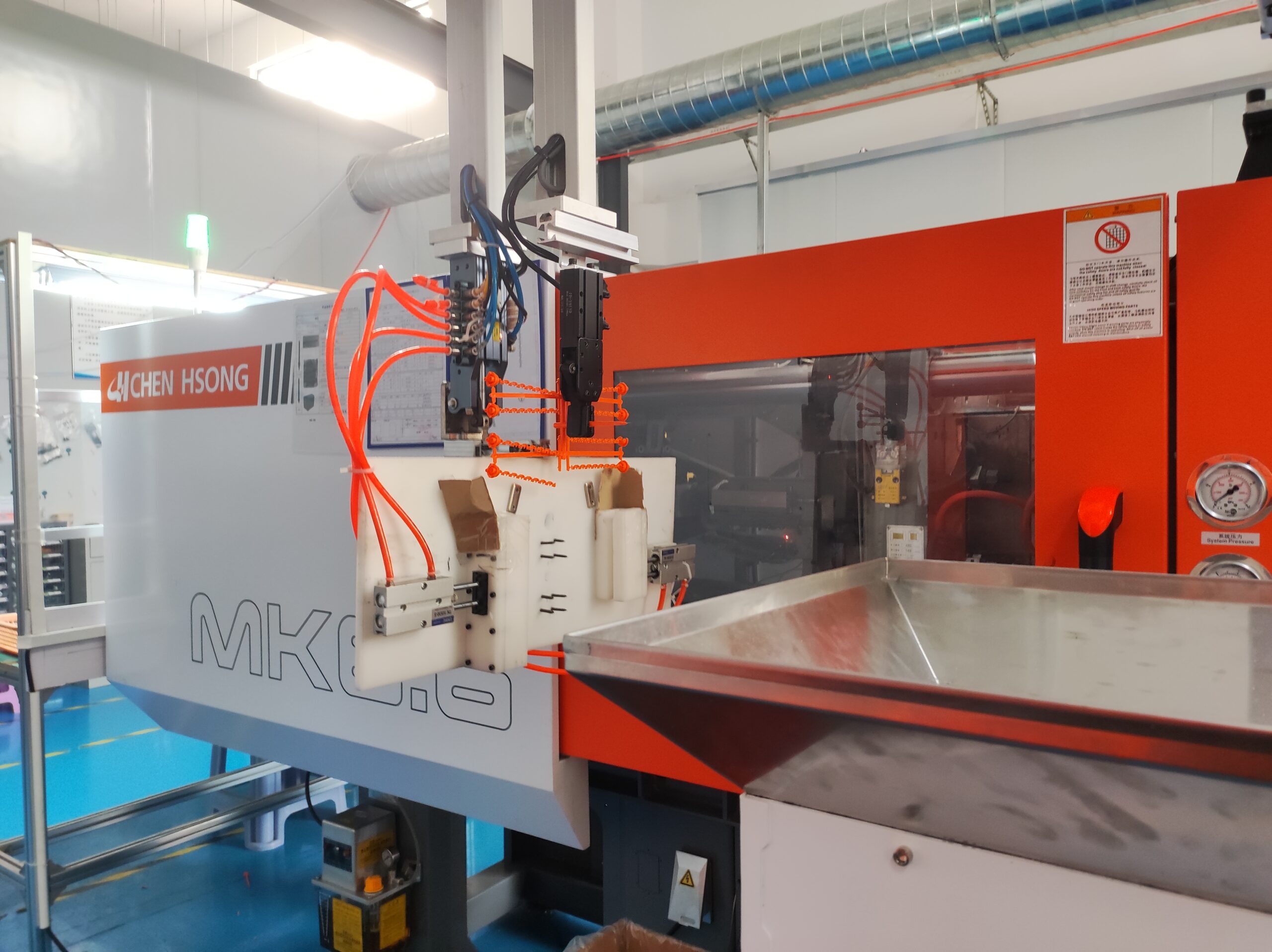
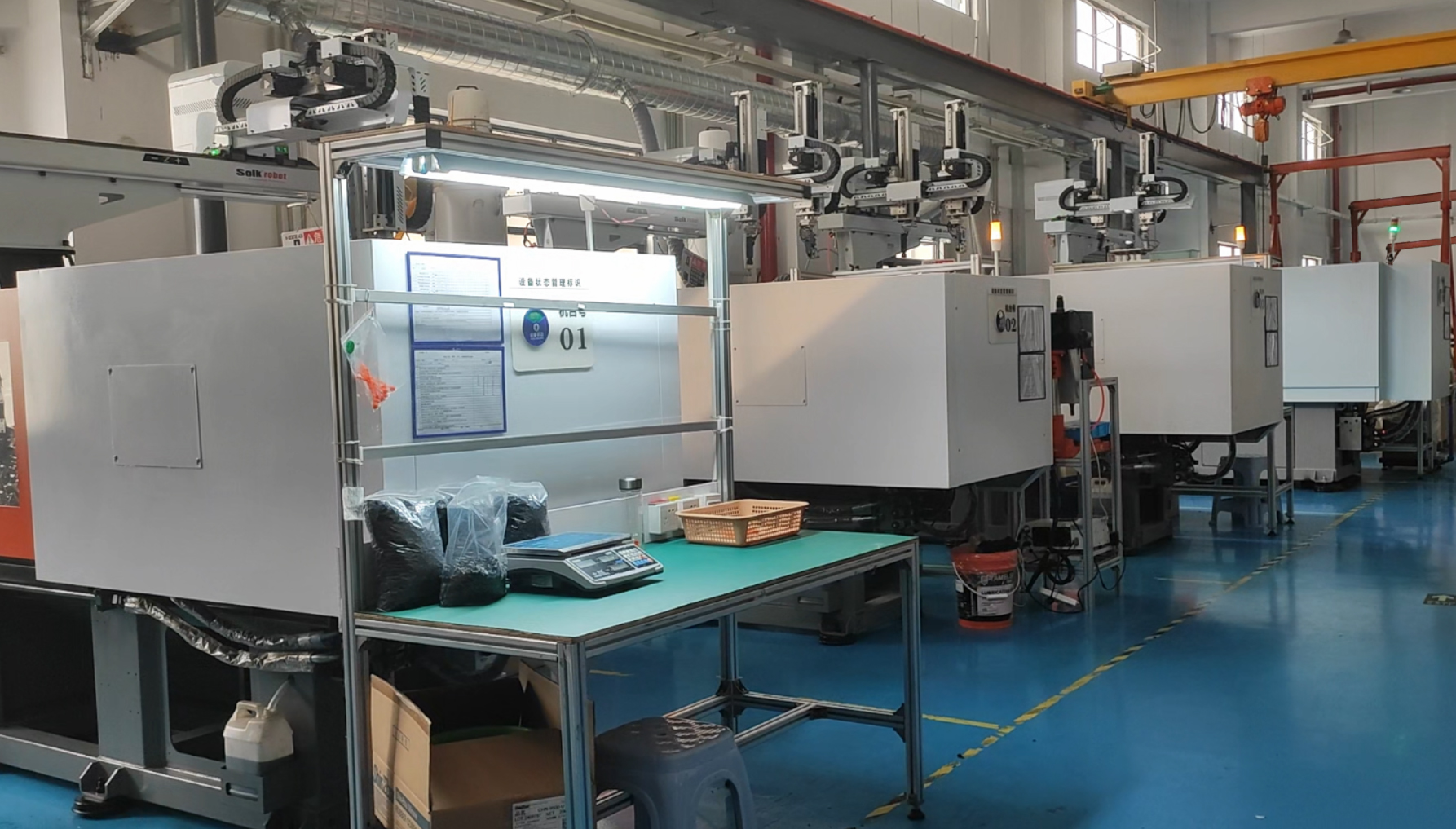
Ebestron manufactures its dispensing consumables in Jiangsu, China, running its own tooling for the tips, cartridges, and mixing tubes rather than rebranding stock parts. Each tip is single-use, so no half-cured adhesive from a previous job contaminates the next bead, and every element count is held to the chemistry-matched range, a 24-element epoxy tip really carries 24 elements. Bond-strength claims here lean on a published method, ISO 4587, not on adjectives: a matched tip is verified on a lap-shear coupon, the same way an OEM tip is, so a shop can defend the repair if an audit ever asks.


ISO 9001-aligned QMS
1/4-inch NPT Semco thread
Batch dimensional reports
PP · PA · PBT · HDPE grades
Automotive Panel Bonding Adhesive Solutions
Configuration Tool
Access Tool
Nozzle Element Selector
Calculation Engine
Access Tool
Striation Layer Calculator
Verification System
Access Tool
Cartridge-Nozzle-Gun Fitment Trio Checker
FAQ, Panel Bonding Adhesive Tips & Static Mixing Nozzles
What is a static mixing nozzle?
It is a disposable spiral tube that screws onto a two-part cartridge and blends resin and hardener as you dispense, with no moving parts. The two components split and recombine at each internal element until the bead leaving the tip is one uniform adhesive.
How many elements does my panel bonding adhesive tip need?
Match the count to the chemistry: epoxy panel adhesives want 15–24 elements, polyurethane 24–36, acrylics 18–20, silicone 20–30. For a structural epoxy on a 200 mL cartridge, 24 elements is the working default. Ebestron stocks tips across that whole range so the nozzle fits the adhesive.
Is more elements always better?
No. Past the count your chemistry needs, extra elements just add back-pressure and waste adhesive.
Are generic mixing nozzles as good as the OEM brand for warranty work?
Independent hammer-and-lap testing has shown quality generic tips matching OEM bond strength when the element count and ratio are correct — the failures come from under-spec tips, not from being generic. Many shops still keep the OEM tip on warranty jobs by policy; for everything else, a correctly specified Ebestron tip lands on the same lap-shear number at a lower unit cost.
Will Ebestron tips fit my existing cartridges and applicator gun?
In most cases, yes — Ebestron tips are built for the standard 50, 200, and 400 mL dual cartridges and seat on both manual and pneumatic applicators. The one thing to verify is that three details agree: cartridge volume, mix ratio, and gun type. A 200 mL tip will not seat a 400 mL cartridge, and a 10:1 geometry expects a gun that can deliver that thrust ratio. Send those three details with your enquiry and the compatibility check is done for you before a single box ships, so nothing arrives mismatched on a Friday afternoon.
How do I stop wasting adhesive in the tip?
Purge and discard a short first bead to clear unmixed material, keep spare tips on the shelf so a cured nozzle never stops the job mid-panel, and match the tip to the shot size so you are not over-purging a tube that is too long.
Why We Publish Tip Fitment and Element Data
The element counts, outlet diameters, and cartridge-fit figures on this page come from Ebestron's own production tooling for 50–400 mL dual-cartridge static mixing tips and from published two-component mixing engineering. We share the Adhesive-to-Element Match Chart because the fastest way to earn a body shop's trust on a new tip is to show the number that decides the bond, not to hide it behind a brand name.
References & Data Sources
- ISO 4587 — Adhesives — Determination of tensile lap-shear strength of rigid-to-rigid bonded assemblies.
- ISO 10365 — Adhesives — Designation of main failure patterns.
- ISO 9001 — Quality management systems — Requirements.
- USPTO US10786790 — Multicomponent static mixer for mixing components.
- USPTO US8657366 — Panel-to-panel bonding using a branched channel.
- USPTO US7811405 — Adhesive bonding of vehicle external panels to reduce bond-line read-out.
- USPTO US6319344 — Bonded vehicular glass assemblies utilizing two-component adhesives.
- 3M Collision Repair — Structural and Panel Bond Adhesives, application SOP (substrate prep, mixing-nozzle attachment, purge step).
- Adhesives & Sealants Industry — How to Choose a Static Mixer to Properly Mix a Two-Component Adhesive.