Get in touch with Ebestron Company

ENPROC
Potting Cartridge System
Electronics Potting
Cartridge Systems
Electronics potting cartridge systems from Ebestron package any two-part potting compound, epoxy, polyurethane, or silicone, into empty dual cartridges that dispense on-ratio and void-free, so your printed circuit board stays sealed instead of cured around trapped air. We supply the delivery hardware: cartridges, guns, and static mix tips. You choose the resin.
Request a Quote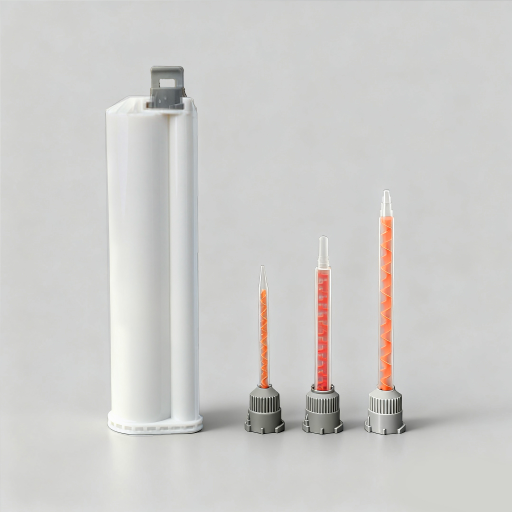
Specifications
Solution Summary
-
01
Cartridge Sizes
50 / 200 / 400 / 600 mL dual cartridge -
02
Mix Ratios
1:1, 2:1, 4:1, 10:1 by volume -
03
Compounds
two-part epoxy, polyurethane, silicone -
04
System Fit
compatible with Sulzer Mixpac A/B/C/F & Nordson Side-by-Side -
05
Mixing
matched static mix tips, 8–36 elements by resin -
06
Outcome
on-ratio (±5% target) + void-free dispensing for PCB, sensor & LED potting
PROCESS ANALYSIS
The Potting Delivery Problem: Why Mix-Ratio and Void Control Decide PCB Reliability ENMGR
Most field failures in potted electronics don’t start with the wrong potting compound. They start with how the compound was delivered. Potting is the process of filling a complete electronic assembly with a solid or gelatinous compound to lock out moisture, vibration, and thermal stress. When engineers hand-mix that compound from bulk and pour it, two errors creep in: air gets whipped into the mix, and the resin-to-hardener ratio drifts. Both quietly destroy the protection the potting material was supposed to give.
Air is the first enemy. Bubbles trapped against a component reduce dielectric strength and create thermal weak points where heat cannot escape. Forum after forum of working engineers describe the same battle — “the pour took considerable time because of air bubbles that had to be removed by tipping,” and the common verdict that you almost have to “do it under vacuum” to eliminate them by hand.
Ratio is the second enemy. As the working engineers put it, “a few percent off can reduce strength and cure time,” and a deviation beyond roughly ±5% can leave the surface sticky or the resin under-cured. A potting cartridge system attacks both errors at the source, the two parts are metered by the cartridge geometry itself and mixed in a sealed static tip, so the compound that reaches your circuit board is already on-ratio and largely free of entrained air. Engineers weighing conformal coating vs potting, or comparing potting vs encapsulation, are really deciding how much circuit board potting compound to apply, but either way, the delivery system decides whether it cures clean. The air bubbles from aggressive mixing are the enemy here, which is why so many shops otherwise resort to vacuum degassing just to undo what stirring caused.
The Void-Free Dispensing Stack
Void control isn’t one feature; it’s a chain of four controls that each remove a way for air to enter. We call it the Void-Free Dispensing Stack, and every Ebestron cartridge system is built around it:
| Stage | Module | Control Application | Failure it Removes |
|---|---|---|---|
| STAGE 01 | Metering | Side-by-side dual cartridge holds resin and hardener in fixed-volume barrels | Ratio drift from eyeballed hand-mixing |
| STAGE 02 | Self-venting piston | Pistons bleed trapped head-space air before the first shot | Air pocket pushed ahead of the compound |
| STAGE 03 | Static mixing | Element count matched to the resin gives full mix without whipping | Under-mix streaks and aeration from aggressive stirring |
| STAGE 04 | Controlled bead | Tapered tip lays a steady bead into the cavity from the bottom up | Folded-in air from splashing or layering |
ENGINEERING NOTE
The honest version of this story has a limit, and we’ll say it plainly: a static mixer can’t rescue a ratio that’s already wrong on the way in — “a static mixer tube won’t fix a fluctuating input ratio,” as the engineers on EEVblog put it. That’s exactly why the metering stage sit first. Metering fixes the ratio first; the mixer and tip then protect it. Patent literature for thermal-shock-resistant encapsulation of electronic components describes the same priority on controlled, void-free fill (US 6,664,318 B1).
System Configurations
Electronics Potting Cartridge Systems & Sizes
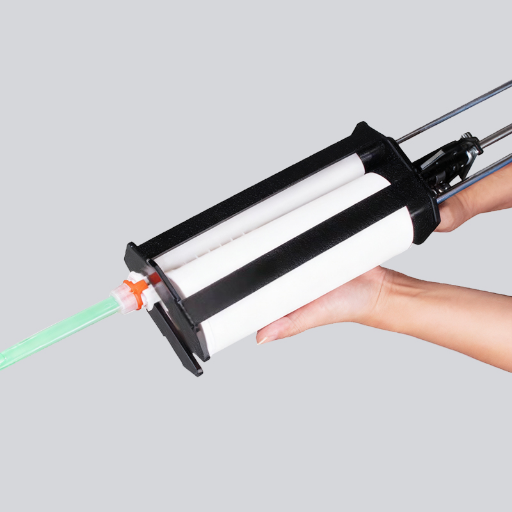
A potting cartridge system is three parts working together: the empty dual cartridge that holds the two-part compound, the gun (manual or pneumatic) that drives the pistons, and the static mix tip that blends the streams. For hand-dispensed lines, the same cartridges run in our manual cartridge dispensing guns. All three are built to standard system footprints, so the cartridge drop into the dispensing gun you already own. Each barrel pair is molded to hold the resin and hardener at a fixed ratio, and the one-piece body resists bulging so the ratio stays put under thrust. Pick the wrong size and you pay for it twice: an oversized 600 mL cartridge leaves expensive compound to cure and be scrapped, while an undersized one forces a re-prime mid-pour that risks a cold joint.
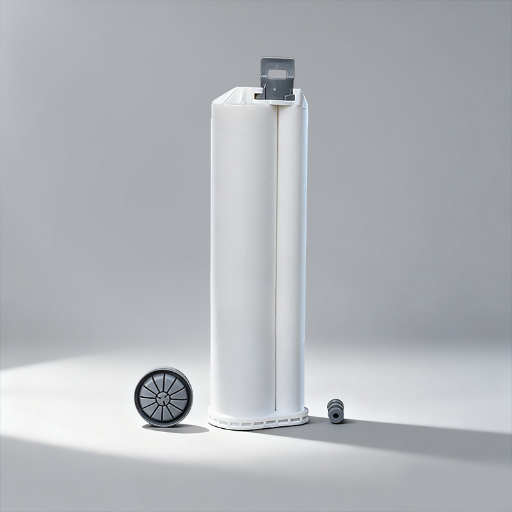
50 mL Dual Cartridge
Bench & repair scale. 1:1 / 2:1 / 4:1 / 10:1. The 50 mL bayonet format is the size “most commonly used in electronics manufacturing” for sensors and small modules. MOQ & lead time on request.
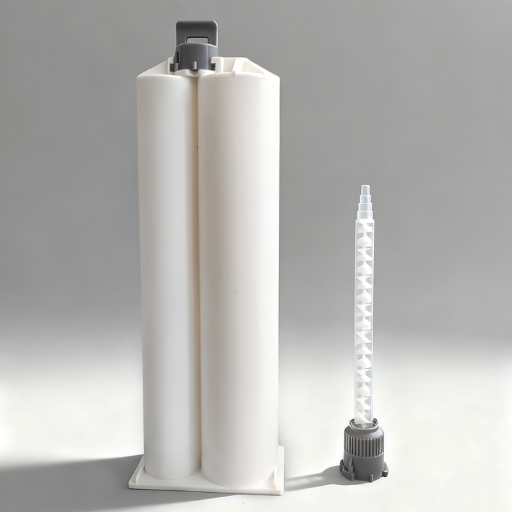
200 / 400 mL Dual Cartridge
Production potting of control modules, drivers, and connectors. Side-by-side body, self-venting pistons, A/B/C/F system footprints. Pneumatic gun recommended above 200 mL.
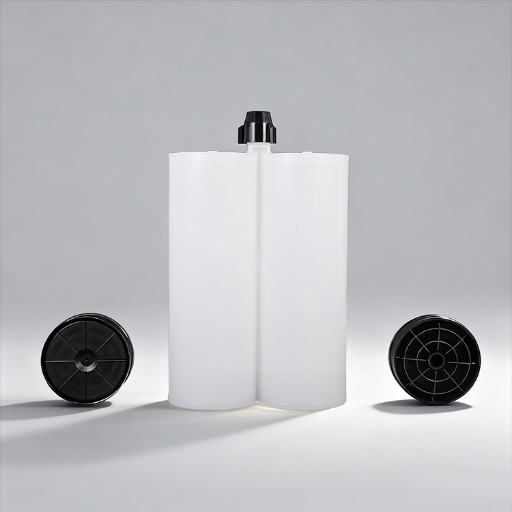
1500 mL Dual Cartridge
High-volume encapsulation of transformers and large potted assemblies. Pairs with a pneumatic applicator for steady flow and low operator fatigue.
Specifications
Potting System Spec Matrix
This matrix maps each cartridge size to the matched gun, the static mix element count for the resin you plan to run, and the typical electronic potting job it suits. Element counts follow the published Nordson EFD selection ranges, where a 1:1 ratio sits at the low end and higher ratios sit at the high end.
| Cartridge | Mix Ratios | Gun / Applicator | Static Tip Elements | Compound Class | Typical Electronic Job |
|---|---|---|---|---|---|
| 50 mL | 1:1 | Manual cartridge gun | Epoxy 15–18 | Two-part epoxy | Sensor & small PCB potting |
| 50 mL | 2:1 | Manual cartridge gun | Epoxy 18–24 | Epoxy | Connector backshell encapsulation |
| 50 mL | 10:1 | Manual, high-thrust | Silicone 24–30 | Silicone potting | LED module dielectric gel |
| 200 mL | 1:1 | Manual or pneumatic | Epoxy 15–24 | Epoxy | Driver / control module potting |
| 200 mL | 2:1 | Pneumatic | Polyurethane 24–32 | Urethane | Outdoor controller encapsulation |
| 400 mL | 1:1 | Pneumatic | Silicone 20–30 | Silicone | Automotive sensor potting |
| 400 mL | 4:1 | Pneumatic | Polyurethane 28–36 | Polyurethane | Junction-box encapsulation |
| 600 mL | 1:1 | Pneumatic | Epoxy 18–24 | Epoxy | Transformer / inductor potting |
| 600 mL | 2:1 | Pneumatic | Polyurethane 24–36 | Urethane | Large potted power assembly |
Process Evaluation
Cartridge System vs. Bulk Meter-Mix vs. Hand-Mixing
Buyers weighing a cartridge system usually compare it against two alternatives they already know: a benchtop meter-mix machine, or hand-mixing potting compound from bulk cans. The trade-off is real, and we won’t claim the cartridge win every scenario. A bulk meter-mix machine wins on cost-per-gram at very high volume; hand-mixing wins on raw material price for a one-off pour. Where the cartridge system win is the cost you don’t see on the purchase order, the scrap and rework from voids and off-ratio cure. As the dual-cartridge case study in Adhesives & Sealants Industry documents, dual-barrel cartridge systems “reduce both material and hazardous waste, improve performance, and increase worker safety”.
| Factor | Hand-mix from bulk | Bulk meter-mix machine | Ebestron cartridge system |
|---|---|---|---|
| Ratio accuracy | Operator-dependent, often >±5% | High once calibrated | Fixed by barrel volume, ±5% target |
| Air / void risk | High, stirring whips in air | Low | Low, sealed static mix, self-venting piston |
| Up-front cost | Lowest | Highest (machine capex) | Low, no capital equipment |
| Setup & cleanup | Bowls, sticks, waste | Hoses, pumps, purge | Swap cartridge + new tip |
| Best volume range | One-offs / prototypes | Continuous high volume | Bench to mid-volume, mixed jobs |
| Material waste | High (mixed pot wasted) | Medium (purge) | Low (dispense what you use) |
That waste line is where this matters most to a production manager. Hand-mixing forces you to mix a full pot and throw away whatever cures before you reach it; a 600 mL meter-mix machine has to be purged. With a cartridge you dispense what the job need and cap the rest. One manufacturer on r/Tools summed up the pain that push shops toward cartridges: running a part where they “hate constantly mixing some out of the 10 oz tubes” by hand. Metered two-component dosing through a static mix tip is well established in dispensing patents, including gel-time testing done by “dispensing 10 g of material from a 2:1 cartridge with a static mixing tip” (EP 2,603,568 B1).
ROI, SILVER
Where the cartridge pays back: the cost driver in potting is rarely the resin price, it’s scrap (a fully wasted potted assembly) and rework (de-potting and re-pouring). Because scrap is a total loss while rework recovers the unit at added labor, even a small drop in void-driven rejects shifts total cost of ownership in the cartridge’s favor. Field reports and trade-press case studies typically attribute material and hazardous-waste reduction to dual-cartridge metering versus open hand-mixing; exact savings depend on your shot size and reject rate.
[Qualified, based on industry case studies, not a single audited figure.]Want the numbers for your shot size?
Request Comparison
Materials Engineering
Matching the System to Your Compound: Epoxy, Polyurethane and Silicone
The cartridge is the delivery system; the cured properties come from the potting compound you load into it. We won’t claim a cartridge make a poor compound good. What the right cartridge-and-tip pairing does is let each resin class reach its full potential, correct ratio, full cure, no voids. Engineers searching for a potting compound for electronics, whether a pcb potting compound, an epoxy potting for electronics, or a silicone potting compound for electronics, are really choosing among these three resin classes for the right balance of potting and encapsulation performance. These three types of potting materials behave very differently, and selecting between them is a question of temperature range, dielectric strength, mechanical strength, repairability, and the thermal conductivity (the λ value) your component actually needs.
| Property | Silicone potting | Epoxy | Polyurethane (urethane) |
|---|---|---|---|
| Temperature range | −60 to +200°C (to +300) | −40 to +130°C | −40 to +120°C |
| Hardness | Shore A 15–60 | Shore D 70–90 | Shore A 60–Shore D 50 |
| Dielectric strength | 15–21 kV/mm | 20–25 kV/mm | 16–22 kV/mm |
| λ thermal conductivity (unfilled) | 0.16–0.20 W/(m·K) | 0.2–0.3 | 0.2–0.3 |
| λ (filled) | 0.30–0.42 | up to 5 | up to 1.5 |
| Repairability | Good (cut & replace) | Very difficult | Possible |
| Static tip elements | 20–30 | 15–24 | 24–36 |
Material property ranges per SILITECH electronics potting comparison and hardness/dielectric test conventions; hardness measured to ISO 868 Shore methods.
SYSTEM ROUTING // Resin-Class Routing Map
Use this map to route a compound class to the cartridge configuration that dispenses it cleanly. It exists because the most common mistake we see isn’t picking the wrong resin, it’s loading the right resin into the wrong tip element count, then blaming the compound for streaky cure.
| If your priority is… | Resin class | Cartridge + ratio | Static tip |
|---|---|---|---|
| Maximum dielectric / tamper-proof, high voltage | Epoxy | 50–600 mL, 1:1 or 2:1 | 15–24 elements |
| Wide temperature swing, low stress on solder joints, LED clarity | Silicone potting | 50–400 mL, 1:1 or 10:1 | 20–30 elements |
| Lowest material cost, flexible indoor encapsulation | Polyurethane | 200–600 mL, 2:1 or 4:1 | 24–36 elements |
“We size the static tip to the resin, not the other way around. Drop a 15-element epoxy tip onto a 10:1 silicone and you get streaks; move that same silicone to a 28-element tip and the streaks disappear. The cartridge was never the problem, the element count was.”
Engineering Trade-Off
One honest trade-off worth flagging: you don’t always need a thermally conductive compound. For sensors and controllers, an unfilled 0.16–0.20 W/(m·K) silicone is sufficient; filled high-λ compounds only earn their higher viscosity above roughly 1 W of dissipation per cm² of component surface. Over-specifying thermal conductivity just makes the compound harder to dispense without buying you reliability.
APPLICATIONS
Application Outcomes: Bubble-Free Potting Across PCB, Sensor, Transformer and LED MGREN
Potting protects an electronic component against the four stresses that end its service life in a harsh operating environment: mechanical shock, vibration, moisture, and heat. The reason void control matters so much here’s that every trapped bubble is a place where one of those four gets in. A bubble against a transformer winding is a hot spot; a bubble at a sensor lead is a moisture path. Because operating temperature drives reliability hard, a 10 K rise can roughly halve component service life, getting a dense, void-free pot isn’t cosmetic, it’s the difference between a 2-year and a 5-year field life. We won’t claim a cartridge replaces vacuum degassing for the most critical high-voltage pots, the honest version is that vacuum still win at the extreme. But for the volume of PCB, sensor, and LED work most plants run at 50–400 mL shots, Ebestron builds the cartridge, self-venting piston, and matched static tip that reach a dense, void-free pot without a vacuum chamber.
PROCESS WINDOWS
Pot-Life-to-Cartridge-Size Window
Pot life is the other silent killer, the working time before the mixed compound start to gel. Mix a 600 mL pot of a 6-minute-pot-life urethane by hand and most of it cures in the bowl. A cartridge dispenses only the shot you need, so you stay inside the window. This chart routes pot life and shot volume to the cartridge that keep you ahead of gel:
| Pot life of compound | Shot volume per part | Recommended cartridge | Why |
|---|---|---|---|
| 4–7 min (fast urethane/epoxy) | < 30 mL | 50 mL, dispense-on-demand | Each shot fresh; no bulk pot to waste |
| 15–20 min (medium) | 30–150 mL | 200 mL | Several parts per cartridge inside the window |
| 30+ min (slow / silicone) | 150–500 mL | 400–600 mL pneumatic | Long window allows large continuous pours |
ENGINEERING RECORD
These outcomes hold across the jobs our cartridge systems are built for, transformers and inductors, capacitors and coil windings, printed circuit boards and modules, automotive sensors, and LED arrays. Solventless, thermal-shock-resistant encapsulation of electronic components with a controlled glass-transition behavior is described in the patent record (US 6,664,318 B1), and the dispensing mechanics behind a clean pour are covered by two-component dosing patents that feed reactants into a disposable static mixer (WO 2012/021258 A1).
SYSTEM / SPECIFICATIONS
Compliance and Material Compatibility PROCEN
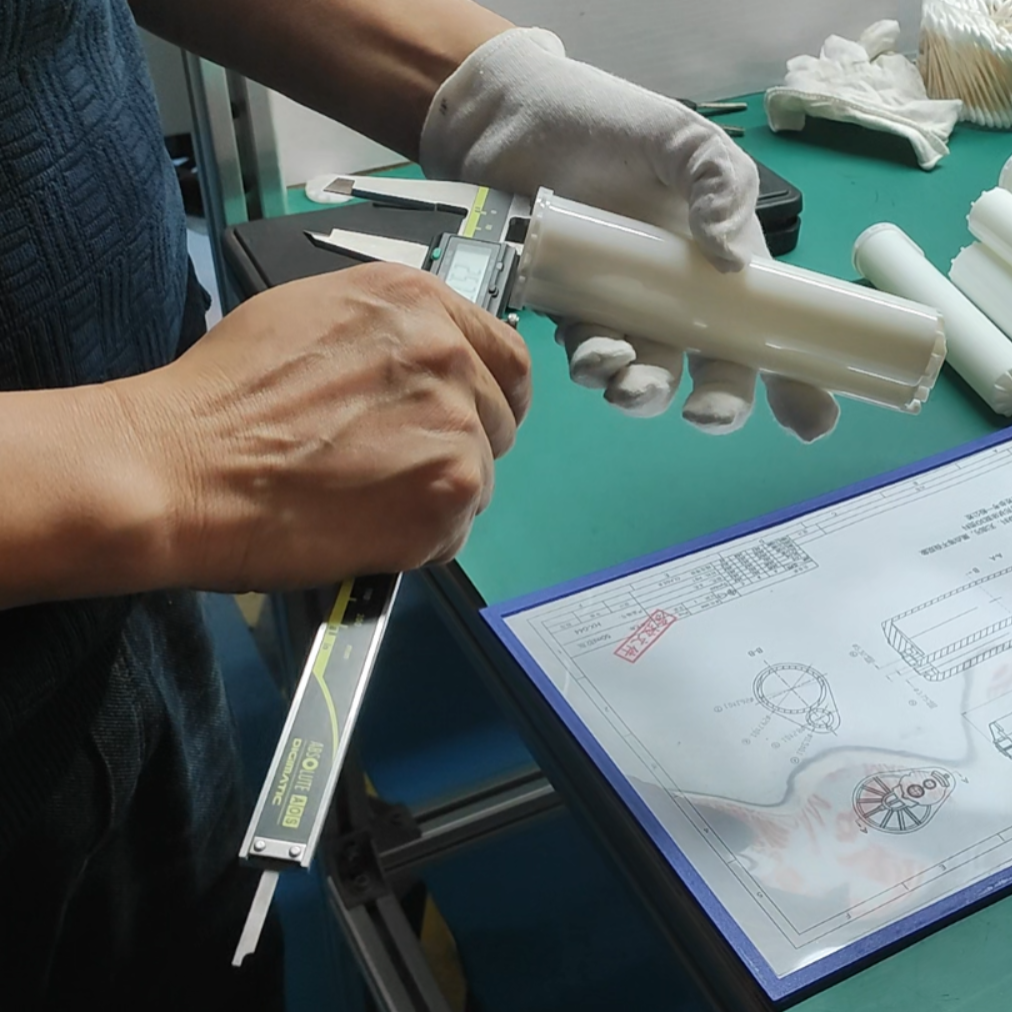
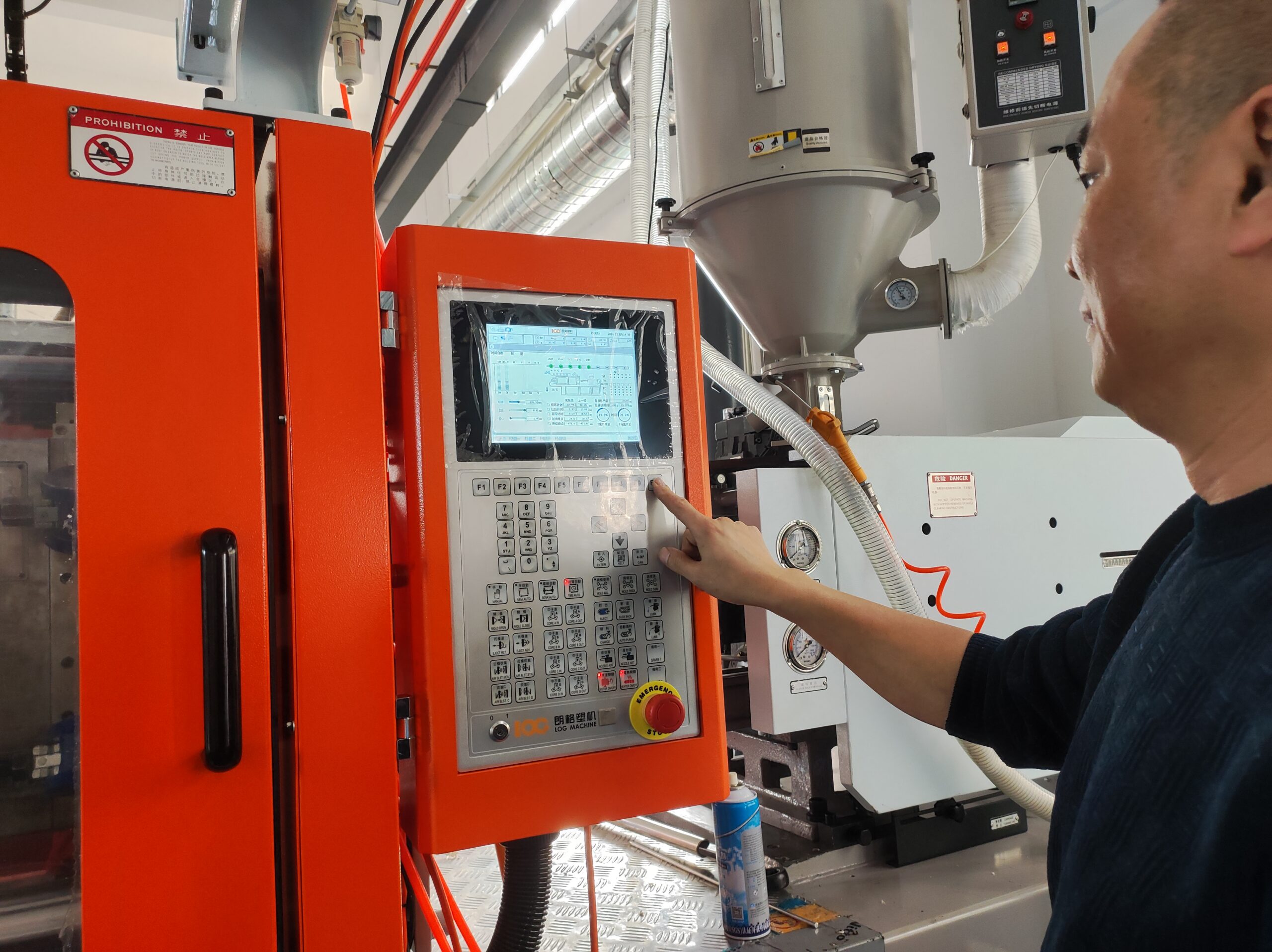
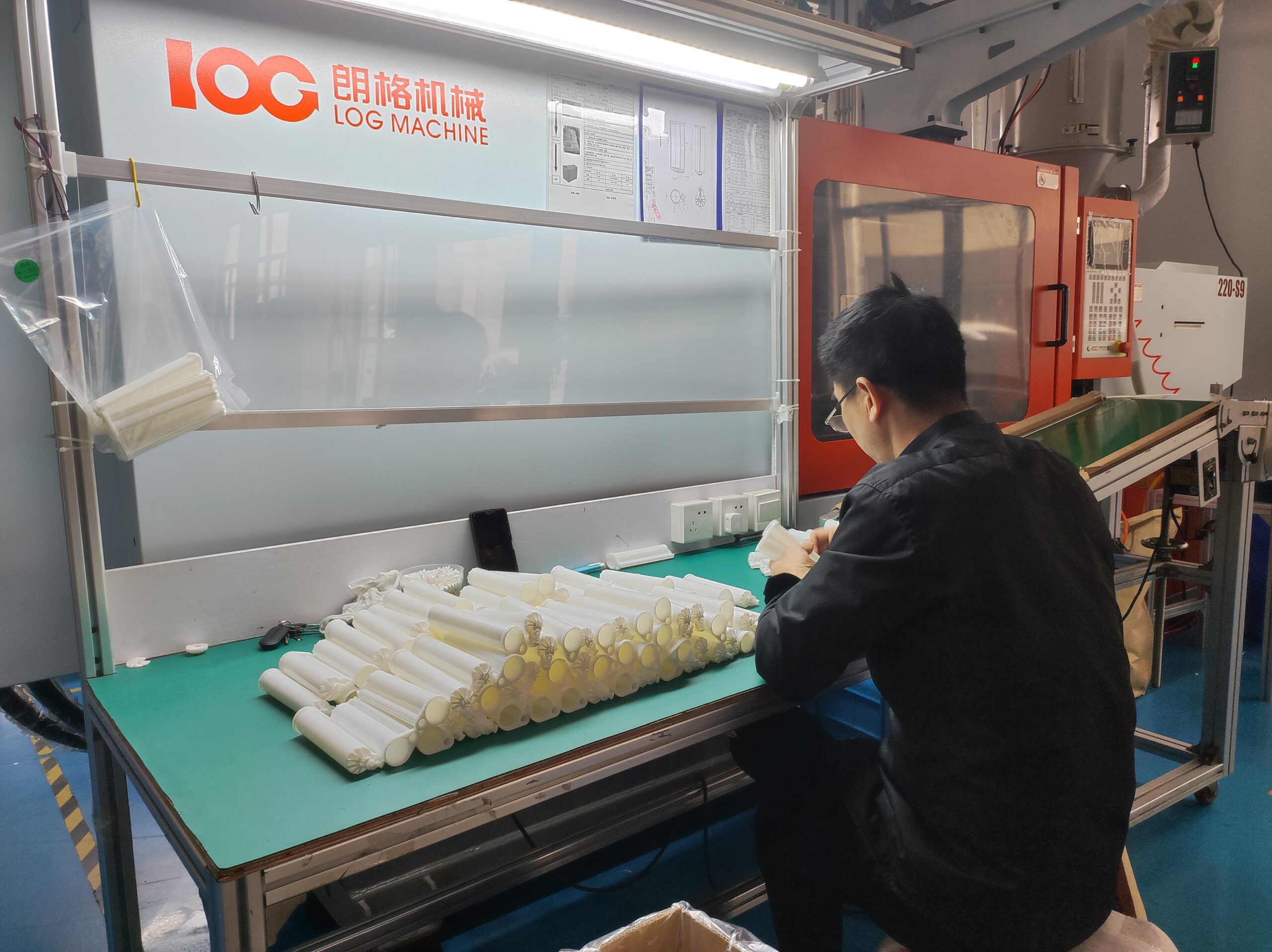
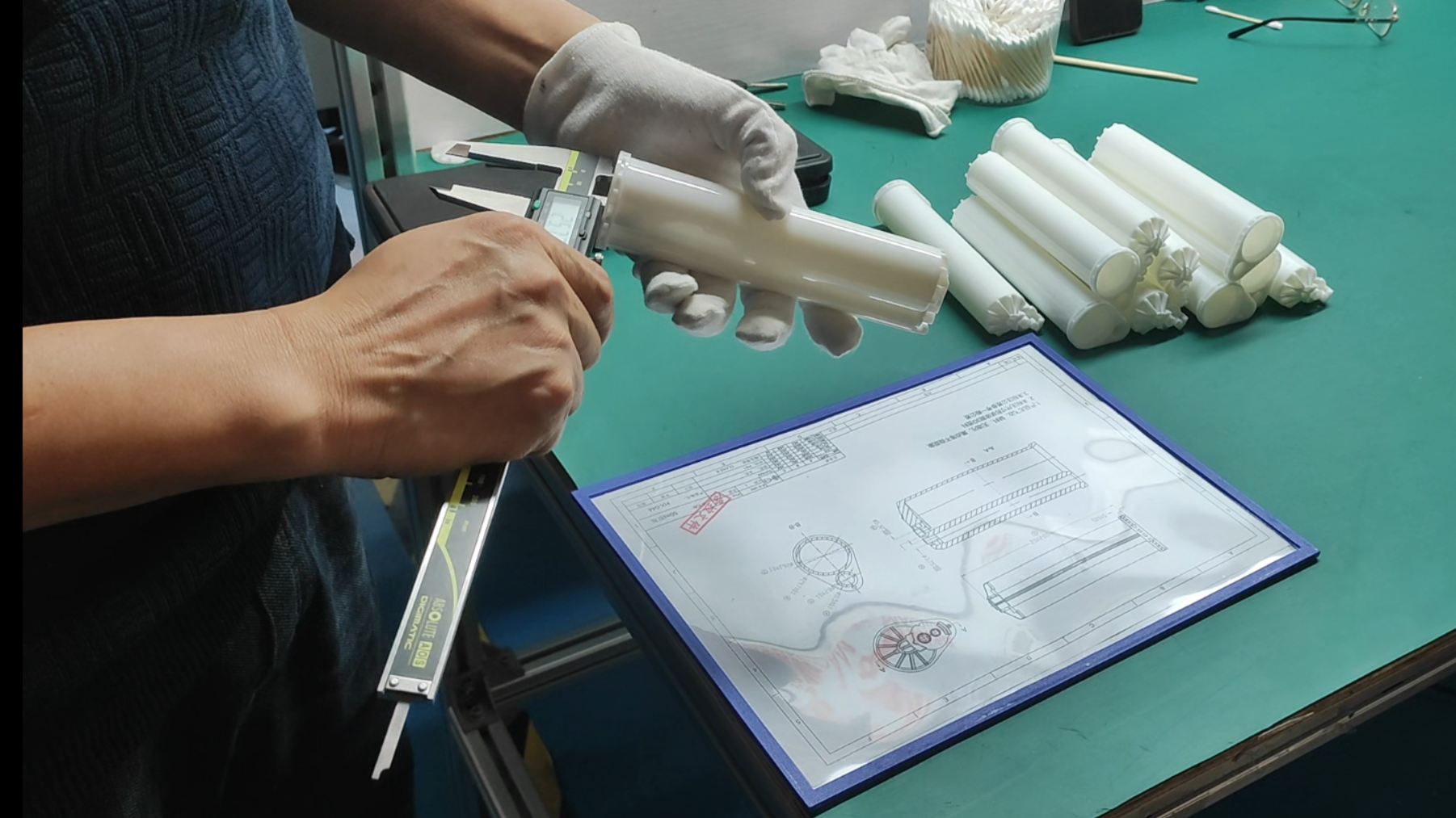
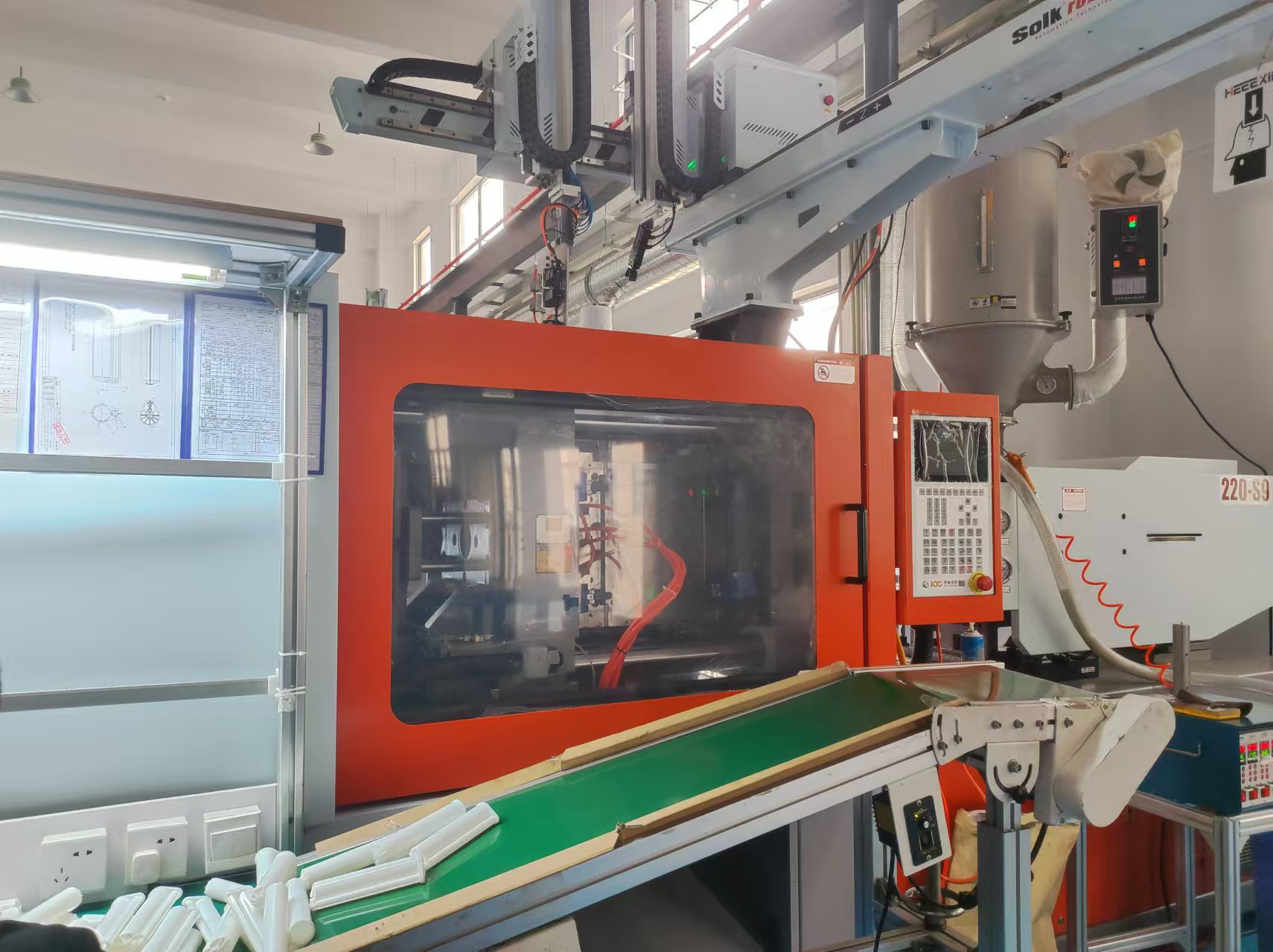
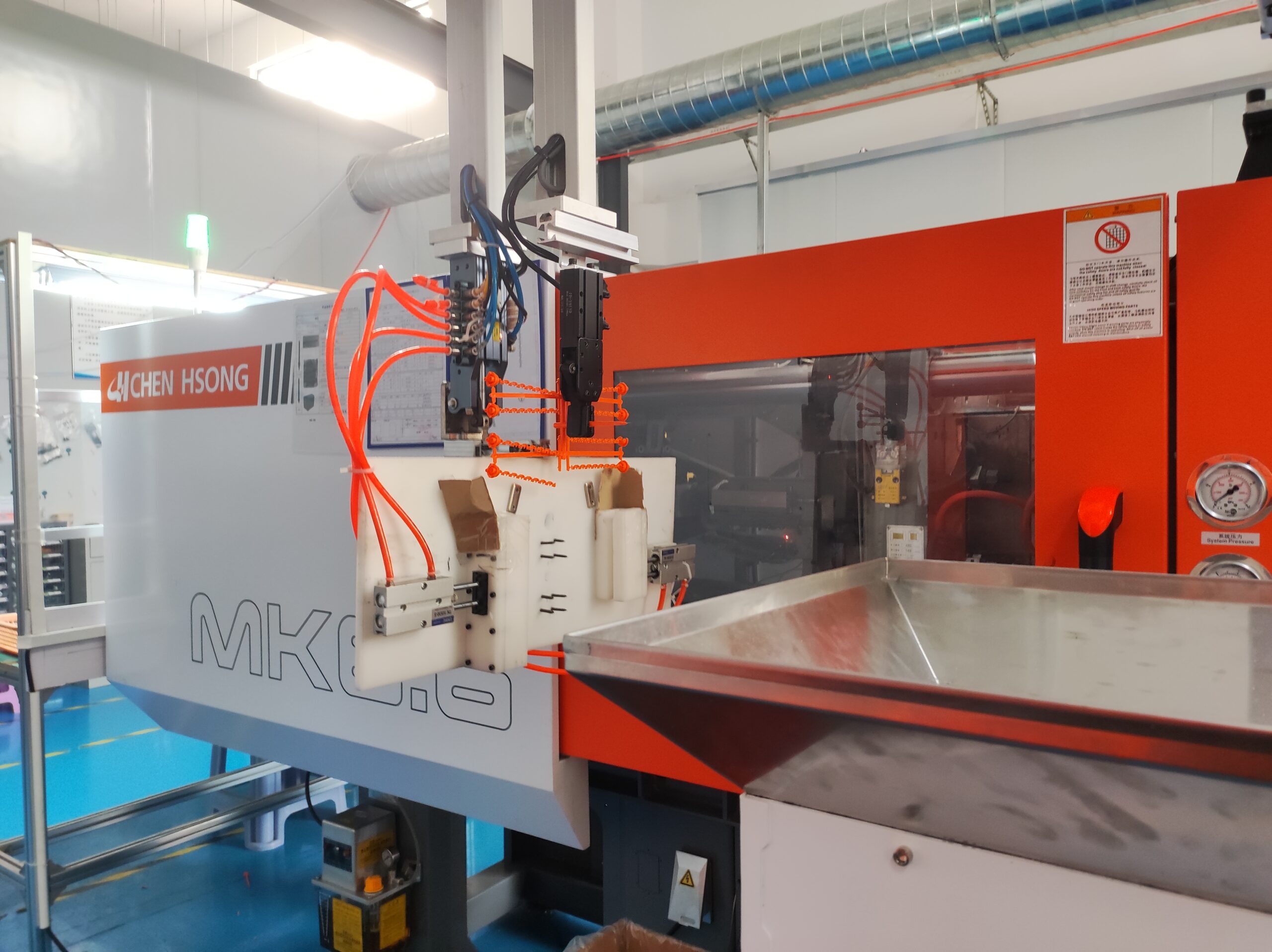
Two questions decide whether a cartridge system can enter your line: does the empty cartridge survive the compound chemically, and does it fit the dispensing gun your operators already hold? Both get answered with standards, not adjectives. Cartridge bodies and pistons are molded from polymer grades chosen for chemical compatibility with two-part epoxy, polyurethane, and silicone, so the barrel doesn’t swell, leach, or change the mix ratio over the compound’s shelf life. This matters because a body that swells against an incompatible resin can shift the ratio by more than the ±5% window the compound tolerates, and the pot cures soft. Ebestron molds the barrels and pistons in-house from grades qualified against each resin family, then holds the tolerances batch to batch so a reorder fit the same gun as the first lot.


Compatibility dimension
What we control
Reference
System footprint
Cartridge fits Sulzer Mixpac A/B/C/F and Nordson Side-by-Side gun geometry
Standard cartridge systems
Mix ratio integrity
One-piece body resists bulging; pistons hold ratio under thrust
±5% cure window
Flame class of cured pot
Cartridge enables UL 94 V-0 / HB compounds to cure as rated
UL 94 plastics flammability
Compound contact
Polymer grades compatible with epoxy / PU / silicone resin and hardener
Manufacturer TDS
Quality management
Repeatable molded tolerances, batch consistency
ISO 9001 QMS
Engineering Utility Terminal
System Sizing & Routing Calculators
FAQ
Will empty cartridges trap air bubbles the way hand-mixing does?
No, that is the main reason shops move off hand-mixing, where whipped-in air forces a 30–50 mbar vacuum step just to undo the damage. An Ebestron electronics potting cartridge system meters the two parts in sealed barrels, vents head-space air through self-venting pistons, and blends through a static mix tip without stirring, so very little air enters the compound before it reaches your circuit board. For ultra-critical high-voltage pots you can still vacuum-degas, but most 50–400 mL assemblies do not need it.
Can I keep using my Sulzer Mixpac or Nordson dispensing gun?
In most cases, yes. Our dual cartridges match the standard Sulzer Mixpac A/B/C/F and Nordson Side-by-Side footprints. Because those four families are not interchangeable, we confirm your exact gun and ratio before quoting.
How do I stop the potting compound from curing inside the cartridge?
Match the cartridge size to the compound’s pot life and your shot volume. A fast 4–7 minute urethane belongs in a 50 mL cartridge dispensed shot-by-shot; a slow silicone with a long working life can run from a 400–600 mL cartridge. Keep unused material cool, cap the cartridge, and fit a fresh static mix tip for each session, the mixed resin only sits in the disposable tip, not in the barrels.
Do I need a thermally conductive potting compound for my electronics?
Not always. For sensors and controllers, a standard unfilled compound at 0.16–0.20 W/(m·K) is sufficient. A filled, thermally conductive potting compound earns its higher viscosity only above roughly 1 W of dissipation per cm², power semiconductors, dense LED arrays, EV modules. Our cartridge systems dispense both, so you can match the λ value to the component instead of over-specifying.
What is the difference between potting and encapsulation?
Potting fully fills the housing around the electronic assembly, giving maximum ingress protection (up to IP68/IP69K) and tamper resistance but adding weight and making repair difficult. Encapsulation (or conformal-style selective coating) covers only critical areas, saving weight and keeping connectors accessible, at lower ingress protection. The same Ebestron cartridge system dispenses the compound for either approach, and solventless thermal-shock-resistant encapsulation of electronic components is documented in the patent record (US 6,664,318 B1).
Why We Build the Delivery System, Not the Compound
Ebestron makes adhesive packaging consumables, dual cartridges, dispensing guns, and static mixing tubes, in Jiangsu, China. We took the deliberate position of supplying the electronics potting cartridge system rather than the potting chemistry, because the failures we kept seeing in the field were delivery failures: voids and off-ratio cure, not bad resin. This page reflects what we standardize against, Sulzer and Nordson system footprints, Nordson EFD static-mixer element ranges, and the ±5% ratio window that decides whether a two-part compound cures the way its data sheet promises.
Talk to an Ebestron application engineer →
Still choosing a configuration for your potting line?
References & Data Sources
- U.S. Patent US 6,664,318 B1, Encapsulant compositions with thermal shock resistance (solventless hydrophobic resin encapsulation of electronic components). patents.google.com
- U.S. Patent US 10,434,704 B2, Two-component dosing into a disposable static mixer dispenser. patents.google.com
- Patent EP 2,603,568 B1 / WO 2012/021258 A1, Epoxy structural adhesive; gel-time test via 2:1 cartridge with static mixing tip. patents.google.com
- ISO 868, Plastics: indentation hardness (Shore durometer). iso.org
- ISO 9001, Quality management systems. iso.org
- Nordson EFD, How to Select a Static Mixer for Two-Part Fluids (element counts by resin). nordson.com
- SILITECH AG, Potting compounds for electronics: epoxy, silicone, or PU (material property and λ comparison). silitech.ch
- Adhesives & Sealants Industry, Benchtop Metering Maximizes Efficiency of Dual-Cartridge Systems. adhesivesmag.com
- Potting (electronics) — process definition. en.wikipedia.org