Get in touch with Ebestron Company

OEM Compatible
Nordson EFD, Fisnar & Loctite Compatible Dispensing Tips
Nordson EFD, Fisnar and Loctite compatible dispensing tips that drop into the syringe barrels and luer-lock hubs you already run, 304 stainless steel and PTFE-lined cannulae, color-coded gauges from 14G to 32G, built to OEM dimensional spec at factory-direct cost. If you buy precision tips by the box every month, this is where you stop paying distributor markup without changing your process.
Get a Bulk Quote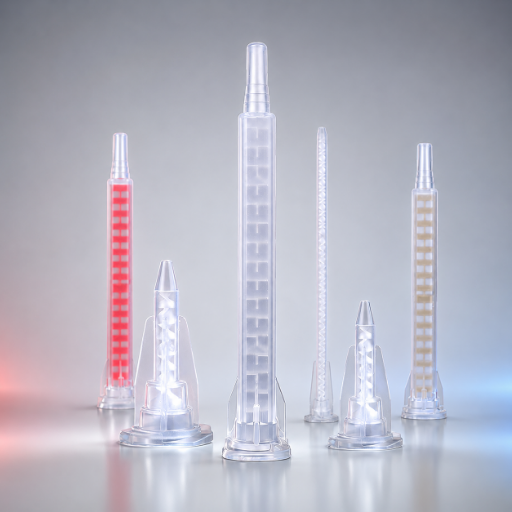
Core Specifications
14G–32G
Color-coded gauge range304 SS
Passivated cannula + PTFELuer Lock
Fits OEM standard barrels50 / 500+
Box quantities, factory-directISO 9626
Medical-device tubing specOEM Spec
Your parts & colorsStop Losing Deposits to Wrong-Fit Tips and Single-Source Stockouts
Sourcing Analysis
Two failures cost more than the tips themselves. First, cyanoacrylate cures inside a metal or nylon tip and clogs the line, killing throughput on an automated cell until an operator clears it. Second, a single-source compatible seller marks your gauge “Sold out” for weeks, and production can’t wait on one stockout. Both are sourcing problems, not chemistry problems, and both are what this page is built to remove.
Ebestron makes the consumable side of fluid dispensing: tips, needles, dual cartridges and mixing tubes. The tips here are engineered to match the dimensions of the OEM parts you run today, so you change the supplier without changing the process. Reference standards are published by the ISO (ISO 9626 stainless steel needle tubing).
For industrial buyers across the EU and US, the math is plain on the floor: run a 30 mL barrel on an automated cell and a loose hub show up as scrap long before a customer audit flags it. Fix the fit and the reject line settles.
A dispensing tip is the steel or plastic cannula on the end of your syringe or valve that lays down the bead of adhesive, solder paste or fluid; a dispensing needle is the same part with a longer metal cannula. That difference matters less than the fit. When a tip’s luer hub is a fraction loose on the barrel, or the inner diameter drifts batch to batch, the deposit volume shifts across the panel and your reject rate climbs, quietly, until a line audit catches it.
Not sure which gauge your line runs?
Ebestron Compatible Tip & Needle Range, Gauges, Materials & Styles
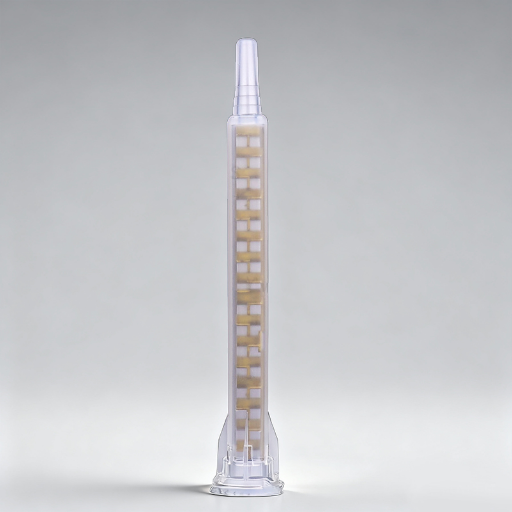
Our range covers the styles a production line actually orders: straight stainless steel, 45° and 90° angled, tapered polypropylene, flexible polypropylene, PTFE-lined and brush. Every tip uses a luer-lock or luer-slip polypropylene hub molded to the same seat as the OEM part, and a passivated 304 stainless steel cannula on the metal styles. Our catalog also lists these as dispensing needle tips, tapered dispensing needle and teflon dispensing needles, depending on the term your team uses.
Gauge-Color-ID Reference, 14G to 32G
Hub color follows the ISO 6009 convention every major brand shares, so a green hub is 18 gauge on an Ebestron, Nordson or Fisnar tip alike. This table maps gauge to color, nominal inner diameter and the fluid band each size suits, the chart your buyers screenshot:
| Gauge | Hub Color | Nom. ID | Nom. OD | Material | Best-fit fluid |
|---|---|---|---|---|---|
| 14G | Olive | 1.60 mm | 2.10 mm | 304 SS | High-viscosity paste, RTV, thick epoxy |
| 15G | Amber | 1.36 mm | 1.83 mm | 304 SS | Thick adhesive, silicone |
| 16G | Grey | 1.19 mm | 1.65 mm | 304 SS | Epoxy, heavy beads |
| 18G | Green | 0.84 mm | 1.27 mm | 304 SS | General epoxy, solder paste |
| 20G | Pink | 0.60 mm | 0.91 mm | 304 SS | Medium-viscosity, RTV beads |
| 21G | Purple | 0.51 mm | 0.82 mm | 304 SS | General-purpose adhesive |
| 22G | Blue | 0.41 mm | 0.72 mm | 304 SS | Medium-low viscosity |
| 23G | Orange | 0.34 mm | 0.64 mm | 304 SS / PTFE | Light adhesive, flux |
| 25G | Red | 0.26 mm | 0.51 mm | 304 SS / PTFE | Low-viscosity, cyanoacrylate, ink |
| 27G | Clear | 0.21 mm | 0.41 mm | 304 SS / PTFE | Micro-dot, cyanoacrylate |
| 30G | Lavender | 0.16 mm | 0.31 mm | 304 SS | Fine micro-dispensing |
| 32G | Yellow | 0.10 mm | 0.23 mm | 304 SS | Ultra-fine deposit |
Inner-diameter values follow the Birmingham gauge nominal series codified in the Birmingham gauge reference and the ISO 9626 tubing standard. Selection by fluid, not by habit, is the chart’s whole point, which the next sections turn into a fit check and a viscosity rule.
Most regional contract manufacturers and industrial buyers run a 50 mL syringe of epoxy on an 18G green tip, with a 25G red tip kept on hand for low-viscosity work. A single line rarely needs more than three or four gauges in steady rotation.
Want the full styles-and-gauges list for your fluids?
Request the product sample kit →
Buyer focus: Engineering, primary · Procurement, drop-in sourcing
Cross-System Compatibility, Nordson EFD, Fisnar, Loctite & Luer Lock
One objection stops most switches, fit: will these actually seat on the Nordson EFD barrel or Fisnar valve already on the bench? They will, because the hub is built to the luer-lock and luer-slip taper defined by ISO 80369-7 small-bore connectors—the same taper the OEM hubs use. A luer connection is a dimensional standard, not a brand feature.
OEM-to-Ebestron Tip Replacement Register
This register maps the OEM part you order today to the Ebestron equivalent by gauge, color, length and style, so procurement can build a swap list from existing part numbers without re-engineering anything:
| OEM reference | Gauge / Color | Length | Style | Ebestron equivalent |
|---|---|---|---|---|
| Nordson EFD 7018023 (general purpose) | 14G Olive | 0.5 in | Straight SS | EB-SS-14-050 |
| Nordson EFD 7018110 (general purpose) | 18G Green | 0.5 in | Straight SS | EB-SS-18-050 |
| Nordson EFD 7018339 (precision) | 25G Red | 1.5 in | Straight SS | EB-SS-25-150 |
| Nordson EFD 7018462 | 32G Yellow | 0.25 in | Straight SS | EB-SS-32-025 |
| Fisnar 8001091 (blunt end) | 18G Green | 0.5 in | Blunt SS | EB-SS-18-050 |
| Fisnar 8001270 (tapered) | 16G Grey | 1.25 in | Tapered PP | EB-TP-16-125 |
| Fisnar 814050SS1 (luer lock SS) | 14G Olive | 0.5 in | Straight SS | EB-SS-14-050 |
| Loctite 97224 high-precision (tapered) | 20G Pink | 1.0 in | Tapered PP | EB-TP-20-100 |
| Techcon TE-series equivalent | 22G Blue | 0.5 in | Straight SS | EB-SS-22-050 |
| PTFE-lined (CA service) | 25G Red | 1.0 in | PTFE-lined SS | EB-PT-25-100 |
Ebestron part numbers shown are illustrative of the register format; OEM brand names are referenced only to identify the dimensional standard each part matches. Nordson EFD, Fisnar and Loctite are trademarks of their owners; Ebestron tips are compatible replacements, not OEM products.
3-Check Fit Verification
Before you switch a line, three checks confirm a drop-in fit, no test rig required:
-
Check 1, Hub thread
Confirm your barrel is luer lock (threaded collar) or luer slip (smooth taper). Ebestron ships both; match the one your barrel uses.
-
Check 2, Cannula ID
Match the gauge to your current tip from the chart above. Same gauge = same nominal ID to the ISO 9626 series.
-
Check 3, Barrel seat
Verify length and hub seat against the OEM part in the register. Same length, same seat, same deposit geometry.
Ebestron Compatible Tips vs OEM Tips, Spec & Cost Reality
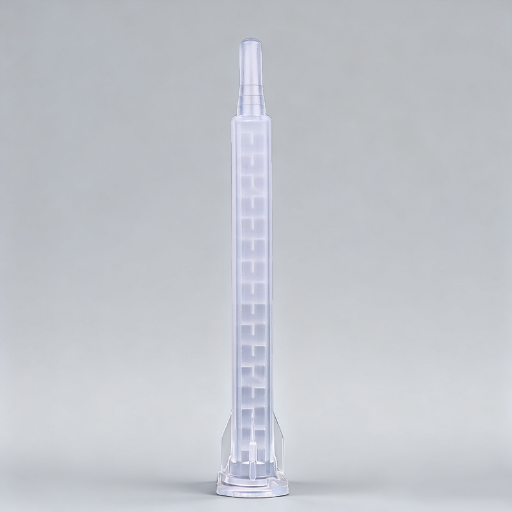
Here’s the honest version: the cannula tubing in a reputable compatible tip and the OEM tip is drawn to the same ISO 9626 stainless steel needle-tubing specification. Steel is not the differentiator. Real variables are hub-mold tolerance and how cleanly the cannula is passivated, which is exactly where a focused consumables maker competes, not where it falls short.
That trade-off is real and worth stating plainly: a global OEM carries a deeper specialty catalog, oval, chamfered and proprietary micro-geometries that a focused range doesn’t stock. We won’t claim an Ebestron tip outperforms a Nordson Optimum tip on those specialty geometries. For the straight, angled, tapered and PTFE-lined styles that make up the bulk of a line’s monthly order, the parts are dimensionally equivalent and the saving is the markup, not the spec.
Selecting the Right Tip, Gauge, Material & Fluid Viscosity
A finer gauge doesn't always mean a more precise deposit. Below roughly 25G with a high-viscosity fluid, back-pressure rises and the bead breaks into inconsistent drips, matching the gauge to the fluid beat reaching for the finest needle. Worse, the costliest mistake here isn't picking the wrong brand; it's running a metal tip where the chemistry needed PTFE.
"We see the same failure every month from new lines: a 27-gauge metal tip on cyanoacrylate, cured solid inside two shifts. Move that one fluid to a PTFE-lined tip and the clog calls stop. What saves money is the tip matched to the chemistry, not the cheapest box."
Ebestron Engineering Team, fluid dispensing consumables
Two rules cover most selection
Gauge-to-viscosity rule
High-viscosity (epoxy, silicone, RTV, sealant): larger ID (14G–18G) and a tapered tip to cut back-pressure and dripping.
Material-to-chemistry rule
Low-viscosity (cyanoacrylate, anaerobic, ink, flux): fine bore (23G–32G), blunt precision tip, and PTFE lining for any CA service.
Why PTFE for cyanoacrylate: CA cures on contact with metal and surface contaminants, so a bare steel or nylon bore can set solid mid-run. A PTFE lining gives the fluid a chemically inert, non-stick path, which prevents premature cure and clogging and stretches the working life of each tip. Blunt tips stay the versatile default for low-viscosity work; tapered tips earn their place on thick fluids. Reference application notes are documented in the University of Chicago PSEC dispensing-tip library (.edu).
A concrete example industrial buyers in the EU and US hit often: a 30 mL barrel of cyanoacrylate on a low-viscosity line. What stops clog calls is a 25G red PTFE-lined tip, not a finer metal needle, chemistry-match first, gauge second.
Quality, Material Certs & Compliance
The gap that fail a compatible tip at a customer audit is rarely the part, it's the paperwork. For industrial buyers in the EU and US, a box that arrives with no material certificate and no standard reference can't clear an audited line. Ebestron tips ship against named standards, with lot traceability, so the audit trail exists before the question is asked.




ISO 9626
304 SS tubing spec
ISO 6009
Gauge color code
ISO 80369-7
Luer connector taper
304 SS
Passivated cannula
Lot Trace
Batch traceability
FAQ, Compatible Dispensing Tips & Needles
What is the difference between a dispensing tip and a dispensing needle?
A dispensing tip is the short cannula or tapered nozzle on the end of a syringe or valve that places the fluid; a dispensing needle is the same part with a longer metal cannula. Both seat on a luer hub. Across the industry these terms are used interchangeably, including in our catalog.
Will Ebestron tips actually fit my Nordson EFD or Fisnar barrels?
Yes. Hubs are molded to the luer-lock and luer-slip taper defined by ISO 80369-7, the same taper the OEM hubs use. Run the 3-Check Fit Verification (hub thread, cannula ID, barrel seat) against the Replacement Register and the part drops in.
Which gauge should I use for my fluid?
Match gauge to viscosity, not to the finest needle available. High-viscosity epoxy or silicone wants a larger ID (14G–18G) and a tapered tip; low-viscosity cyanoacrylate or ink wants a fine bore (23G–32G). Our Gauge-Color-ID table maps every size to a fluid band.
Why use a PTFE-lined tip for cyanoacrylate?
Cyanoacrylate cures on contact with metal and contaminants, so a bare steel bore can clog mid-run. A PTFE lining is chemically inert and non-stick, which prevents premature cure and clogging and extends each tip's working life.
Are these the same steel as the OEM tips?
Each cannula is passivated 304 stainless steel drawn to the ISO 9626 needle-tubing series, the same specification basis as the OEM precision tips. Material certificates and lot traceability ship with the order.
Can I order private-label or custom lengths?
Yes. As the manufacturer, Ebestron packs to your part numbers, hub color and length spec. Custom branding and non-stock lengths affect lead time, which we confirm on the quote.
What box quantities are available?
Standard boxes of 50, 500 and 1,000 per gauge, with per-unit pricing tiered to volume. Mixed-gauge sample kits are available to qualify a line before a bulk order.