Get in touch with Ebestron Company
ISO 9001 | CE · RoHS
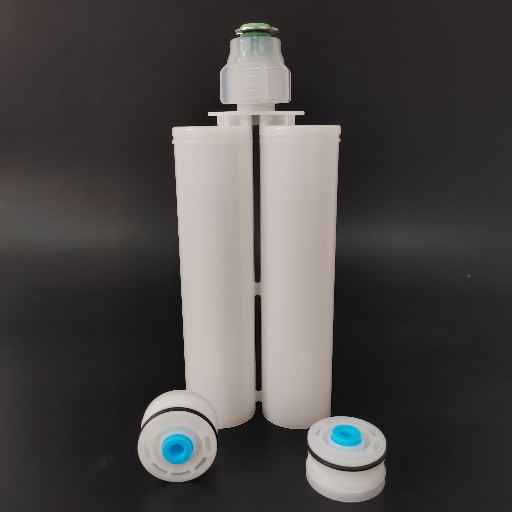
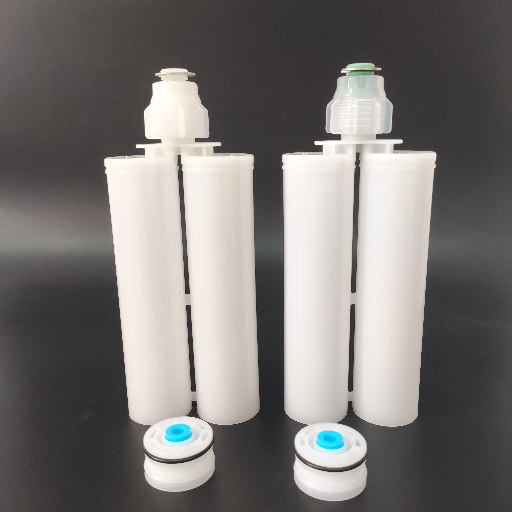
200ml Dual Cartridges
200ml Dual Cartridges — Two-Component Adhesive Packaging That Mixes Right and Seals Tight
Empty side-by-side 200ml dual cartridges for epoxy, PU, MMA, silicone and acrylic systems — 1:1 and 2:1 ratios, PP / PA / PBT bodies, CE & RoHS, built for production filling and OEM private label.
200 ml
Total volume (2 × 100 ml at 1:1)
1:1 / 2:1
Volumetric mix ratios
PP·PA·PBT
Body materials by chemistry
B-System
Side-by-side bayonet outlet
±5%
Target mix-ratio tolerance
CE · RoHS
Compliance + OEM filling
Curing in the Barrel, Leaking Pistons, Wrong-Fit Tooling: What a Bad 200ml Cartridge Actually Costs
Failure Mode Analysis
A 200 mL dual cartridge looks simple, and that is exactly why a poor one slips into a production line and quietly destroys yield. Mixing errors are the single largest source of scrap in bonding and potting work, because an off-ratio shot of two component glue cures soft, cures slow, or fails to cure at all — and an off-ratio of more than 5% can measurably cut bond strength and chemical resistance . When the part fails 21 days later in the field, the cartridge that caused that risk is long gone.
Three failure modes drive most of that loss, and each is a structural hardware problem rather than an operator problem. Pistons should be fairly level and not leaking; when one sits crooked, that side weeps and the ratio drifts before the first bead leaves the nozzle. Air entrapment can be detrimental to the mechanical strength of the adhesive, because a non-vented piston traps a slug of air that starves the joint. And a thin or warped barrel lets reactive epoxy exotherm and cure inside the cartridge above roughly 30 °C, because curing epoxy generates heat and heat accelerates the cure further .
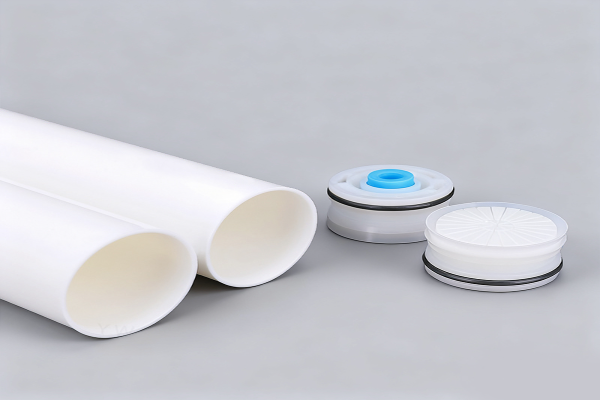
This is the problem Ebestron engineers the 200 mL two component cartridge to remove before it reaches your line.
What makes industrial buyers in the EU and US standardize on Ebestron here is structural: dimensionally stable barrels give a square piston seat, vented pistons release air on a 100 mL fill, and an O-ring sealing ring is sized to the resin so the ratio holds from the first shot to the last. Ebestron keeps the two reactive parts apart until the static mixer — a documented engineering lineage described in USPTO filings such as US7581828, and the only thing your adhesive datasheet was ever counting on.
Auditing a recurring cure-in-barrel or leak problem?
Request a free sample kit for your engineering test →
Product Specifications
Ebestron 200ml Dual Cartridge: Ratios, Materials and System Compatibility
Here is the honest version of cartridge selection: the cartridge body is not a commodity, and the trade-off you make on material decides whether your chemistry survives storage. Ebestron will not claim one material fits everything. Epoxy, polyurethane and silicone systems run well in PP (polypropylene), which resists most acids, bases and common solvents at the lowest cost. Methacrylate (MMA) resins with volatile monomers need PA (polyamide) or PBT, because those barrels hold dimensional stability under load and resist aromatics, ketones and oils that would swell PP. For industrial buyers in the EU and US, the structural reason this matters is shelf life: a swollen barrel changes the 100 mL chamber dimension, the piston seal drifts, and the ±5% ratio window is gone before the cartridge ever reaches a gun.
Technical Deep-Dive — 200ml Cartridge
| Parameter | 200ml Dual Cartridge |
|---|---|
| Total volume | 200 ml (2 × 100 ml at 1:1; split adjusts at 2:1) |
| Volumetric ratios | 1:1, 2:1 (200ml family) |
| Body material | PP / PA / PBT / PE by chemistry |
| Outlet system | B-System side-by-side bayonet, twin-bore |
| Piston | Twin, vented for air release; O-ring sealing ring |
| Mix-ratio target | ±5% volumetric (per adhesive TDS) |
| Tooling fit | Standard 200ml manual / pneumatic dual guns (25:1–26:1 thrust) + static mixers |
| Service temperature | Material-dependent; PA/PBT for elevated-heat formulations |
| Compliance | CE, RoHS |
Mix-ratio tolerance and material rules verified against permabond and btektech technical resources. Anti-contamination twin-barrel architecture per US5676280 and on-demand static-mix dispensing per US9409193.
RMS Selector — Ratio × Material × System
Most suppliers list “all ratios available” and leave you guessing. Our RMS Selector maps your adhesive chemistry to the ratio, body material and 200 mL system that actually fit it, so an empty adhesive cartridge order matches the resin before it ships:
| Adhesive chemistry | Ratio | Body | System | Typical 200ml use |
|---|---|---|---|---|
| Epoxy, structural | 1:1 / 2:1 | PP | B-System | Automotive panel bonding |
| Epoxy, fast-set | 1:1 | PP | B-System | MRO field repair |
| Polyurethane (PU) | 1:1 / 2:1 | PP | B-System | Façade & panel bonding |
| Silicone, 2K | 1:1 | PP | B-System | Electronics gasket / seal |
| Methacrylate (MMA) | 1:1 / 2:1 | PA / PBT | B-System | Metal & composite structural |
| Acrylic, dissimilar bond | 1:1 | PBT | B-System | Mixed-substrate assembly |
| Polyurea coating | 1:1 | PP / PBT | B-System | Protective lining |
| Anchoring resin | 1:1 / 2:1 | PP | B-System | Chemical anchoring / bolt set |
| Potting compound | 1:1 / 2:1 | PP | B-System | Electronics encapsulation |
| Low-viscosity reactive | 1:1 | PBT + O-ring piston | B-System | Precision dosing |
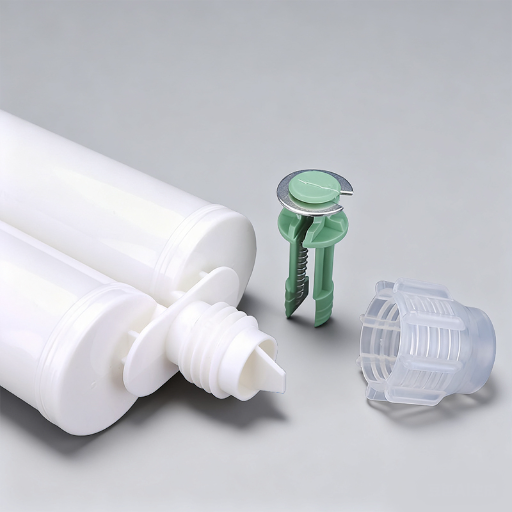
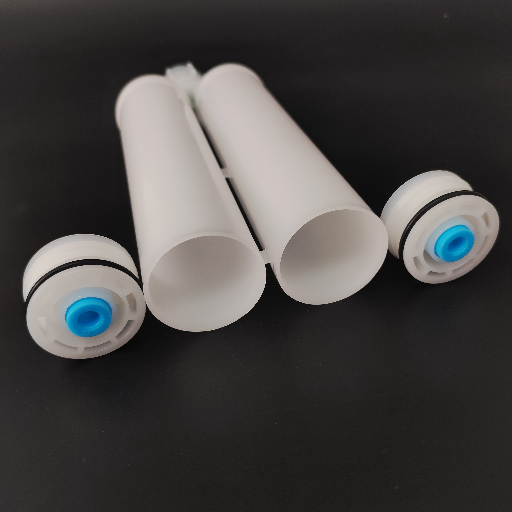
“We size the piston O-ring to the resin viscosity, not to a generic spec. A low-viscosity acrylic that weeps past a loose piston ruins the ratio before the gun even moves — so for those jobs we ship a PBT body with a sealing-ring piston as standard, not as an upgrade.”
One more honest limitation worth stating up front:
A side-by-side 200ml cartridge is not the right home for a paste loaded with fast-settling fillers, which can separate in the barrel. If that is your formulation, talk to us about a different package rather than forcing a dual cartridge epoxy fill that will not stay homogeneous.
SYS.REC // EVAL-MATRIX
200ml vs 50ml / 400ml–600ml — and Empty Cartridge vs Bulk Meter-Mix
At 200 mL, this size is the workhorse of the Ebestron family: enough volume for a production shift or a full field job, light enough to run in a one-hand gun. For industrial buyers in the EU and US, choosing it is really two decisions — which cartridge volume, and cartridge versus a bulk metering machine. The risk of getting this wrong is real: oversize a 600 mL barrel for a low-volume line and 40% of the shot can gel in the nozzle between jobs, because pot life runs out before the cartridge empties. Both decisions come down to numbers, not adjectives:
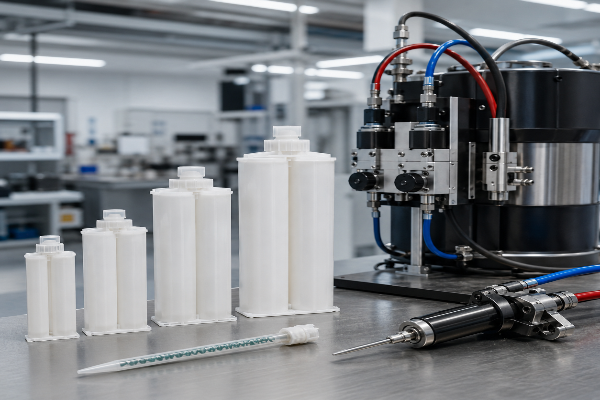
IMG.01 // DISPENSING VOL.
| Factor | 50ml | 200ml (this page) | 400–600ml | Bulk meter-mix rig |
|---|---|---|---|---|
| Volume per unit | 50 ml | 200 ml | 400–600 ml | 20–200 L |
| Equipment capex | $0 hand gun | $0 hand gun | low (heavy gun) | high (metering plant) |
| Sweet-spot volume | <100 shots | mid-volume line + field | high per-shot | continuous high volume |
| Changeover | instant | instant | instant | purge / clean cycle |
| Waste per stop | 1 nozzle | 1 nozzle | 1 nozzle | line purge |
| Ratio options | 1:1–10:1 | 1:1 / 2:1 | 1:1 / 2:1 | near-unlimited |
TCO & Structural Trade-offs
Here is the honest trade-off, and the structural reason Ebestron recommends the 200 mL by default: a disposable cartridge is not always the cheapest route. At very high single-formulation volume, a bulk meter-mix machine wins on material cost. But for low-to-mid volume, multiple formulations, on-demand re-sealable use and field work, the 200 mL cartridge that Ebestron engineers skips the metering machine entirely — a documented dispensing approach in filings such as US7144170. That is why most industrial buyers in the EU and US start at 200 mL and only step up when a single chemistry exceeds roughly 50 L per day.
$0
metering-equipment capital required for low-to-mid-volume two-component dispensing — no machine to buy, calibrate or purge between formulations.
Comparing this against your current package?
Get Instant Quote
TCO framework, industry sources (compositesworld, merlin packaging). Exact savings depend on volume — request an application-specific analysis.
Where 200ml Two-Component Cartridges Deliver: Outcomes by Industry
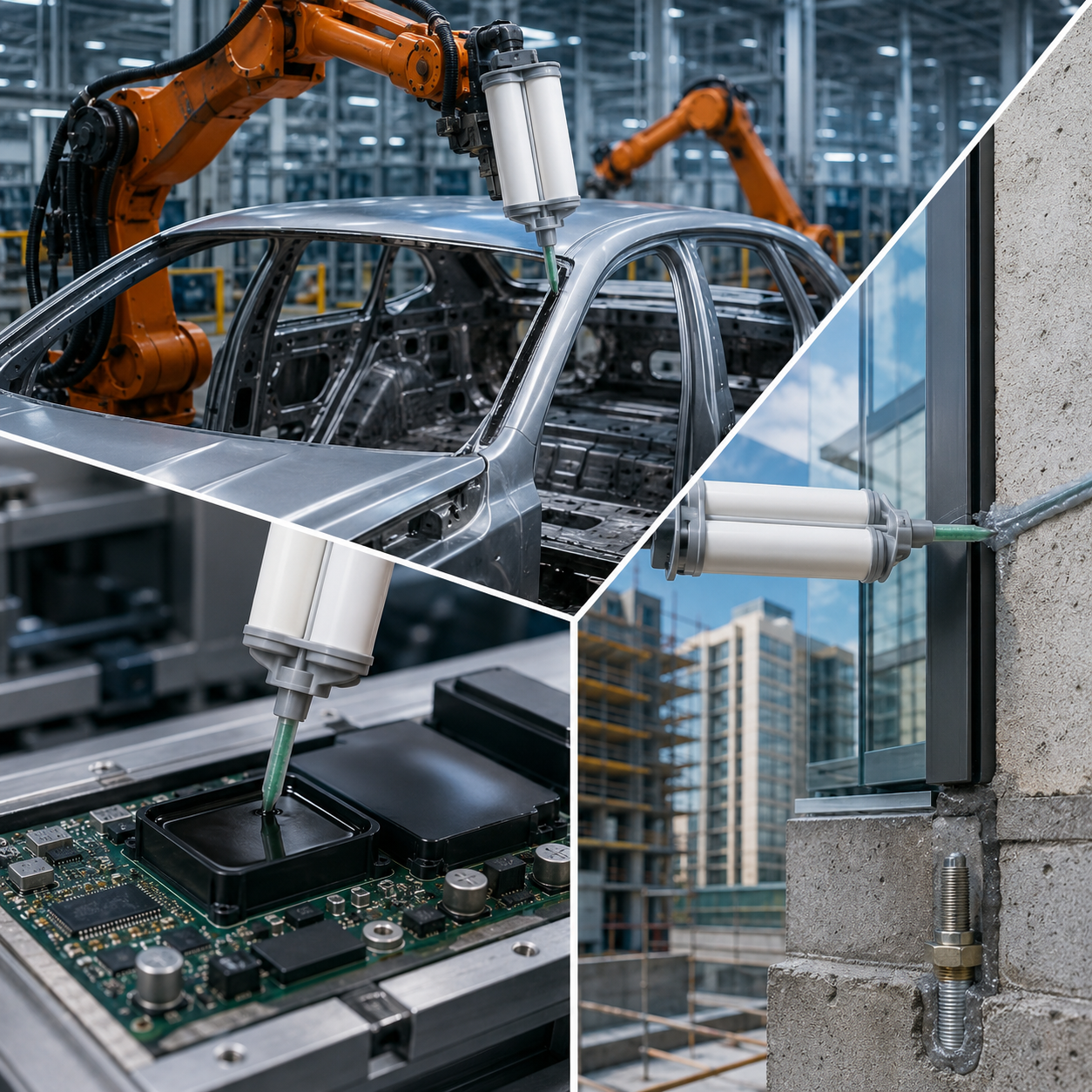
Application Sectors
That same 200 mL dual cartridge that Ebestron builds shows up across very different lines because the value is consistent dosing on demand — and the failure it prevents, inconsistent hand-mixing, is the same everywhere.
For industrial buyers in the EU and US automotive lines, the 200 mL carries structural epoxy and MMA for body-panel bonding, EV battery-enclosure assembly and glass mounting, where a 5% ratio slip can fail a crash-relevant joint.
In electronics, 100 mL of one chamber runs encapsulation and gasketing that must cure clean below 40 °C.
In construction, it dispenses PU and anchoring resin for façade panels, crack injection and chemical bolt-setting .
200ML SERIES
Compliance: CE, RoHS and Material Conformity
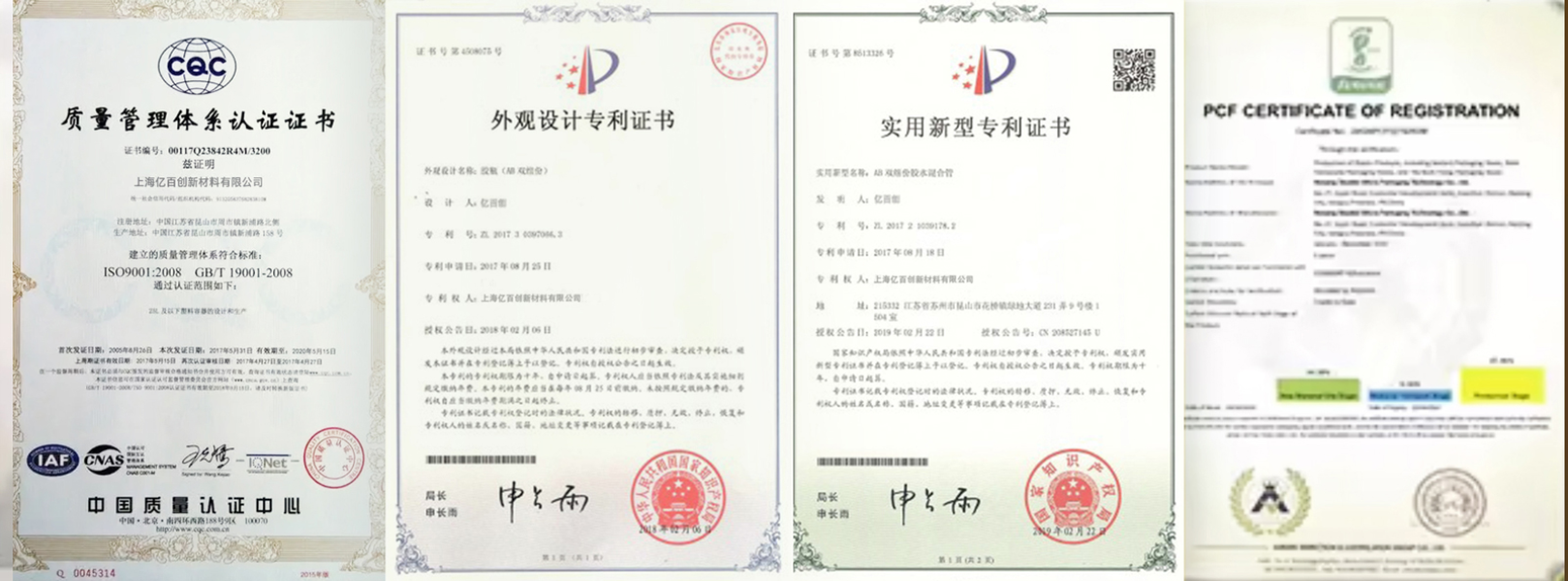
For industrial buyers in the EU and US evaluating a 2023-founded supplier, compliance is where trust is earned, because an undocumented material is a procurement risk that can stall a line audit for 5 working days. Ebestron keeps it concrete and certifies it: every Ebestron 200 mL cartridge carries CE and RoHS, and the structural reason the body resin is stated on the spec sheet is conformity — for example, polyolefin grades governed by food-contact frameworks such as FDA 21 CFR 177.1520 when the 100 mL chamber contacts a sensitive formulation. That is the gap Ebestron closes that a reseller cannot.
CE
Conformité Européenne
RoHS
Restricted substances
PP / PA / PBT
Material conformity by use
±5%
Mix-ratio target
Click to Zoom
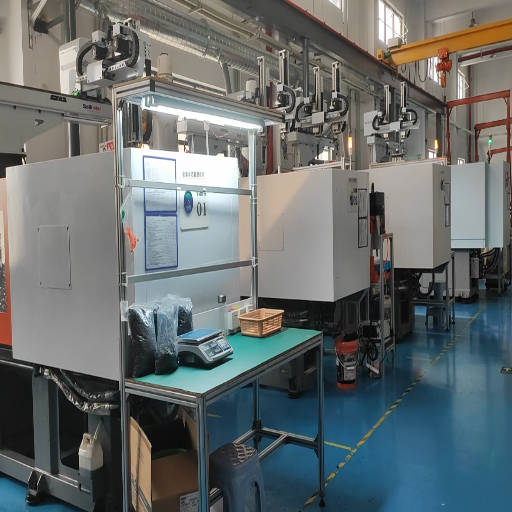
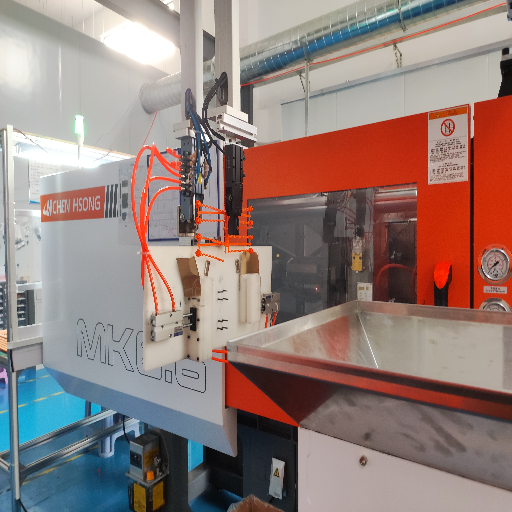
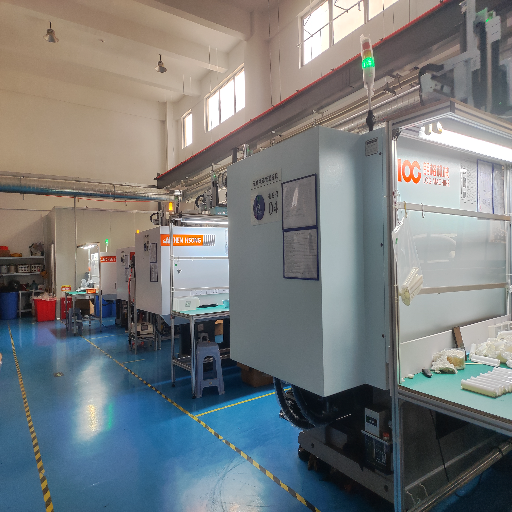
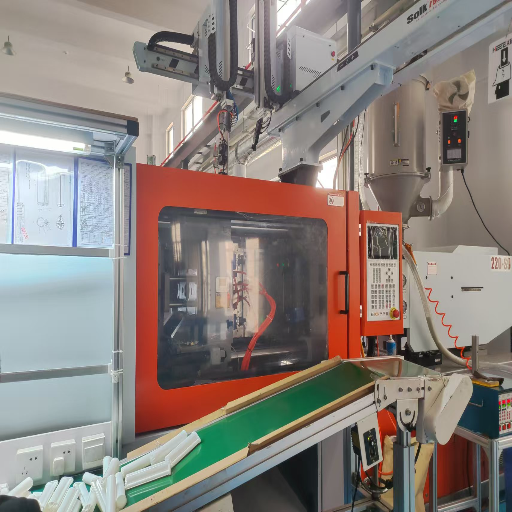
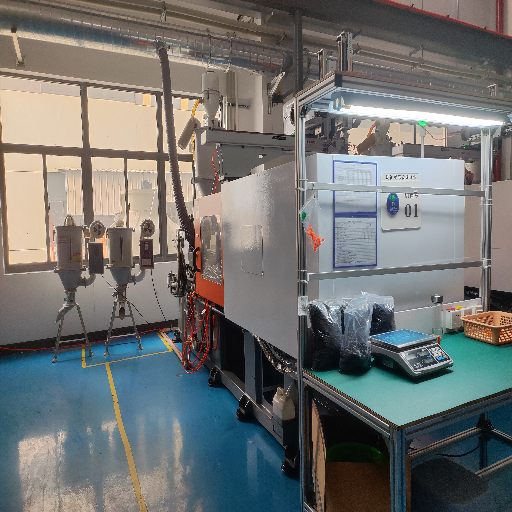
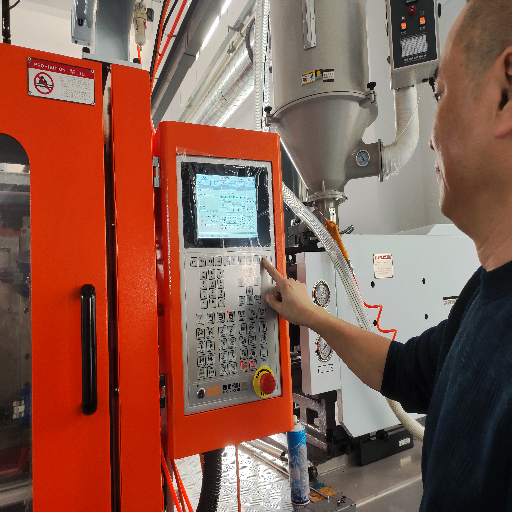
Industry 4.0 Standard
Advanced Production Line Automation
Engineered for absolute precision, uninterrupted speed, and seamless scalability. Explore our state-of-the-art automated manufacturing facilities driving global industry standards.

×
![Zoomed View]()
200mL Dual Cartridge Engineering & Selection Tools
200ml RMS Selector
Pick your adhesive chemistry — get the ratio, body material and system that fit a 200 mL dual cartridge.
Launch SelectorCartridge Size & System Selector
Estimate the right cartridge volume and whether a disposable cartridge or a bulk meter-mix machine fits your throughput.
Estimate VolumeMix-Ratio Tolerance Checker
Two-component adhesives should hold the mix ratio within ±5%. Enter the spec and what your line actually delivers.
Check ToleranceWhy We Publish These Specs
Most empty-cartridge listings skip the material, the ratio tolerance and the honest limitations. We publish them because the buyers who order 200ml dual cartridges from us are filling their own two-component adhesive — and a mismatch between resin chemistry and barrel material is a problem we would rather prevent at the RFQ than discover in your line. The RMS Selector and material rules here reflect how the Ebestron team actually matches cartridges to resin.
Trademark note:
“Mixpac,” “Sulzer,” “medmix” and “Nordson” are trademarks of their respective owners. Ebestron cartridges are independently manufactured and are not affiliated with, sponsored by, or endorsed by those companies; system references (A-System / B-System) describe industry-standard geometry only.