Get in touch with Ebestron Company
Static Mixing Nozzles for 2-Part Adhesives
Static Mixing Nozzles for 2-Part Adhesives | Bayonet, Bell-Mouth | Ebestron
A static mixing nozzle is the disposable tip that decides whether your two-part adhesive cures to full strength or fails in service. We manufacture the complete range, helical, Quadro and bayonet, to fit every major 2-part cartridge system, shipped factory-direct from our plant in Jiangsu, China.
Spec-Match
Send us your OEM part number
Factory-direct
OEM & private label
Static Mixing Nozzles Specifications Matrix
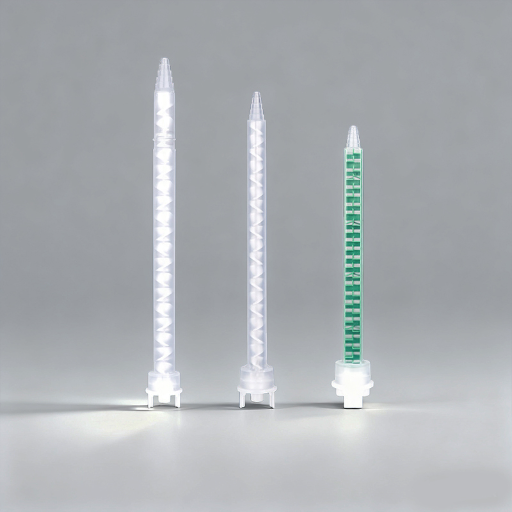
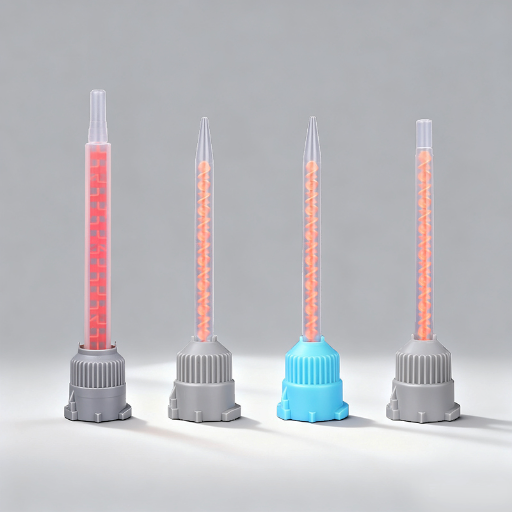
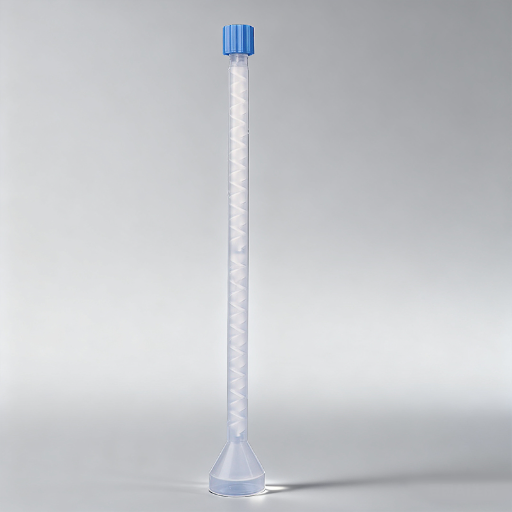
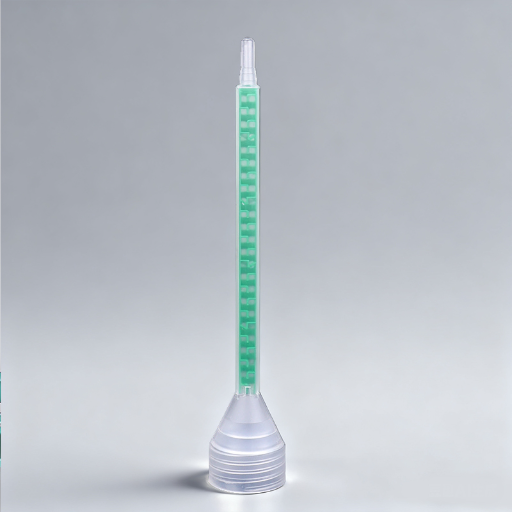
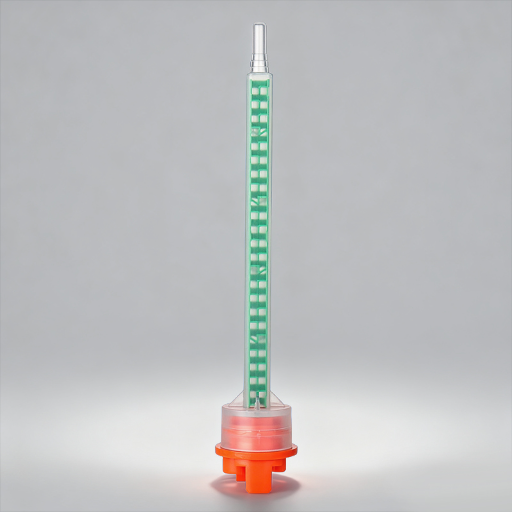
A / B / C / F
Cartridge systems
1:1–10:1
Mix ratios
3–13 mm
Outlet bore
7–49
Mixing elements
Helical / Quadro
Element geometry
50/200/400 ml
Cartridge sizes
STATIC MIXING DYNAMICS
SYS.01 // FLUID ENGINEERING
Why the Wrong Mixing Nozzle Wastes Both Your Adhesive and Your Bond
A 10-element generic nozzle that under-mixes a structural epoxy will leave streaks of un-reacted resin that never reach full hardness, one fabricator reported a resin that “cured terribly” until they swapped to a 14-element nozzle and the problem vanished. That’s the quiet failure mode of this part: the bond look dispensed, but the chemistry never finished.
When a static mixing nozzle holds too few elements for the adhesive, or the wrong bore for the shot size, you get soft spots, delamination and rework that costs far more than the 50-cent tip that caused it.
A static mixing nozzle (also sold as an epoxy mixing nozzle, static mixer nozzle, static mix tube or mixing tip) is a disposable plastic tube of fixed internal baffles that blends resin and hardener into one uniform stream as a two-part adhesive is dispensed from a two-component adhesive dual cartridge. It does the job a hand-stir does for bulk adhesive, only inline, repeatably, at the point of application. Mount it on the cartridge, pull the trigger, and the two components leave the tip already mixed to ratio.
One distinction up front, because the search results blur it: this page is about the cartridge mixer tip, not the industrial inline “motionless” static mixer (the steel pipe-section device used to blend process fluids in a pipeline). Different product, different buyer. Everything below is the disposable nozzle that screws or bayonets onto a 2-part adhesive cartridge.
What actually fixes it isn’t “buy the nozzle with the most elements.” It’s matching three things, element count, geometry and cartridge fitting, to your adhesive and shot size. We build the full range so that match is exact, and our Spec-Match service lets you send an OEM part number and get the equivalent back. The mixing principle itself is old and well understood, the original helical static-mixer patent dates to 1965 (US 3,286,992, Kenics), but the selection logic is where most buyers go wrong. Ebestron engineers the full range in-house, and because an under-mixed two-part bond can fail at well below 50% of its rated strength, we hold each nozzle to tight dimensional tolerance. The honest answer is that the tip isn’t a commodity, it’s the last thing that touches your adhesive before it cures, and treating it as throwaway is the mistake that return as warranty claims.
The Ebestron Static Mixing Nozzle Range, by Geometry, Interface & Ratio
Our line covers the full geometry × interface × ratio space that real production needs: two element geometries (helical and Quadro/square), every common cartridge interface (bayonet, bell-mouth, spiral-thread, stepped tip) and ratios from 1:1 to 10:1. Outlet bores run 3–13 mm and element counts 7–49, so we can hold the right back-pressure for both thin acrylics and thick paste epoxies.
Each sub-line below ship factory-direct, with OEM and private-label options. Spec the wrong bore and you risk a nozzle that fails under back-pressure or a bead that never fully mix; Ebestron engineers each configuration to the cartridge in-house, because fit and mix fail together. Unlike a one-size catalog, we hold bore tolerance so every nozzle in a production batch dispenses to the same ±5% ratio window.
Static Mixers Portfolio
Explore our industrial-grade mixing configurations below. Custom configurations available.
- Core Advantage Factory-Direct
- Ratio Tolerance ±5% Strict
- Customization OEM / Private Label
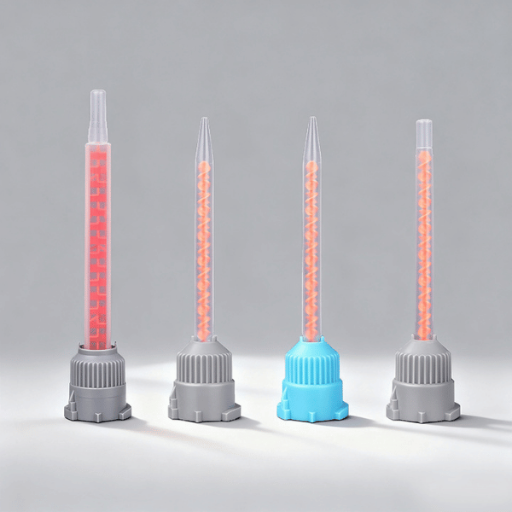
Epoxy Mixing Nozzles
Disposable epoxy mixing nozzles for two-part epoxy and structural cartridges.
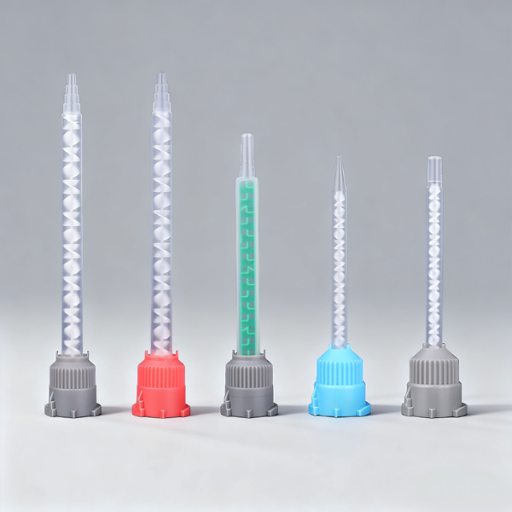
Static Mixing Tubes
Static mixing tubes and tips across the full bore and element range.
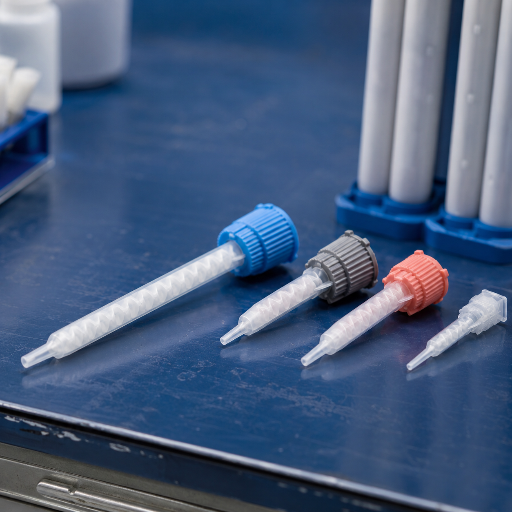
Sulzer Mixpac & 3M Compatible
Cross-compatible mixers that replace Sulzer Mixpac and 3M Scotch-Weld EPX nozzles.
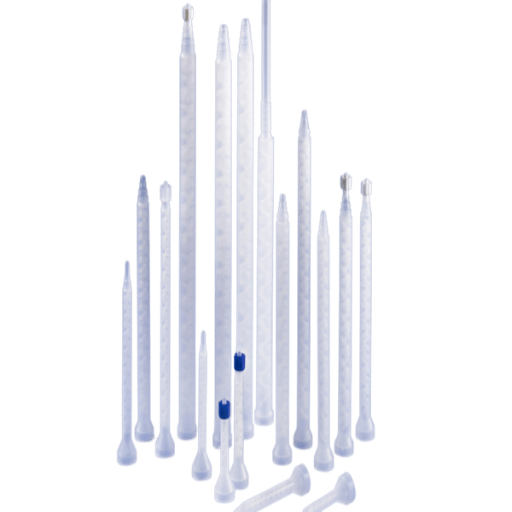
Helical, Quadro & Turbo
Both element geometries, including short Quadro/turbo tips for lower waste.
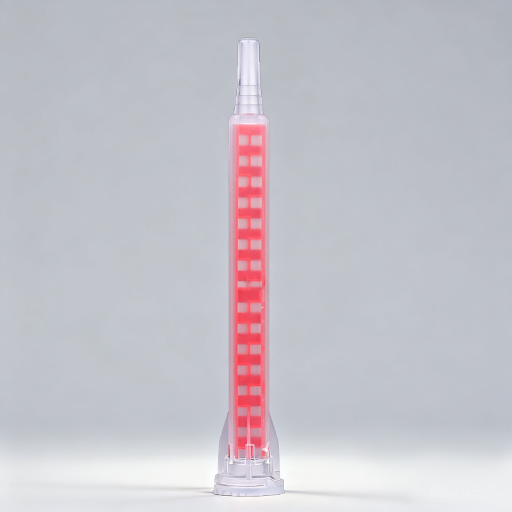
Bayonet Mixing Nozzles
Bayonet-inlet nozzles for 50 ml 1:1 & 2:1 cartridge systems.
| Configuration | Bore (mm) | Elements | Ratio | Geometry (Type) | Typical Cartridge |
|---|---|---|---|---|---|
| MBH 06-16 | 6 | 16 | 1:1 / 2:1 | Helical | 50 ml bayonet (A/B) |
| MBQ 05-16 | 5 | 16 | 1:1 / 2:1 | Quadro | 50 ml, low-waste |
| MCH 06-24 | 6 | 24 | 1:1 / 2:1 | Helical | 200 ml bell-mouth |
| MCH 10-24 | 10 | 24 | 1:1 / 2:1 | Helical | 400 ml, high flow |
| MFH 08-18 | 8 | 18 | 4:1 / 10:1 | Helical | 50/200 ml F-system |
| MAH 03-16 | 3 | 16 | 1:1 / 2:1 | Helical | 50 ml fine bead |
| MCH 13-36 | 13 | 36 | 1:1 / 2:1 | Helical | 400 ml paste, high viscosity |
The Static-Mixer Spec Code
How to Read Any Nozzle Part Number
Every disposable static mixer carries its full specification in its part number, once you can read it, you never have to guess a replacement again. Industry convention, documented by Intertronics and used across the medmix/Sulzer Mixpac catalog, packs five facts into one code. Here’s the decode, mapped to our own range so a Sulzer or 3M part translates directly.
// SYSTEM MASTER NODE
M [system] [geometry] [bore] – [elements]
Example Parse: MBQ 05-16
Mixer · B-system · Quadro · 5mm bore · 16 elements.
Note: H = helical; X suffix = OEM tip variant
1st Letter
Mixer Identifier
Always ‘M’ for Mixer
Always ‘M’ for Mixer
2nd Letter
Cartridge System
A/B = 50/75 ml | C = 200/400 ml | F = high-ratio
A/B = 50/75 ml | C = 200/400 ml | F = high-ratio
Geometry
Element Shape
H = Helical (round) | Q = Quadro (square)
H = Helical (round) | Q = Quadro (square)
1st Number
Outlet Bore (ID)
Range: 3–13 mm inner diameter
Range: 3–13 mm inner diameter
2nd Number
Element Count
Range: 7–49 internal mixing elements
Range: 7–49 internal mixing elements
Practical Notes from Production
First, the system letter governs the fitting, an A-system bayonet won’t lock onto a C-system bell-mouth even if the ratio matches.
Second, the bore is sized to the cartridge flow, not chosen freely: a 400 ml paste cartridge needs a 10–13 mm bore to avoid the back-pressure that blows a nozzle off its lock. (EP 0121342B1, 3M)
“We keep the decode chart on the shop floor because nine out of ten ‘it doesn’t fit’ calls are really a system-letter mismatch, not a defect. Confirm the system first, then bore, then element count, in that order, and the cross-reference is almost always clean.”
Cross-Reference: Replace Sulzer Mixpac, 3M, Nordson & Cox Nozzles
If you already run Sulzer Mixpac, 3M Scotch-Weld EPX, Nordson or Cox cartridges, you don’t change your guns or cartridges, only the disposable tip. Our nozzles are built to the same system geometries, so a like-for-like swap hold the same fit and the same mix. The cross-reference below cover the highest-volume replacements; for anything not listed, the Spec-Match service returns an exact equivalent.
| OEM Reference | System | Ratio | Ebestron Equivalent | Fit |
|---|---|---|---|---|
| Sulzer MBH 06-16 | B (50 ml) | 1:1 / 2:1 | MBH 06-16 | Bayonet, like-for-like |
| Sulzer MCH 10-24 | C (400 ml) | 1:1 / 2:1 | MCH 10-24 | Bell-mouth, like-for-like |
| 3M EPX 38193 (200 ml) | C | 1:1 / 2:1 | MCH 06-24 | Scotch-Weld EPX fit |
| Sulzer MFQX (F-system) | F | 4:1 / 10:1 | MFH 08-18 | F-connect, high ratio |
| Nordson/TAH 160-624 | C | 1:1 / 2:1 | MCH 06-24 | Stepped tip |
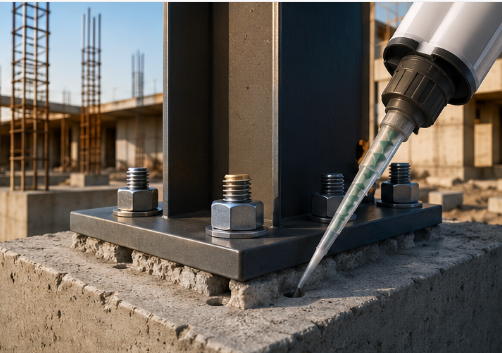
Where These Nozzles Perform: Structural, Automotive, Electronics & Construction
Application sets the nozzle as much as the adhesive does. Epoxies are more mix-sensitive than acrylics, so structural epoxy bonding gets a mandatory minimum element count, while a fast acrylic can run a shorter, fewer-element tip with less waste. We size each line to the job:
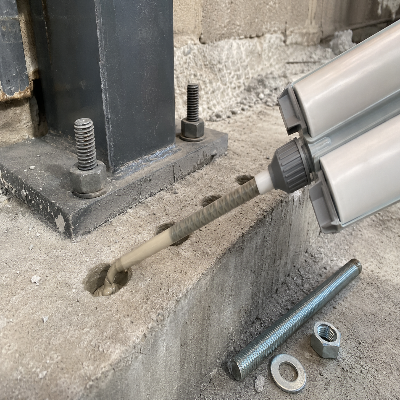
Structural & Construction Anchoring
Structural and construction anchoring, concrete, masonry and steel-joint adhesives, runs bell-mouth-inlet nozzles on 400 ml cartridges, where high flow and a 10–13 mm bore keep back-pressure manageable on thick paste epoxies.
Automotive, Rail & Composite Bonding
In automotive, rail and composite bonding, larger shot sizes and panel-bond chemistries call for larger bore and 24-element helical mixers to hold a uniform bead at speed.
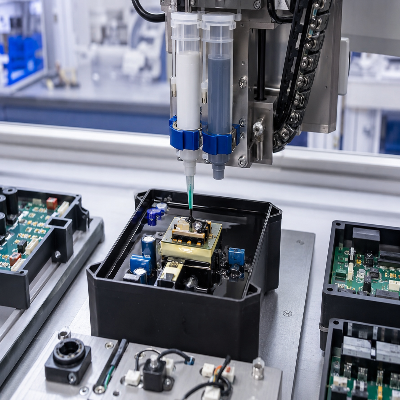
Electronics Potting & Sealing
Electronics potting and sealing of transformers, control modules and sensors needs a clean, silicone-free mix, so we keep these lines free of mold-release contamination that can poison a cure or a conformal coating.
General MRO & Small-Batch Repair
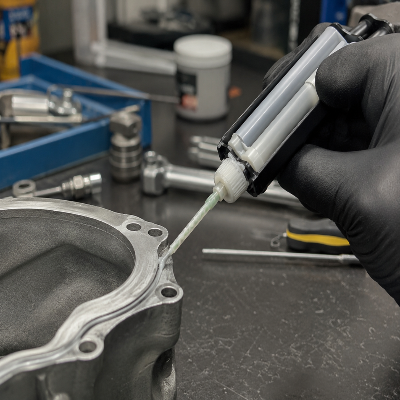
For general MRO and small-batch repair, 50 ml bayonet nozzles with 3–6 mm bores deliver fine, controlled beads.
Industry 4.0 Standard
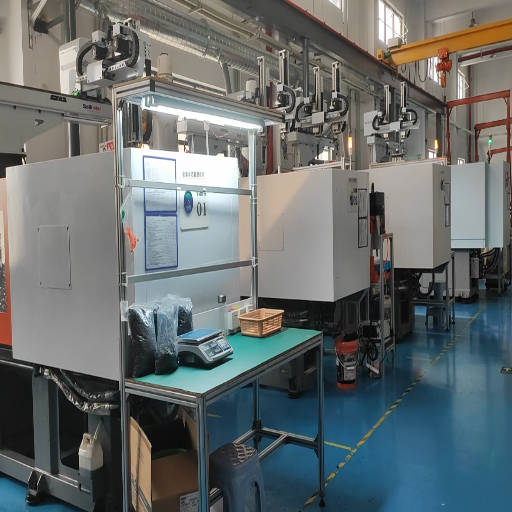
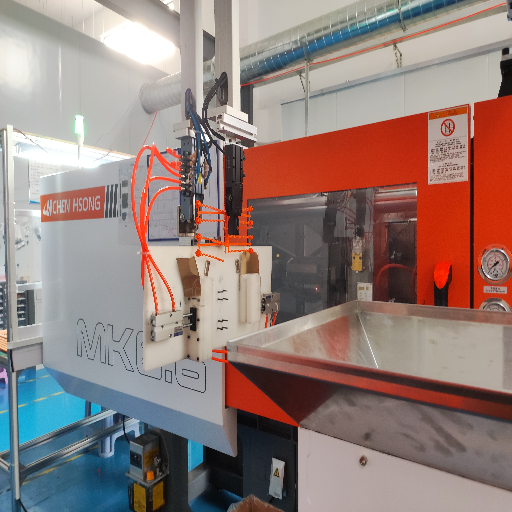
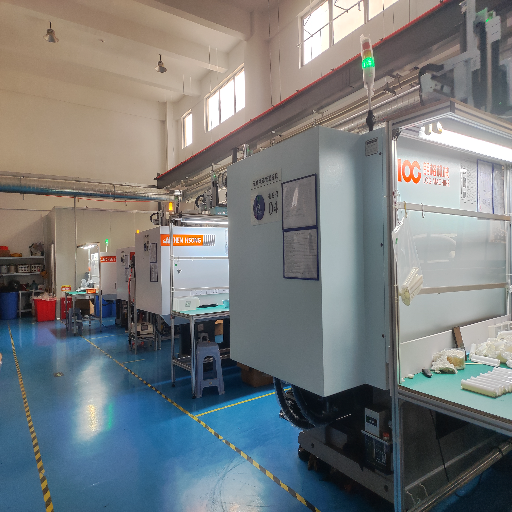
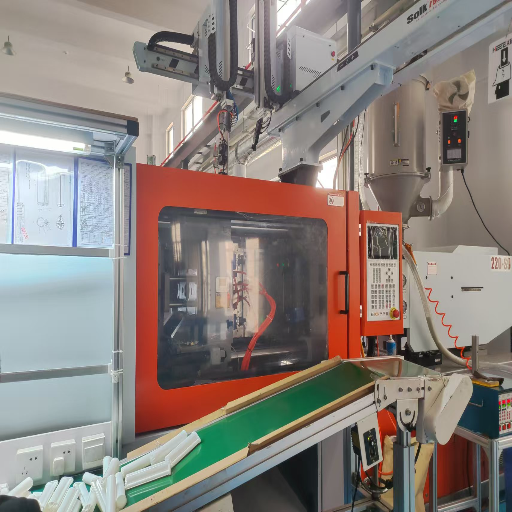
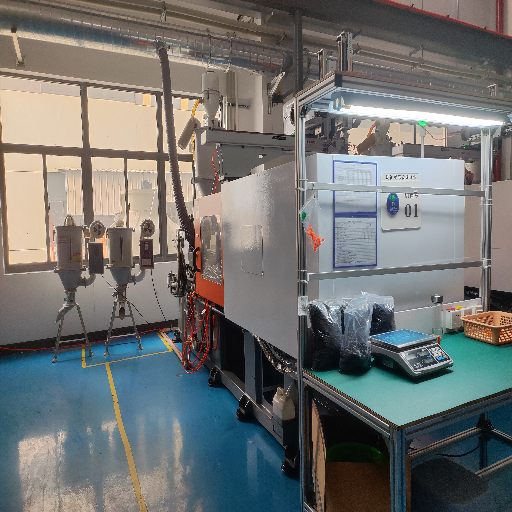
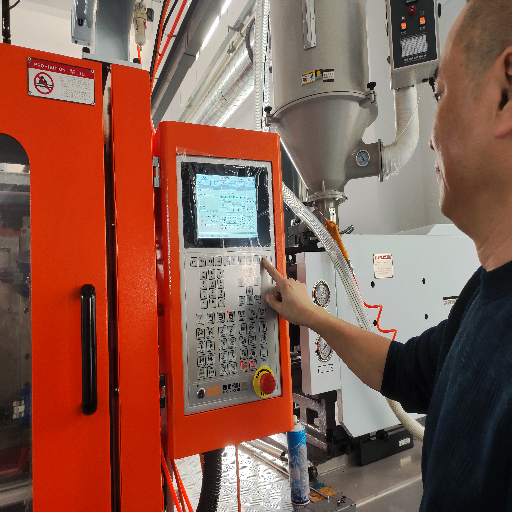
Advanced Production Line Automation
Engineered for absolute precision, uninterrupted speed, and seamless scalability. Explore our state-of-the-art automated manufacturing facilities driving global industry standards.

×
![Zoomed View]()
Material, Tolerance & Quality Control
A mixing nozzle is a precision-molded part pretending to be a throwaway. Its element twist, bore and inlet lock all have to hold tolerance, or the mix and the fit drift. Our nozzles are molded from virgin polypropylene and nylon (PBT for high-temperature lines), with no recycled regrind and no silicone-based mold release on electronics-grade lines, the contamination that quietly ruins a potting cure. We run our quality system on ISO 9001 quality-management principles (ISO 9001:2015), with batch-level dimensional checks on bore, element count and inlet geometry.
Virgin Resin
PP / nylon / PBT, no regrind
Silicone-Free
electronics-grade lines
ISO 9001 Principles
batch dimensional QC
~77°C / 170°F
typical service temp
Because a trace of silicone mold-release can make a potting compound fail to cure, Ebestron engineers electronics-grade lines silicone-free and holds bore and element tolerance batch to batch, unlike regrind-based tips that drift between lots. That consistency is the difference between a nozzle that meets spec on paper and one that meet it on the thousandth shot.
Need documentation for an incoming-inspection spec?
Request technical & QC data →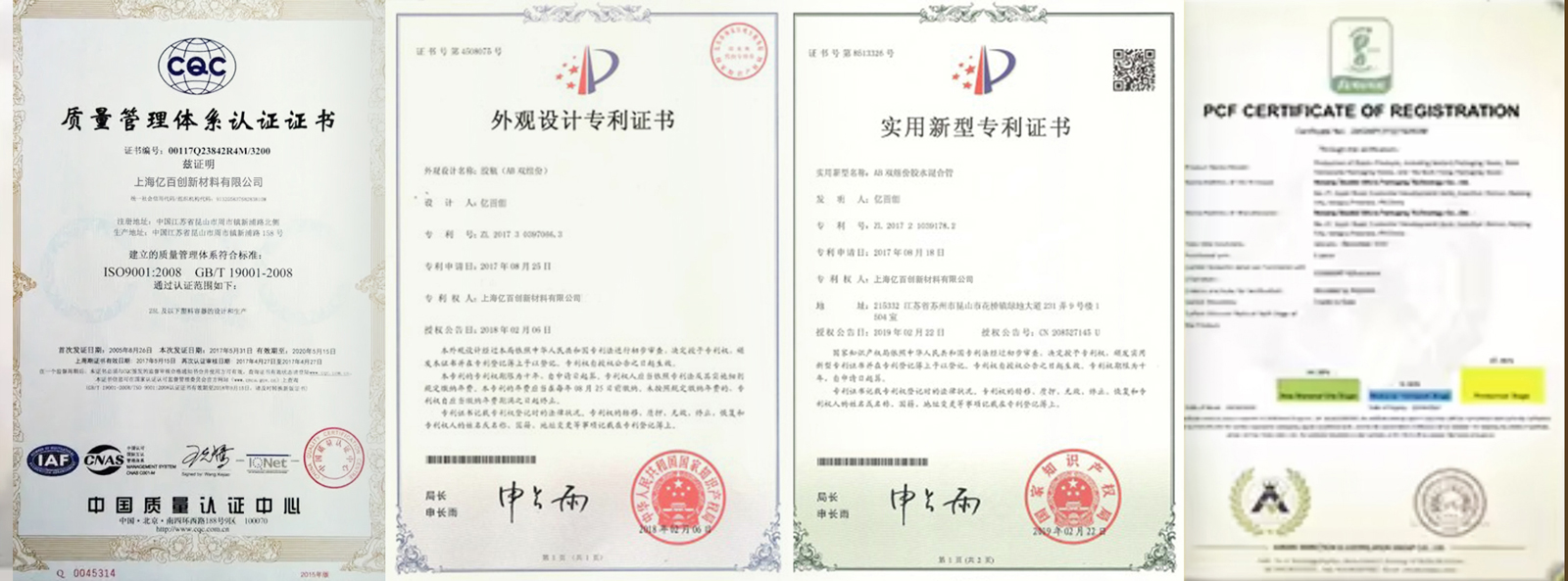
ISO 9001
Quality System
Ordering: MOQ, Lead Time, Private Label & Factory-Direct Pricing
We sell factory-direct, so you pay for the nozzle and not for a distributor markup on a brand label. Opaque pricing is the hidden cost buyers resent, because a brand markup buries the real price of the part, Ebestron engineers and molds in-house under an ISO 9001 quality system, so the quote reflects the nozzle, not the label, unlike distributor pricing built on someone else’s catalog. What drives your quoted price is straightforward, and we would rather show you the levers than a single number:
Pricing factors, what moves your quote
Annual volume and commitment, per-piece cost falls steeply with volume and stocking agreements.
Geometry and element count, longer, higher-element nozzles use more resin and tooling time.
Private label versus stock, custom bag or box branding and dedicated stock add setup; OEM private label is available.
Lead time, stock configurations ship fast, while custom geometries and dedicated stocking run longer.
For OEM and high-volume buyers we offer private-label packaging, dedicated stocking and custom mixer development. Fastest path to a firm number is to send the configuration (or an OEM part number) and your annual volume. Request a quotation and we’ll come back with pricing, MOQ and lead time for your exact spec.
Intelligent Identification System
Static-Mixer Spec-Code Decoder
Instantly translate complex nozzle part numbers into precise technical specifications. Engineered for advanced industrial applications to ensure flawless adhesive integration and exact geometric mixing performance.
Launch Tool
Compatibility Matrix System
Cartridge-to-Nozzle Fit Finder
Pick your cartridge and adhesive — we match the bore, geometry and element count.
Launch Tool
Dead-Volume Analysis System
Adhesive Waste Calculator
Estimate the two-part adhesive lost to nozzle dead-volume each year.
Launch Tool
SYS.INFO // 02
FAQ
Technical specifications and common inquiries regarding our 2-Part Adhesive Static Mixing Nozzles.
It’s a disposable plastic tube of internal baffles that mounts on a two-part adhesive cartridge and blends resin and hardener into one uniform stream as the adhesive is dispensed. It’s also called an epoxy mixing nozzle, static mix tube or mixing tip.
Each internal element splits the two-component flow and folds it back together, doubling the number of layers per element (a 2n “baker’s transformation”). After enough elements the two parts are blended to ratio, no hand-stirring, no stopwatch.
A mixing nozzle is the small disposable tip on an adhesive cartridge. An inline (motionless) static mixer is a steel pipe-section device that blends process fluids in a pipeline. Same mixing principle, completely different product, this page is the cartridge nozzle.
An element is one internal mixing baffle (one twist for helical, one square cell for Quadro). The element count is how many of these the nozzle contain, 7 to 49 in our range. More elements means more mixing, but only up to the point of full blend; beyond that you add waste, not quality.
Quadro (also called turbo) mixers use square-cell elements instead of round helical twists. They reach a full mix in a slightly shorter nozzle and cut retained-adhesive waste by roughly 7% versus helical of the same length, useful in tight spaces, but not a dramatic waste fix on their own.
It depends on the adhesive and shot size, not a fixed rule — “all epoxies need 24 elements” is the kind of guideline the trade literature warns against. Most full-mix nozzles run 24–32 elements, but a sound epoxy cure can need as few as 12–14. Send us the adhesive and cartridge and we’ll spec it.
Yes, when it’s built to the same system. Fitting is system-specific (A/B/C/F), so we match the system letter and ratio, not just the ratio, a matching ratio on the wrong system won’t lock on. Use the cross-reference above or send your OEM part number for a Spec-Match.
Almost always too few elements for the adhesive, or a fitting that let the ratio drift. One real example: a resin “cured terribly” on a 10-element nozzle and was fine on a 14-element one. The cure depend on getting a full mix to within about ±5% of ratio.
Yes, they’re single-use, molded from virgin polypropylene and nylon (PBT for high-temperature lines), with silicone-free options for electronics potting. Single use avoids the cured-adhesive clogging that comes with trying to reuse a tip.
Yes. We ship factory-direct from Jiangsu with OEM/private-label packaging, dedicated stocking and volume pricing. Send your configuration and annual volume for a firm quote, MOQ and lead time.