
Get in touch with Ebestron Company
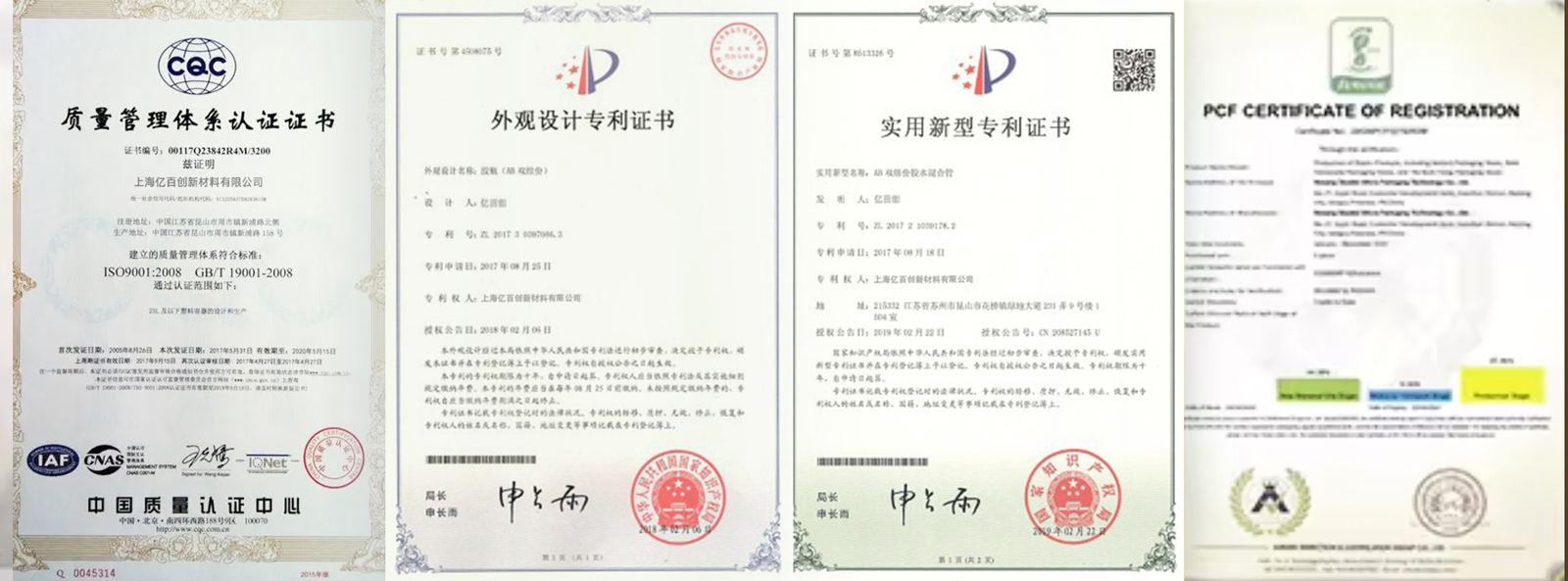
ISO 9001 Certified Quality
Epoxy Applicator Guns
Epoxy Applicator Guns for Two-Part & Dual-Cartridge Adhesives
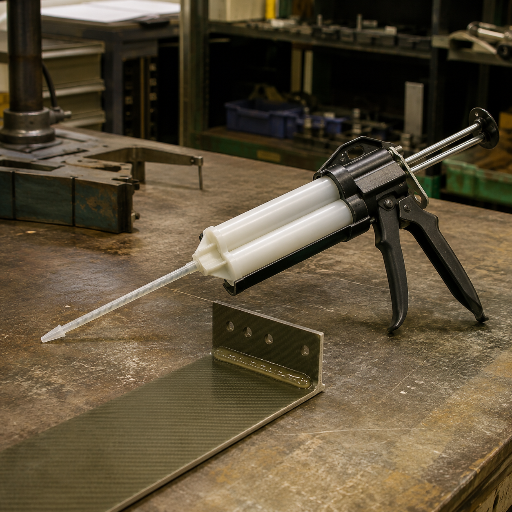
An epoxy applicator gun is only as accurate as the cartridge, piston, and static mixer it pushes — and on a two-part bond, that accuracy decides whether the joint cures to full strength or fails in service. Ebestron builds dual-cartridge epoxy guns, dual cartridges, and static mixing nozzles as one matched unit, in the standard 1:1, 2:1, 4:1, or 10:1 ratios and 50-600 mL capacity your adhesive comes in already.
- Gun + Mixer Matched as one system
- Source Direct from maker
1:1–10:1
Mix ratios stocked
50–600 mL
Cartridge sizes
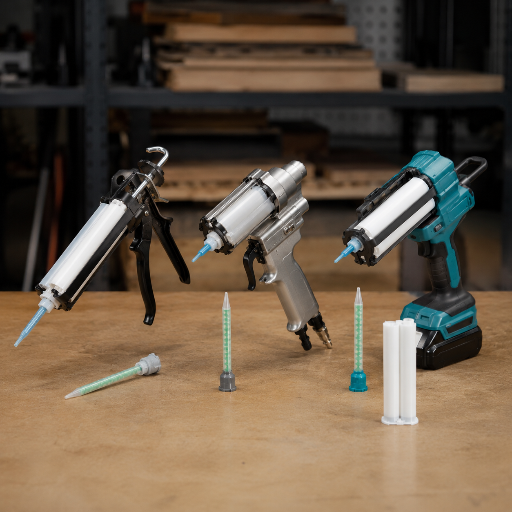
Manual · Air
Drive options
OEM
Private-label & custom
Inconsistent Mix, Wasted Cartridges, Hand Fatigue: What a Precision Epoxy Gun Fixes
The Defect Mode
On a fresh two-part cartridge, the first squeeze is almost never on-ratio. Pistons sit slightly off center from the pack, so the first shot runs resin- or hardener-rich – and that off-ratio material impacts cure and final strength if it ends up in the joint. That’s the small daily defect mode behind a category most buyers treat as commodity: a two-part epoxy gun (also called a dual-cartridge or two-component applicator) is the gun that holds the cartridge, pushes both pistons evenly into a static mixer, and lays a properly-mixed bead onto the surface.
Root Causes
Three issues arise wherever you deploy these guns heavily, and each traces to a root cause. Mixing nozzle waste occurs because operators pick shorter mixers to cut cost, which leaves too few elements to mix completely. Hand fatigue occurs because manual epoxy guns are repetitive high-volume work, which tires the operator and increases the chance of a poorly-fitting bead. And mismatch exists because a cartridge that fits a gun doesn’t necessarily meter accurately – not always the same thing.
The Ebestron Standard
Ebestron guns are built around a controlled retraction trigger and a tight piston fit, QA tested under an ISO 9001 system, unlike a generic body sold to fit any cartridge. Matching the gun, cartridge, and static mixer to the adhesive cures all three – ideally before the first 25 mm of the bead is laid, not after a failed joint.
Ebestron Epoxy Applicator Guns: Models, Mix Ratios & Cartridge Sizes
Because a cartridge that fits a gun isnt the same as a gun that meters it accurately, each Ebestron applicator is built around a specific cartridge style, ratio, and size rather than sold as a one-size fit all body. Cheap guns that leak or drift with use are a known quality of life issue for buyers; a controlled retraction trigger and a tight piston against the cartridge are why the drip stop and the lead-lag between Part A and Part B. Each model below is organized the way you actually specify a gun: by volume, ratio, and drive.
| Configuration | Cartridge | Ratio | Drive | Typical use |
|---|---|---|---|---|
| 50 mL Manual | 50 mL side-by-side | 1:1 / 2:1 | Manual | Lab, electronics, small repairs |
| 200 mL Manual | 200 mL dual | 1:1 / 2:1 / 10:1 | Manual | MRO, field bonding |
| 400 mL Manual | 400 mL dual | 1:1 / 2:1 / 4:1 / 10:1 | Manual | Highest-demand general production |
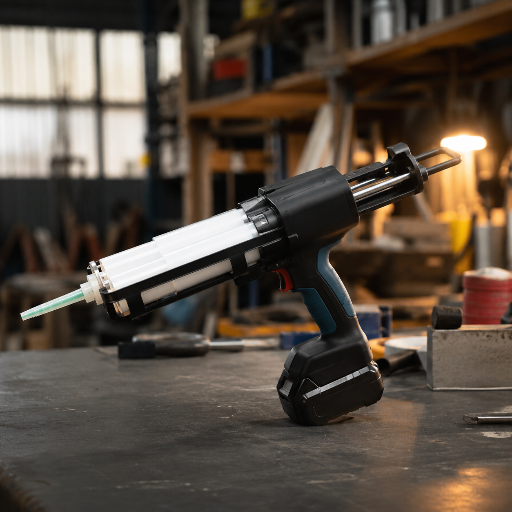
| 400 mL Pneumatic | 400 mL dual | 1:1 / 2:1 / 10:1 | Air | Repetitive line work |
| 600 mL Pneumatic | 600 mL dual | 1:1 / 2:1 | Air | Structural, high-volume assembly |
Engineering Note — Thrust ratio and pressure
Manual guns are rated in mechanical advantage (thrust ratio), and over the typical two-part tool, ranges from about 12:1 to 34:1. Adhesive pressure can be calculated using the basic formula P=F / A, and with a dual cartridge having two pistons, all force is distributed over what’s effectively two packs. Being 950 lbs. underneath an overall bore simply becomes roughly 150 psi on each side of the piston pair. More thrust isn’t necessarily better: the 12:1 drive outputs roughly 40% more per trigger than the 18:1 while the 18:1 needs roughly 33% more pulls to land the same package. Your correct ratio is one matched to the viscosity of your adhesive, addressed in the selection matrix below.
Similarly, the size of your cartridge shapes your work window: with every two-part adhesive giving a formulized pot life (the period before the guy in the nozzle sits still and gels in place) which slightly increases in length as the ambient temperature drops: a product rated at 10 minutes will result in only 4 or 5 minutes at 71 F (23 C). Larger 400 or 600 ml cartridges truly only compensate if you successfully time the use before the static mixer gels, so in slow and detailed work, a 50 or 200 ml will probably waste less material than a big package that becomes somewhat solid halfway through. More action in cold conditions has its equal inverse: the epoxy thickens into a high viscosity that becomes difficult to move by hand: that’s exactly where a higher thrust ratio or a compressed air drive demands reimbursement.
How to Choose: The Ratio × Volume × Thrust Selection Matrix
Buying the highest thrust number in the spec list is the most common selection error- a higher thrust ratio doesn’t absolutely mean best. Higher thrust means a more powerful output, at the expense of a slower extrusion rate, and is desirable when working with high-viscosity, fill-and-forget epoxy, or to avoid the trouble of mixed pressure pot or static mixer extension while working. Selection is a trade-off through three variables -part ratio, package size, and drive thrust – based on a single variable how viscous your adhesive and how much you want to feed through per shift. Whether you employ a pneumatic epoxy gun with a line or a manual epoxy package gun in the field, follow the same process. Find your adhesive viscosity then your volume.

| Adhesive viscosity | Recommended thrust | Drive | Cartridge size | Why |
|---|---|---|---|---|
| Low (flows like syrup) | 12:1–18:1 | Manual | 50–200 mL | Faster extrusion, less over-force |
| Medium (paste) | 18:1–26:1 | Manual | 200–400 mL | Balanced effort and flow |
| High (peanut-butter thick) | 26:1–34:1 | Manual or Air | 400 mL | Force to move stiff resin |
| Any, repetitive high volume | Air-powered | Pneumatic | 400–600 mL | Constant flow, no hand fatigue |
Manual vs. Pneumatic vs. Cordless: Total Cost & Throughput Compared
The Impact of Tool Selection
The lowest price item is rarely the least expensive choice–that’s the trade-off many buyers miss. For a bonding or sealing job, the dispense gun may represent less than 1% of total job cost, but is 50%+ of whether the application is a success. An adhesive dispensing gun chosen based on sticker price which under-mixes and causes operator fatigue to create inconsistent beads may scrap more adhesive and labor than it saves over its matched 2-part epoxy gun counter. Now there is a comparison.
<1% → 50%
The dispensing gun is typically under 1% of project cost but drives roughly half of application success — which is why tool selection, not tool price, is the cost lever.
Source: Adhesives & Sealants Industry / Albion Engineering · See References
Performance Comparison Matrix
Drive
Up-front cost
Force range
Best volume
Operator load
Manual
Lowest
12:1–34:1 thrust
Low–medium
Hand fatigue at high volume
Pneumatic
Medium + compressor
300–1,500 lbf
High, repetitive
Low, needs air line
Cordless
Highest
350–1,200 lbf
High, mobile
Lowest, no hose/fatigue
Executive Recommendation
Cordless tools bring an added bonus: a max-force setting an pneumatic dispenser may not even guarantee where an operator might lean on an underpowered tool. And 18 V lithium-ion units last 40% longer and weigh 50% less per charge than previous 14.4 V, and down to 0 °F. For crews stocking multiple stations, a basic job can still be performed least expensive, using a manually driven gun; for a line filling with stiff product all shift, air or cordless proves their worth in consistency and reduced operator fatigue.
Mixing Nozzles & Cartridges: Building a Complete Dispensing System
They look like disposable plastic tubes, but static mixing elements are where the actual bonding of 2-part adhesives is made. Their internal design twists and recombines two separate streams until they become homogenous; this design also ensure that air pockets which would lead to voids in a cured line are driven to the exterior. From 7 elements in a shorter bayonet-tip style nozzle to as many as 56, with diameters varying from 2.36 to 12.65 mm, element count, not merely the overall length, assures even distribution and mixing.
It’s here where tempted cost-savings short-circuit true process success. The single most common move in assembly rooms on the shop floor is reaching for a shorter nozzle to conserve materials. Most manufacturers’ documentation discourage this practice, precisely because epoxy products are sensitive to being well-mixed and an insufficient number of elements leads to a poorly cured, structural failure that far exceed the nominal cost of a few saved ounces of adhesive. Ebestron supplies the dispensing gun, its dual cartridge and the static mixer nozzle as one well-matched system, where the number of mixing elements are matched to the viscosity and ratio being dispensed.
That quick, short-term saving might look like smart money at a glance, but in reality, those dollars saved against an under-mixed product which fails structural analysis are truly pennies wasted; using an inadequate 2 part epoxy mixing nozzle anywhere from 7 to 56 elements represents the single most common dispensing errors seen. Since the failure of epoxy under-mixed happens almost silently within the bondline, Ebestron provides a well-engineered epoxy dispensing solution featuring a matched gun and nozzle that prevents failure through optimized element count, readily documented as one tool–a failure prevention rather than a marketing upsell for varied applications that result in a much higher cost for an improper, failed product over time.
“We size the static mixer to the adhesive, not to the cartridge thread. The same 1:1 epoxy can need a longer element count than a 10:1 product at the same volume, so we ship the gun, cartridge, and mixer as a matched set and document the element count, instead of leaving it to whatever nozzle is nearest.”
Where These Guns Perform: Automotive, Construction, Electronics & MRO

Hover To Scan Data
SYS.APP // Structural Adhesive Integration
Two-part epoxy applicators sit at the point where structural adhesive replaces a weld or a rivet. In automotive work that means panel bonding and windshield bonding, where a two-part epoxy joins replacement body panels and adds body stiffness without heat distortion. In construction the same tools run flooring systems and insulation panels; in electronics and MRO they handle potting, encapsulation, and field repair where a cartridge system beat a fixed meter-mix machine because the work is spread across awkward locations.
NASA space-module repair
In documented repair work on space modules, operators load a dual-cartridge system into the dispensing gun, attach a static mixer, and dispense an exactly metered two-part bead – the same cartridge-plus-mixer architecture Ebestron supplies, validated in one of the most failure-intolerant settings there’s.
Cartridge guns aren’t always the endpoint. Once volume climbs and time-controlled adhesive shots are needed – typically on robotic or assembly-line work – operations move up to meter-mix-dispense equipment. But for bonding spread across large or awkward areas, like inside an airframe bay or across a building site, a handheld two-part epoxy gun stays the right call: changing adhesives takes seconds, there’s no fixed plumbing, and every cartridge is self-contained. Flow rate and shot control decide that line, not the prestige of automated equipment.
What ties these industries together is that the gun is never the headline – the bond is – which is exactly why the tool has to disappear into reliability. A gun that meters evenly, every cartridge, is what lets an assembler in a tight airframe bay or a tech on a tower trust the joint they just laid.
Quality & Compliance
Industrial buyers screen dispensing suppliers on a short, consistent check list: ISO 9001 quality management, whether the supplier actually engineers and manufactures its own tools, and how deep its technical support runs. Ebestron is built to sit on the manufacturer side of that line rather than the import-and-relabel side – the distinction procurement teams are trained to look for.
ISO 9001
Quality management system
In-house QC
Thrust & retraction tested
Matched System
Gun · cartridge · mixer
Export Ready
Documentation & support
QC VERIFIED: REVEAL
×
Epoxy Applicator Gun Dispensing Tools & Calculators
Epoxy Gun Selector
Match a two-part dispensing gun to your adhesive — by viscosity, volume, and shift demand.
Access Tool
Pot Life Working-Window Estimator
Estimate how long a two-part epoxy stays workable in the mixer as temperature rises.
Access Tool
Dispensing Pressure Calculator
Estimate pressure on each cartridge piston from drive force, using P = F / A.
Access Tool
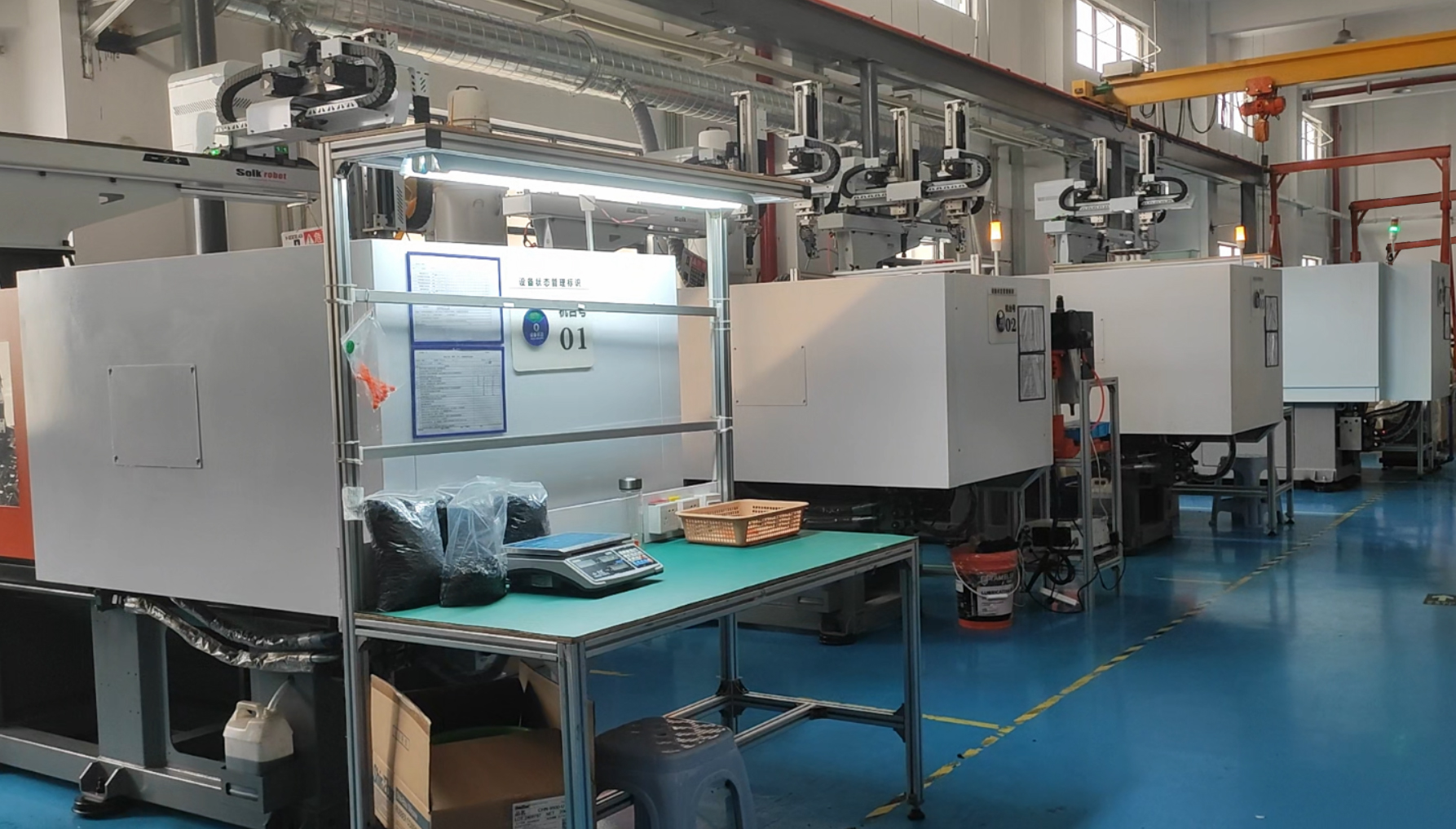
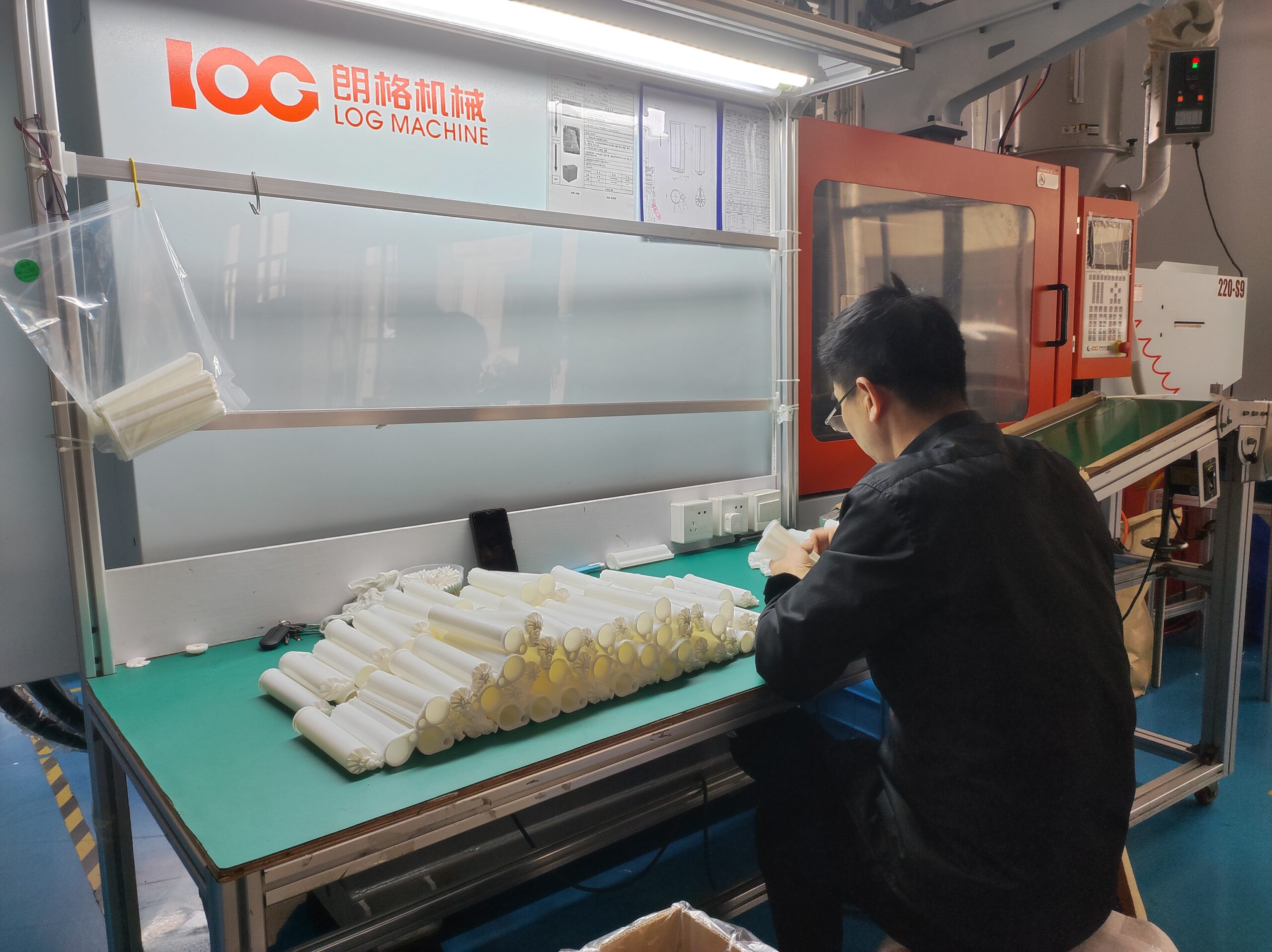
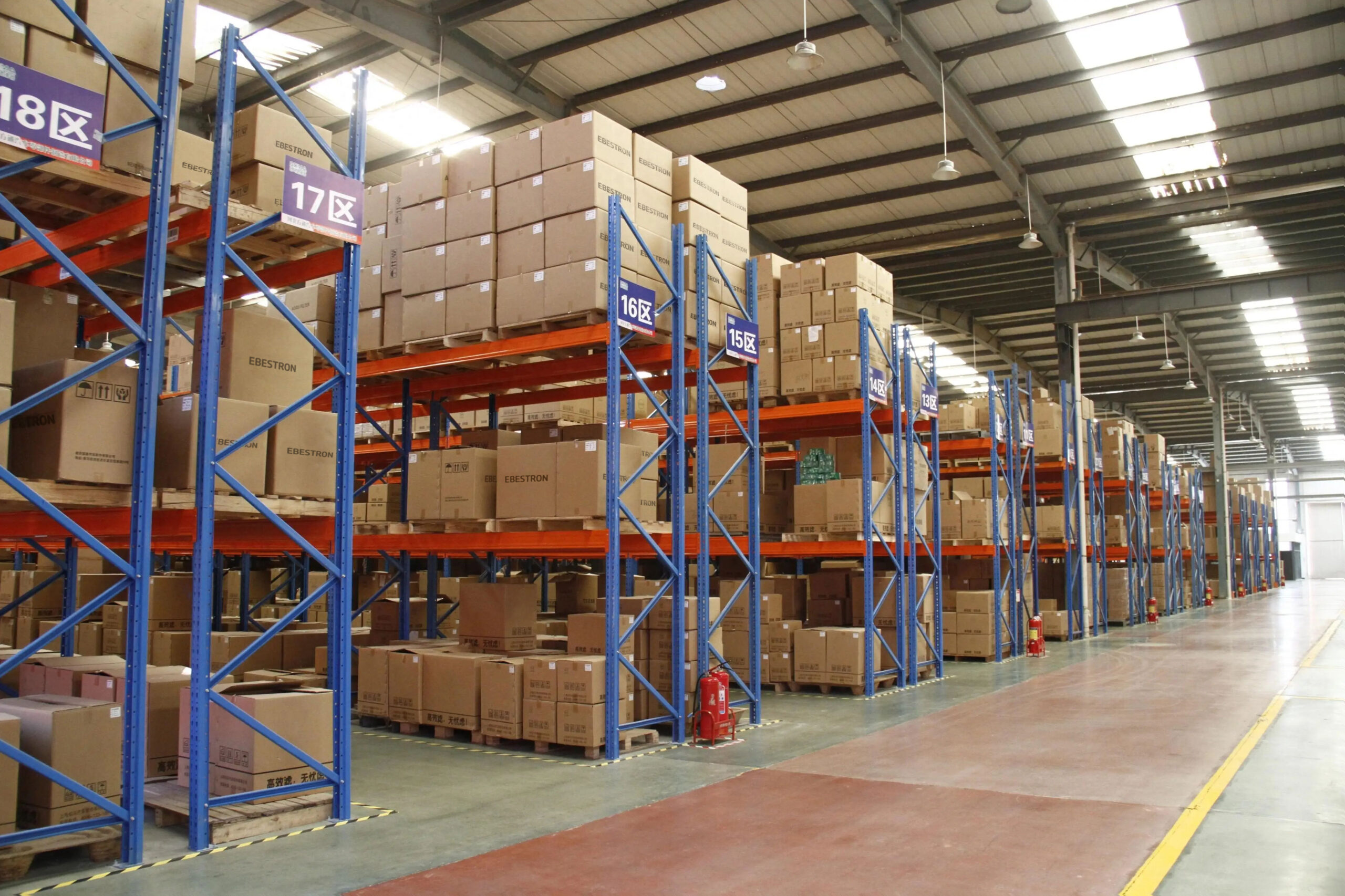
Epoxy Applicator Gun Manufacturing Facility



Frequently Asked Questions
What size epoxy applicator gun do I need?
Your gun must be compatible with your chosen cartridge size (50-600mls usually standard side by side & 1:1, 2:1, 4:1 or 10:1 2-part adhesivemixratios).Ensure to check your cartridge label before selecting a compatible dispensing gun.
Why is my first squeeze of adhesive off-color or uneven?
A new gun cartridge, fresh from the pack often have small amount of resin or hardener alone until mixture is begun due to non equal plunger sizes, so the first dispense, it’s advised that an inch or two be purgedonto paper towels before applying to a working area. This is a common step to ensure the mixed ratio is consistent to the working area from the first moment.
Can I use a shorter mixing nozzle to reduce waste?
Whilst common practice, it’s often not advised to cut back your dispensing gun nozzle. two part adhesives can be very sensitive to mixing ratios and if the element size is cut shorter the static mix elements become too few to mix effectively, meaning that a save on resin becomes wasted because the product hasn’t adequately cured, meaning additional resin is wasted.
Manual or pneumatic, which should I buy?
Manual is your best choice for low volumes and up front initial low cost – once however, dispensing becomes a part of a routine, especially with higher Viscosity resins, you should seriously consider a pneumatic gun. Pneumatic dispense gives a completely uniform rate of delivery and frees the user from hand strain. It’s recommended that you buy a gun with true air regulators rather than a standard needle control value if choosing pneumatic.
What does the thrust ratio on an epoxy gun mean?
This is the mechanical advantage of the gun; in effect a calculation of the mechanical increase of trigger effort. The ratio ranges from 12:1 all the way up to 34:1. As a general guide line, higher ratios will make it easier to dispense thicker material but will mean that you dispense slower with each trigger action. A lower ratio make it quicker to dispense material but requires you to pull much harder on the trigger with thick material. You should match this to your material, not to a target ratio!
Pneumatic or cordless for a production line?
A Cordless gun takes over from where the hand squeeze gun leaves off; they’re efficient and convenient giving consistent product delivery and are cordless. Cordless can eliminate the strain in a hectic operation and provides consistency as each gun will have its maximum dispense limit set by regulation within the unit. A cordless gun costs somewhat more initially; an 18 V (Lithium-Ion batteries generally last 40% more on battery time) compared to an Older NI CD or H I Cad Battery pack, so whether a manual pneumatic or cordless system you select you may want to ensure it’s suitable for the location.
Will an Ebestron gun work with my existing cartridges?
Our guns are built around the standard side-by-side and coaxial cartridge styles in 50–600 mL and the 1:1 through 10:1 ratios most two-part adhesives ship in. Send us your cartridge style and ratio and we’ll confirm the match before you order.
Trending now

![Dynamic Mixing Systems for 2K Sealants [Guide]](https://adhesivespackage.com/wp-content/uploads/2026/10/dynamic-mixing-systems-for-2k-sealants-guide-featured-1-150x150.png)