
Get in touch with Ebestron Company
Manufacturer-Direct · Two-Part Adhesive Dispensing
Static Mixing Nozzles by Interface Type: Bayonet, Bell-Mouth & Spiral
The only reason mixing nozzles fail is one you can avoid: the wrong interface. Buy one whose inlet is wrong for your cartridge, and it won’t latch. It won’t seal. A whole cartridge of two-part adhesive wasted. At Ebestron, we organize mixing nozzles by interface – bayonet, bell-mouth, and spiral – so you choose your hardware’s inlet connection first. Then you can tune element geometry, count and tip. We manufacture our mixing nozzles in our own plant in Jiangsu, China. All ship to fit your cartridge or equipment.
Request a Quote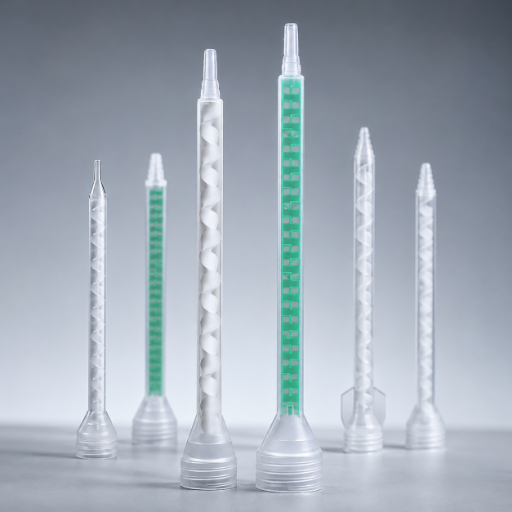
3
Interface families: Bayonet, Bell-Mouth, Spiral
13–48
Element-count configurations
50–600 ml
Cartridge sizes supported
1:1–10:1
Mix ratios
Helical + Square
Element geometries (round & cross-grid/Quadro)
OEM
Private-label & custom color available
System Specifications
Why Interface Type Is the First Thing to Get Right
Most teams pick a mixing nozzle by element count or by the part number printed on the last box. That is backwards. The first filter is the interface, the inlet that mates the nozzle to your cartridge or meter-mix valve.
A bayonet cartridge physically accepts only a bayonet-style mixer;
A bell housing on side-by-side and meter-mix equipment needs a bell or integral-nut mixer.
Get this wrong and nothing downstream matters, because the nozzle never seats.
01
// The Cost of Mismatch
A mismatch costs far more than a $2 nozzle. When a nozzle is too small or the wrong fit, adhesive backs up, pressure spikes, and the bead clogs before it cures. When the inlet does not lock, the first squeeze runs resin-rich or hardener-rich because new cartridge pistons sit slightly unbalanced, so the bead cures soft or streaky unless you purge it to waste. Both failures trace back to selecting a nozzle before confirming the interface.
02
// Decision Process
This page is organized the way the decision runs in practice: connection first, then element geometry, then element count and tip.
03
// Ultimate Goal
Each nozzle is a single-use dispensing tool, and the goal never changes: a clean, fully mixed bond on the first shot and every shot after.
Select By InterfaceMixing Nozzles by Interface Type — Bayonet, Bell-Mouth & Spiral
The family your static mixing nozzles belong to are defined by how they connect-by their inlet interface. You first choose your group – to match either a cartridge or dispense equipment’s bayonet fitting, bell-and-nut or spiral connection. Then choose the desired number of mixing elements and a tip. We offer our mixing nozzles in several element counts, tip designs and colors that our customers employ to separate ratios on their assembly line.
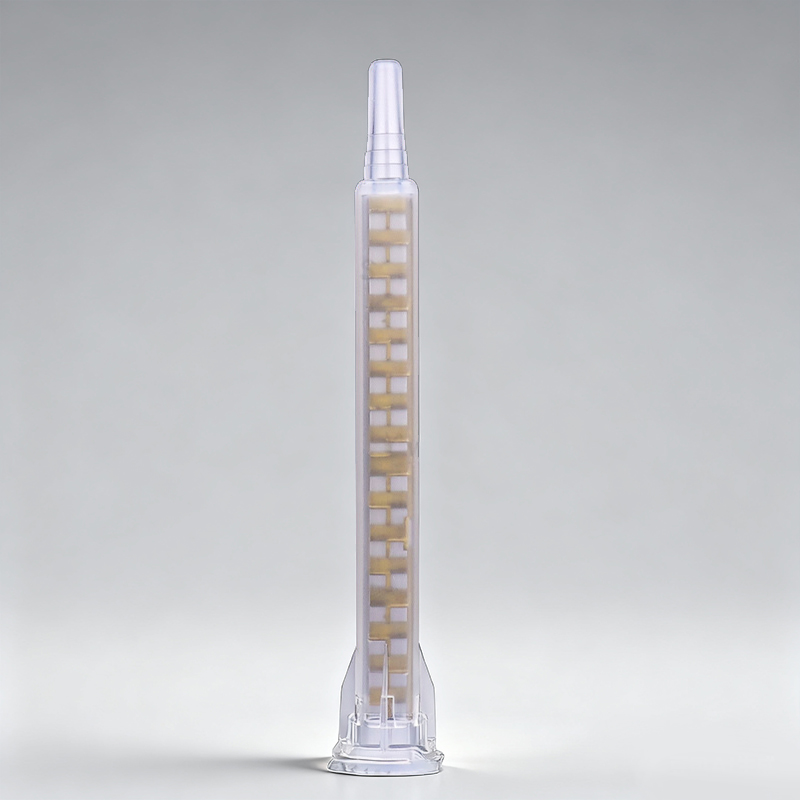
EB-BY Series — Twist-and-Lock
- Rectangular twist-and-lock inlet for 50ml cartridges
- Fits standard A-System and B-System (3M EPX Duo-Pak) cartridges
- Element options: 13, 16, 17, 20, 24
- Ratios: 1:1, 2:1, 4:1, 10:1
- Tips: stepped, tapered, Luer-lock
- Colorways: red, green, clear, gold
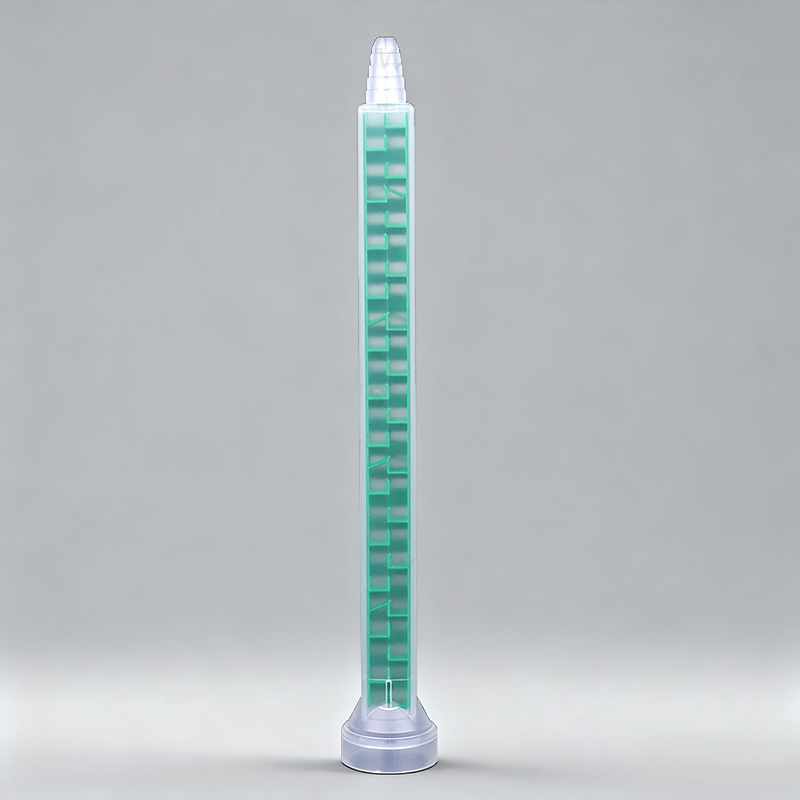
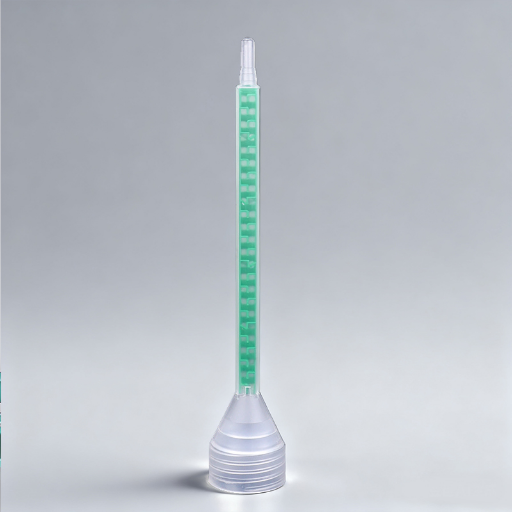
EB-BM Series — Retaining-Nut Bell
- Bell inlet seated by a retaining nut for 200–600 ml side-by-side and meter-mix equipment
- Round and square (Quadro) head variants
- Element options: 24, 32, 48
- Ratios: 1:1, 2:1
- Tips: stepped, H-tapered (Luer-ready)
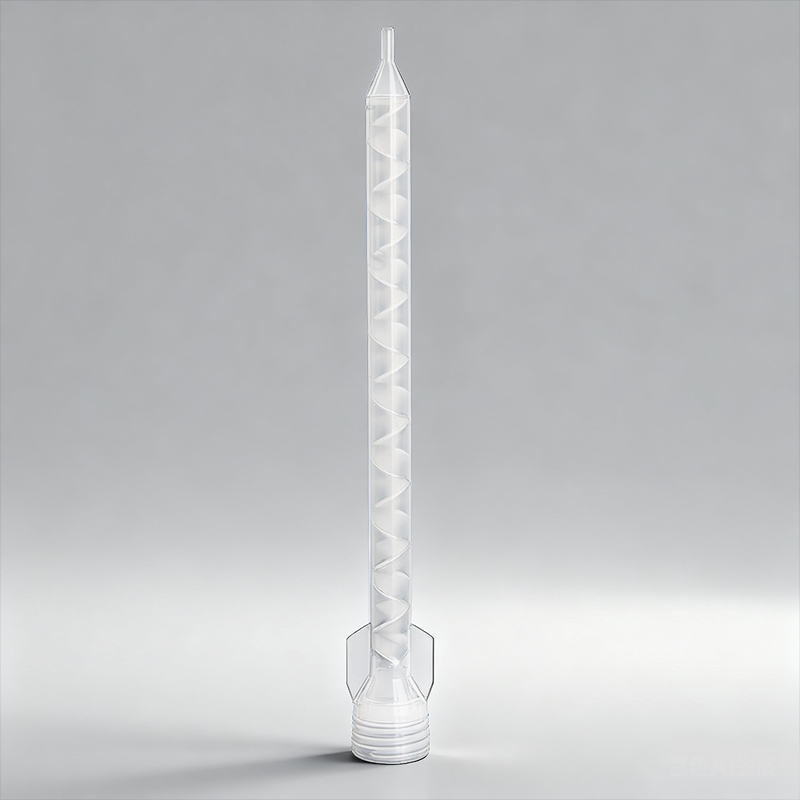
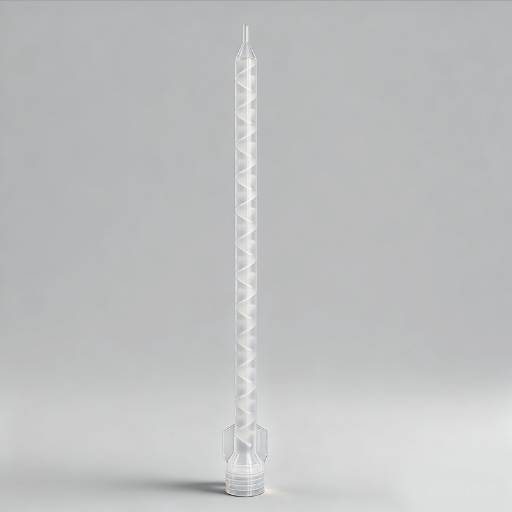
EB-SP Series — Spiral Inlet
- Spiral C-System inlet for 200 ml cartridges
- Helical element body for general-purpose mixing
- Element options: 21, 24
- Ratios: 1:1, 2:1
- Tips: Luer (needle) and stepped outlets
Selection Decision Tree — Engineer’s Path
- Interface: Identify your cartridge or gun. Bayonet 50 ml cartridge → EB-BY. Side-by-side or meter-mix 200–600 ml → EB-BM bell. C-System 200 ml → EB-SP spiral.
- Element geometry: Tight access or high adhesive cost → square/Quadro. General use → helical (round).
- Element count: Set by your material and ratio (see the element table below).
- Tip: Need to add needles for fine beads → Luer-lock. Need to vary bead size → stepped. Simple fixed bead → tapered.
Because your inlet connects the tip to the contents, Ebestron’s engineers work directly with customers-requesting an example cartridge – to ensure their selected nozzle mates the exact container or dispensing machine in their workflow. This avoids the most frequent error when sourcing mixing nozzles – ordering one by its part number, only to discover it will not fully connect and seat.
→ Not sure which inlet your cartridge uses? Send a photo for a free compatibility check →Element Geometry: Helical (Round) vs Cross-Grid (Square / Quadro)
With the interface sorted, it’s the element geometry that then determines how much glue you’re burning off with every shot. A static mixer tube has no moving parts: an epoxy mixing nozzle does the whole job with fixed internal elements, so a good epoxy mixing result comes down to element count and geometry. Two-part isn’t a static mix – you’re not pumping up a pipe, you’re literally chopping the stream in half and feeding it back into itself using static components-until the stream gets completely shredded.
What traditional helical elements rely on is what we call the baker’s transformation; fluid striations double with every element, which is why we generally see that it takes a lot of elements (24 to 32) for a fully homogeneous mix to form. Square (Quadro / cross-grid) elements run this same baker’s transformation effect, but over less space, enabling you to cut down on the body length required for a comparable mix – and it places that mixing closer to the substrate, which, for your average epoxy nozzle, often works out somewhere between 15 to 24 elements depending on what’s important. For a nozzle configured on epoxy, a good setup is balancing that full cure with material waste.
At what point this impacts your bottom line becomes evident with retained and purged volume. Every nozzle holds about two volumes’ worth of product as residue and will eject roughly one volume of product during purging, meaning typical helical and square mixers alone generate approximately 19 ml of wasted product with each cycle. You’ll save approximately 7% of that wastage with a square mixer versus a helical of equivalent mixing capability, but the more impactful change will be matching element count and diameter to your fluid, preventing you from over-purging unnecessarily.
| Attribute | Helical (Round) | Square / Quadro (Cross-Grid) |
|---|---|---|
| Elements for full mix | 24–32 | 24–32 (shorter body) |
| Adhesive waste per nozzle | ~19 ml (baseline) | ~7% lower than helical |
| Body length | Longer | Shorter — work closer to part |
| Mixing mechanism | Baker’s transformation | Baker’s transformation (square) |
| Best for | General 2-part, lowest unit cost | Tight access, lower waste, automation |
Element Count by Material & Ratio
Element count is dictated by the difficulty of your fluid mixture, not by habit or precedent. Typical guiding numbers for two-part materials fall within these ranges, and those at the lower end will generally accommodate materials with low ratios (such as 1:1), while those at the higher end of the spectrum will suit high-ratio materials (like 4:1 and 10:1).
Acrylic8–10
PU foam10–24
Epoxy15–24
Silicone20–30
Polysulfide24–32
Polyurethane24–36
Diameter is driven by fluid viscosity, back-pressure requirements and flow rate-more fluid and lower pressure calls for wider diameters; the opposite goes for thinner fluids at slower speeds.
CLICK TO BRING TO FRONT
COMPATIBILITY MATRIX
Cross-Brand Compatibility Matrix
The most complex step of purchasing nozzles-identifying the specific fitting system of an OEM cartridge your business is already using-shouldn’t be a nightmare of digging through spreadsheets. Below is a family tree of Ebestron interface sizes, showing what system, ratio, element types, and cartridge volumes it’s configured to service.
| Series | Interface | Fits Systems | Sizes | Ratios | Elements |
|---|---|---|---|---|---|
| EB-BY | Bayonet | A/B-Sys, 3M EPX | 50ml | 1:1 – 10:1 | 13-24 |
| EB-BM | Bell | Side-by-Side | 200-600ml | 1:1, 2:1 | 24-48 |
| EB-SP | Spiral | C-System | 200ml | 1:1, 2:1 | 21-24 |
Bayonet cartridges only run our Bayonet mixers… simplifying on fewer SKUs brings down carrying costs.
Buyer Advisory — Before You Standardize
Because your inlet connects the tip to the contents, Ebestron’s engineers work directly with customers to ensure their selected nozzle mates the exact container in their workflow. This avoids the most frequent error when sourcing mixing nozzles – ordering one by its part number, only to discover it will not fully connect and seat.
→ Not sure which inlet your cartridge uses? Send a photo for a free compatibility check →
Supply Chain & Cost Efficiency
Why Buy Manufacturer-Direct: Performance, Cost-per-Shot & MOQ
In a North American search results for static mixing nozzle, virtually all units available are sold by a distributor re-selling the same few brands. Ebestron is the factory. That changes the two factors that matter most to you: the per-shot price, and how we can serve you at scale and deliver customize solutions. We produce the elements and housings, therefore your negotiated price is a direct manufacturer price, without reseller markup.
What hits your annual spend hardest is not the unit cost, it is wasted adhesive. On 1,000 nozzles annually, that equates to around 19 milliliters per nozzle of wasted material that must be disposed of, plus any remaining material in the cartridges. To realize your savings, accurately match the size of elements and diameter of those elements to your material type, and where access allows, use square geometry.
~19 ml
Two-part adhesive purged and retained on every conventional nozzle. Across 1,000 nozzles a year, that is roughly 19 litres of mixed adhesive discarded, before you count the unit cost of the nozzles themselves.
Source: Adhesives & Sealants Industry Magazine (2022). Figures are industry averages, not a guarantee for a specific line.
What Drives Your Quote
Our price quotation process is tailored to the unique specifications of your particular application. Our quoted price for your nozzle reflects the element count and length, geometry (helical versus square), cartridge type, ratio, tip style, any specific color requirements or differentiation and whether you are requesting OEM or private labeling options. Submit your estimated annual volume along with the specific configurations you employ, and we will respond with a quote per configuration, complete with a stocking plan. Given that the production line is ours, low MOQs are attainable and custom branding can readily be accommodated.
Regarding our lead time, we wish to be candid regarding the reality of international production. Trade publications rightly flag the risk of long supply chains that can leave a production line waiting on delivery. Rather than ignoring this potential obstacle, we approach it head-on by collaboratively developing a supply plan with you. We offer a transparent estimate of lead times up front, maintain a buffer supply of your standard configurations and manage subsequent orders to align with your run rate, ensuring that your workbenches are perpetually stocked. Include a proposed stocking plan with your initial quotation request.
PROCESS / QUALITY
Quality Control & Certifications
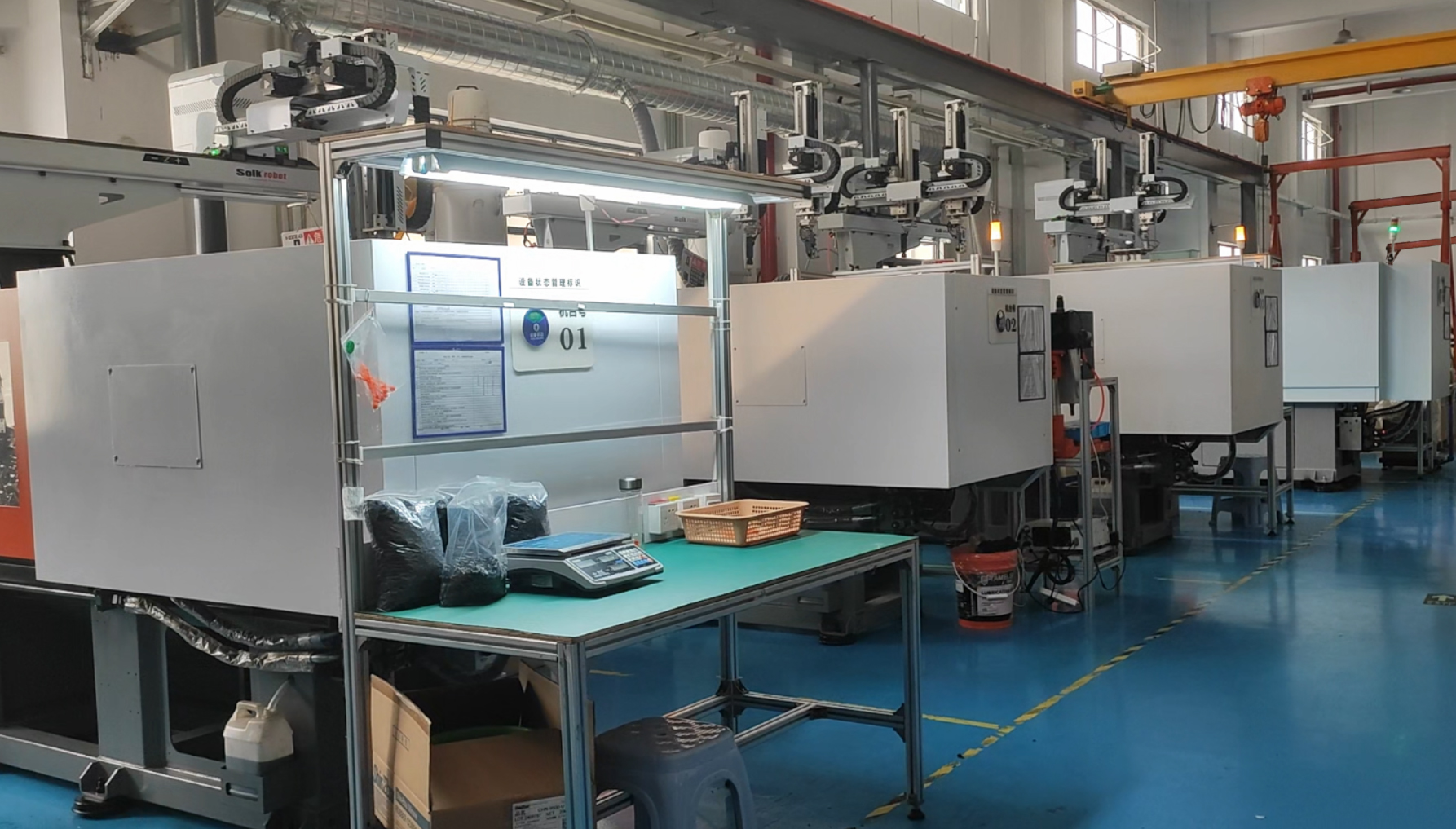
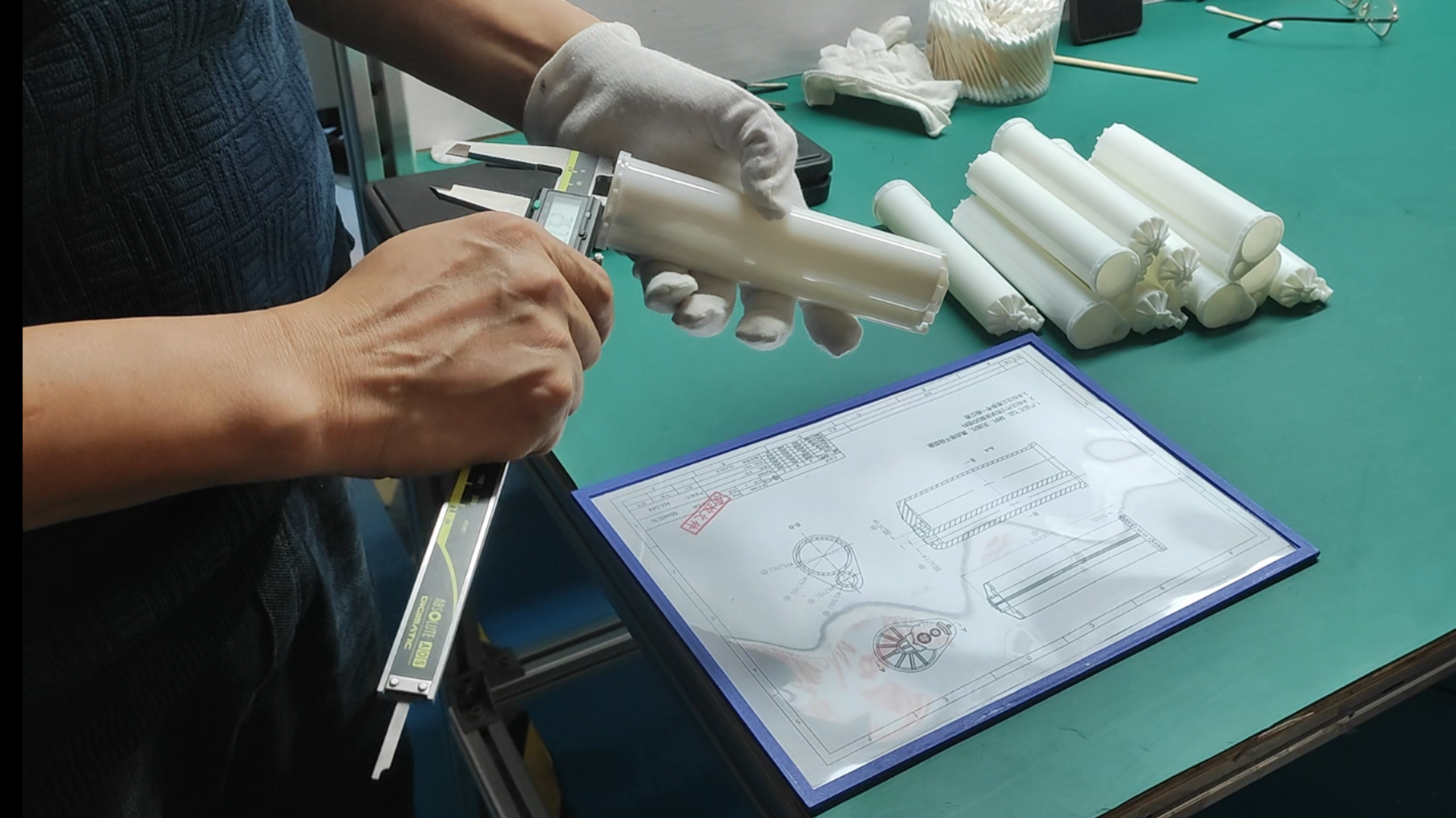
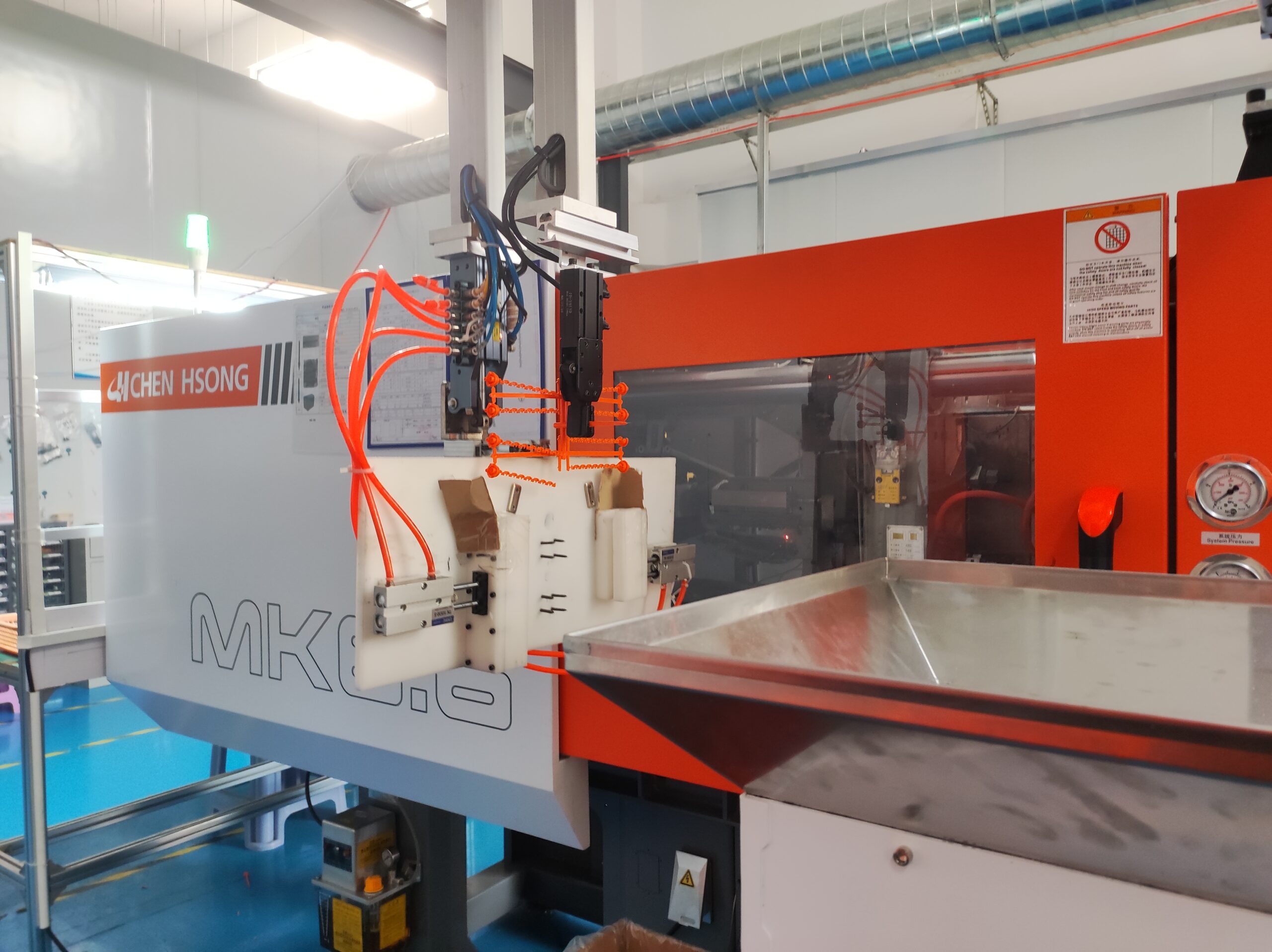
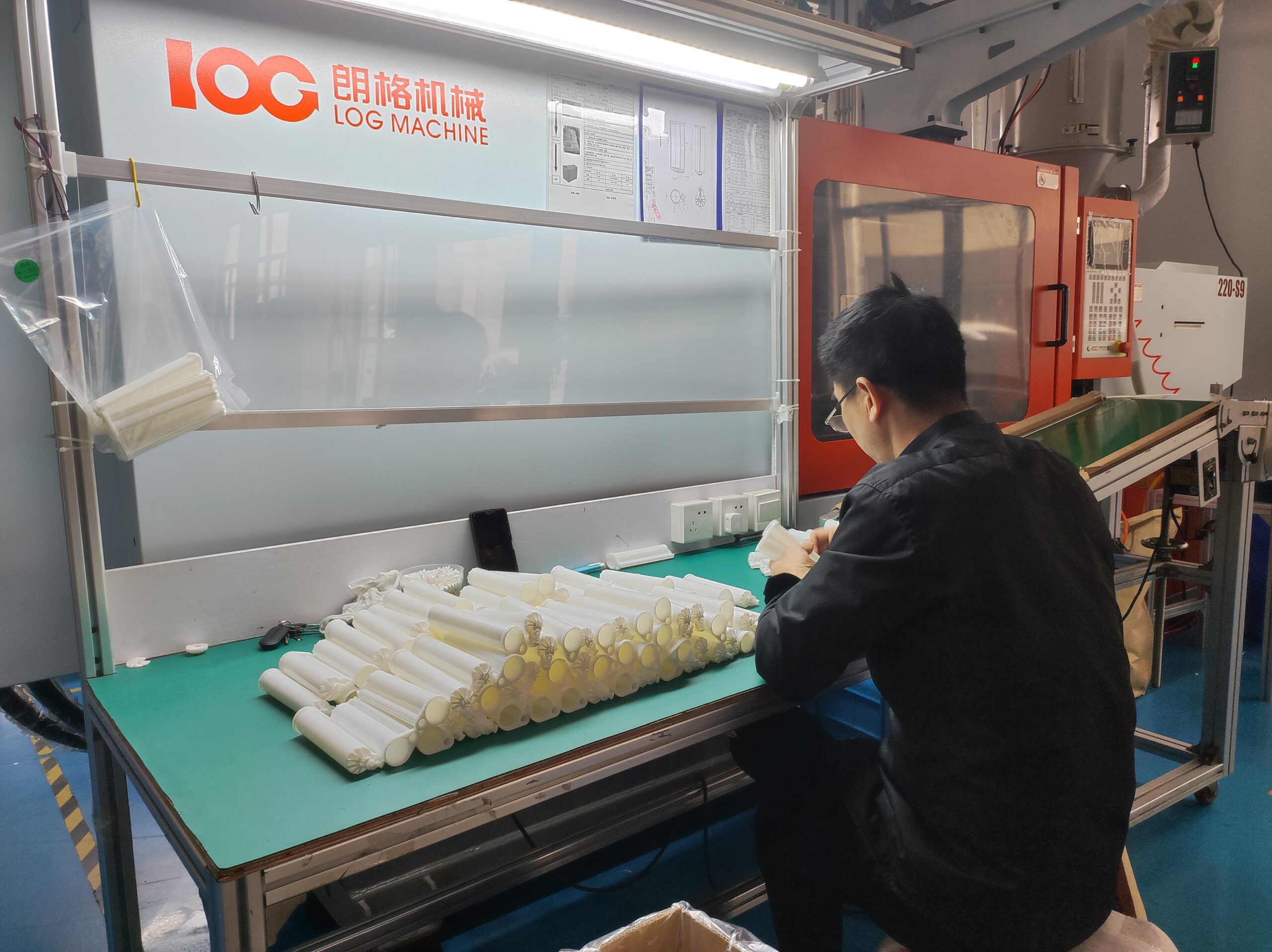
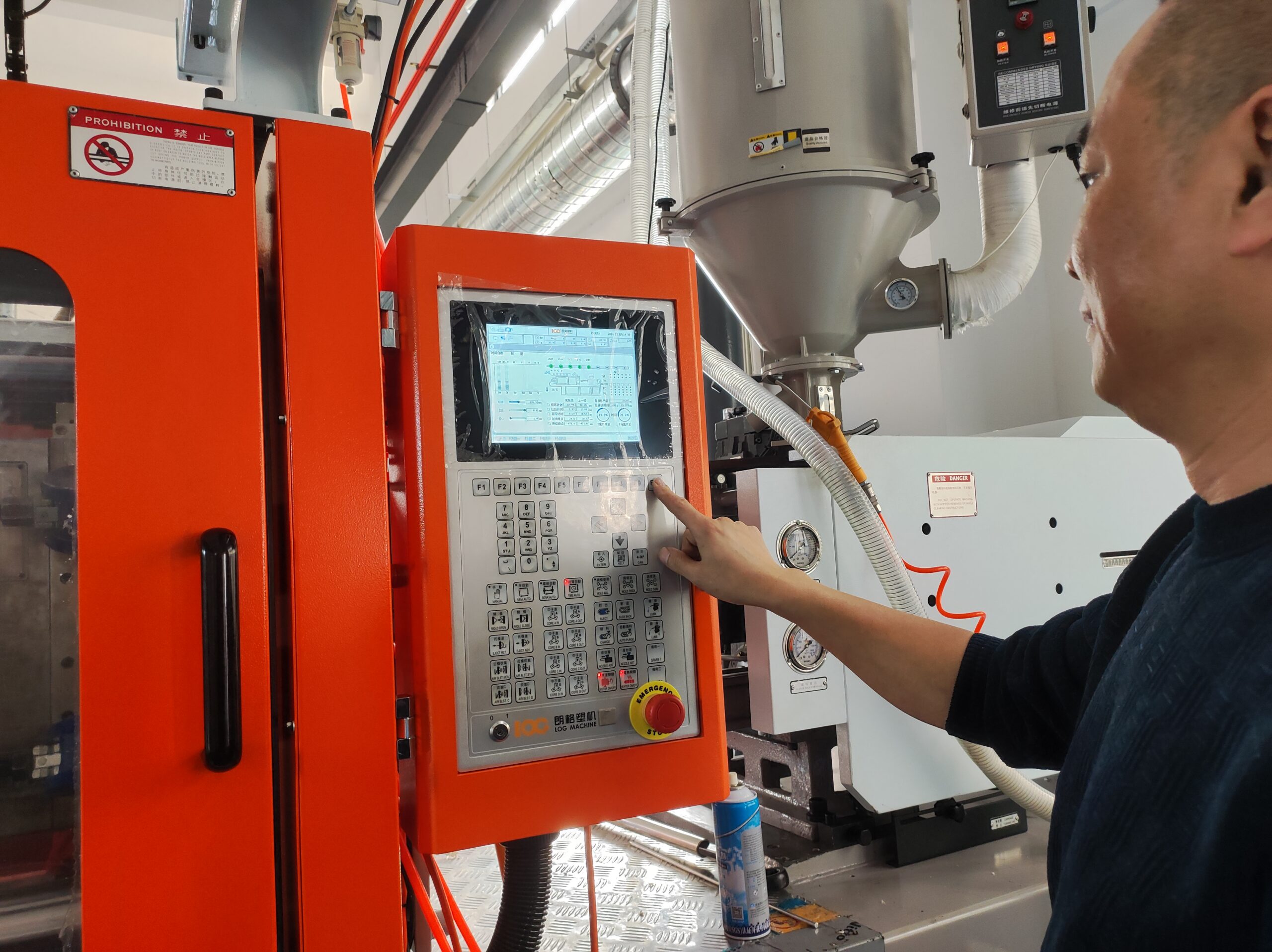
An unbranded nozzle just does not get on to our range if the bead is not just right, every time. Quality case is process control, not a logo, with a reliable test for mix quality. We operate a ISO 9001 quality management system and a new configuration of any of our static mixing nozzles is always tested for Shore hardness of the cured bead ASTM D2240 before it goes out as standard; in fact, it is our standard for you too rather than assuming number of elements guarantees quality.


ISO 9001
Quality management system
ASTM D2240
Shore hardness mix validation
In-House Molding
Housings & elements made by Ebestron
Sample-First
Fit confirmed before volume orders
ENGINEERING UTILITIES
Mixing Nozzles by Interface Type: Advanced Calculation Suite
Frequently Asked Questions
How do I know which interface I need — bayonet, bell-mouth, or spiral?
You can start using a static mixing nozzle from a number of existing cartridges and guns. A 50 ml twist-lock cartridge takes a bayonet static mixing nozzle (EB-BY), while the larger side-by-side (SXS) or meter-mix cartridges take a bell nozzle seated with a retaining nut (EB-BM). C-System 200 ml cartridge static mixing nozzle comes in a spiral variety (EB-SP). Bayonet cartridges fit only a bayonet nozzle, so an EB-BY is the path for 50 ml twist-lock guns. Start from the cartridge or gun already on your bench rather than from the adhesive, because the interface is a hard filter and not a preference. Pick the inlet first, then narrow element count, geometry, and tip. If you run a mixed fleet of bayonet and bell equipment, we cross-reference your current part numbers and tell you which Ebestron series replaces each one. Send a photo and the cartridge brand and we confirm the fit.
Are Ebestron nozzles compatible with Sulzer Mixpac, 3M EPX, and Nordson cartridges?
Each family is built to fit the matching cartridge series: the Bayonet family fits A-System and B-System cartridges (including the B-System that 3M uses for the EPX Duo-Pak), the Bell family fits the larger side-by-side (SXS) and meter-mix cartridges, and the Spiral family fits the 200 ml C-System cartridge. There are always exceptions to the rule so just as a double check just before you order we will advise of the parts that fit and ship an example to test.
How many mixing elements do I need?
Mix quality is dependent on the materials being blended. For many epoxy and similar 2-part cartridges a common recommendation would be 8-10 elements in the nozzle for acrylics, 15-24 for epoxies, 20-30 for silicone, 24-36 for polyurethanes – the 1:1 ratios requiring lower counts and higher ratios higher numbers of elements within that range; but we would always prefer to take a look at your specific material and test, as number of elements is not the ultimate factor defining quality.
Helical or square (Quadro) — which mixes better and wastes less?
Both mix two-part adhesive well when sized correctly. Square/Quadro elements mix in a shorter body, let you work closer to the part, and waste roughly 7% less adhesive than an equivalent helical. Tight access or automation favors square; otherwise helical is the lowest-cost default.
Why did my first bead come out unmixed or streaky?
The new cartridge piston in the plunger set is naturally uneven, with the first amount of material coming from the nozzle being too rich on one element or other and so mixing poorly at best. It is recommended to dispense about an inch of material from the nozzle onto scrap paper and discard before dispensing product to your actual workpiece. Short nozzle to save money leads to bad mixes: few elements just do not mix the product.
How long can adhesive sit in the nozzle before it cures?
Working life of nozzle is set by your adhesive’s pot life and ambient temperature. For example, a product with a 10-minute pot life at 23°C will have about a 5-minute pot life at 31°C, after which the adhesive gels in the nozzle and you’ll need to change it. Plan dispensing for the pot life, and keep the work area cool if you want to extend it.
What is the MOQ, and do you offer OEM or private-label?
Since we manufacture rather than resell, we support low minimum order quantities and private-label runs, including custom housing colors for ratio and material separation. Send your yearly volume and configurations and we’ll send back a per-configuration quote with MOQ and a stocking plan. →