Get in touch with Ebestron Company
ISO Certified
Battery & Electric Cartridge Dispensing Guns
Battery & Electric Cartridge Dispensing Guns for 2-Component Adhesives
Cordless. 18V-class dispensing power for two-part epoxy, MMA, polyurethane and silicone cartridges – tough enough to maintain mix ratio on high-volume lines without the operator strain of a manual gun, or the airline tie-down of a pneumatic system.
Solution Summary, Ebestron Battery & Electric Cartridge Guns
- 1:1 · 2:1 · 4:1 · 10:1 – Interchangeable ratio carriages
- Mixpac · Cox · Nordson – Standard cartridge & mixer fit
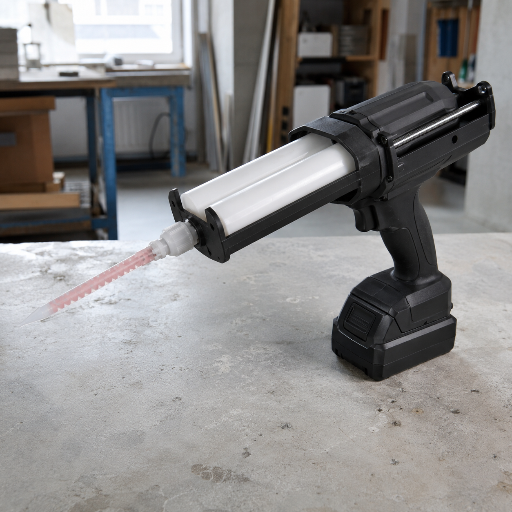
18V Li-ion
Cordless, ~30–35 min fast charge
50–600 mL
Side-by-side & coaxial cartridges
Up to 5 kN
Thrust for high-viscosity 2-K adhesives
CE · RoHS
Factory-direct, OEM/private-label
Cut Operator Fatigue and Bond-Failure Risk on High-Volume Lines
It eliminates a drawback of manual cartridge guns on any two-component adhesive process: Hand-squeezing a 400ml epoxy cartridge 8-hours straight can get tiresome. Tired operators, dispensing less-than consistent quantities, are a problem that dispensing experts don’t mince words about – cartridge guns are “far more subject to operator influence, including inaccurate dispensing quantity potentially impacting bond integrity”.
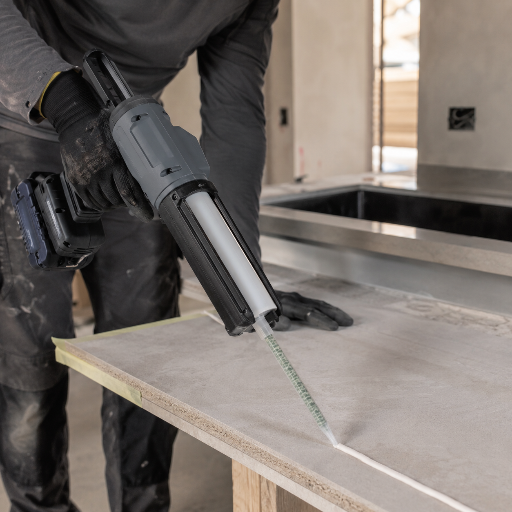
Electric and battery cartridge dispensing guns get rid of that squeezing component – with a motorized drive pushing both Part A and Part B along at a steady, repeat rate, producing consistent shot-after-shot, on-ratio dispense.
Industrial Grade
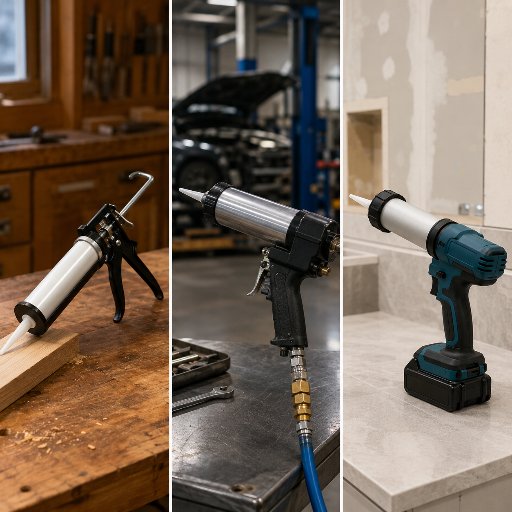
These aren’t the caulk guns your DIY neighbors buy. A two-component, 18V cordless cartridge gun holds and mixes either side-by-side or co-axial cartridges in-device for insertion into a static mix nozzle designed for the big, industrial epoxy, polyurethane, MMA and silicone epoxies that are used in auto manufacture, electronics, aerospace and construction.
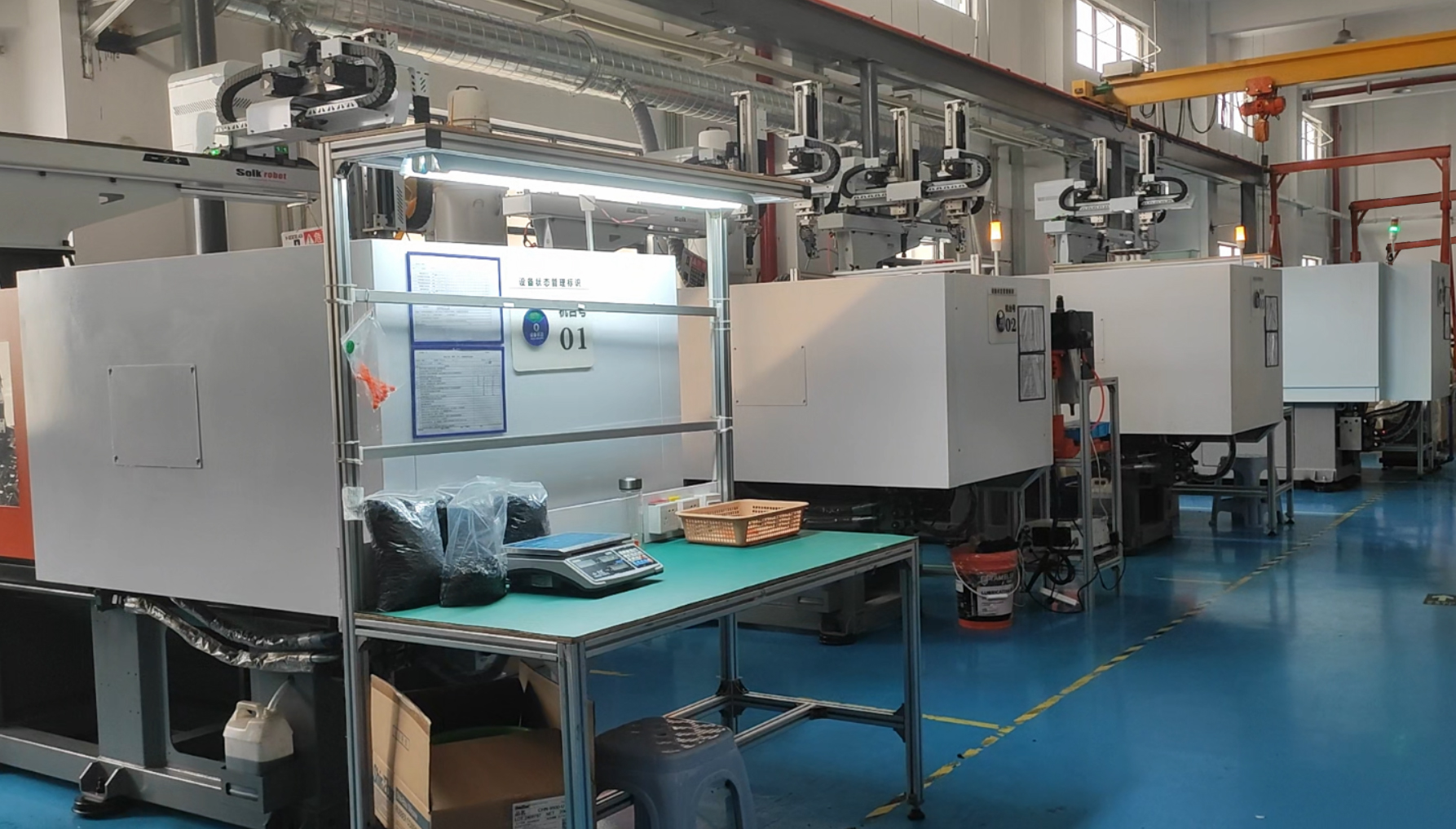
Ebestron manufactures this entire product family in-house at our Kunshan, Jiangsu factory, so a procurement team gets the same CE-marked 18V cordless power the western brands charge $700-800 for. Unlike a hardware-store caulk gun, the carriage is built around the thrust a 10:1 structural cartridge needs to stay on-ratio. It is one drive option in Ebestron’s full two-component adhesive dispensing gun range.
18V
Cordless Power
10:1
Structural Thrust
CE
Marked Quality
Ebestron Battery & Electric Cartridge Guns, Models & Selection
The first thing to choose is cartridge volume, mix ratio and adhesive viscosity. Make the wrong choice and the production line is sure to suffer-one weak 2K cartridge battery applicator can deliver insufficient force to the heavier cartridge in a 10:1 mixture and wreck the mix ratio-the problem that scuttles many a structural bond.
Higher ratio and more viscous adhesives will demand increased thrust and additional mixing elements. You’ll need between 15 and 24 mixing elements per unit for epoxy materials (compared to only 8-10 for 1:1 acrylic) and less for 1:1 sealants. Every one of these we make in our facilities here in Kunshan. That means an engineer can identify and match our 18V industrial battery powered multi-component cartridge gun to an exact Bill of Material specification in one sitting. And you get the equivalent power offered by European and North American brands costing between $700-$800, factory direct from China.
Drive Platform
18V LI-ION
Loads-Per-Charge Throughput Ladder — battery cartridge gun selection by format
| Cartridge format | Typical volume | Mix ratios | Best-fit materials | Drive class |
|---|---|---|---|---|
| Bayonet / coaxial | 50–160 mL | 1:1, 2:1, 4:1, 10:1 | Electronics potting, precise industrial | Compact 18V |
| Side-by-side | 200–300 mL | 1:1, 2:1, 4:1 | Acrylic / MMA, automotive trim | Standard 18V |
| Side-by-side | 400 mL | 1:1, 2:1, 10:1 | Structural epoxy, panel bonding | High-thrust 18V |
| Side-by-side | 600 mL | 1:1, 2:1 | High-volume sealant, glazing | High-thrust 18V |
| Twin / multi-component | up to 825 mL | 10:1 | Acrylics & epoxies, solid-surface | Max-thrust 18V |
Manual vs Pneumatic vs Battery, Choose the Right Drive
Here’s the honest version most product pages skip: a battery isn’t always the answer. In fairness, the established names here, the Cox 2-component battery dispenser and the Albion cordless cartridge gun, set a real performance benchmark, and we won’t pretend otherwise. If you only run a small quantity of low-viscosity cartridges, a less expensive manual cartridge gun is precise and cost-effective for small volumes.
You get the money back on a battery dispenser at high volume, viscous material, or consistency-critical work, where bond-failure cost and dispensing labor really jump as demand climbs. The honest deal is about the upfront money spent, and that deal gets better the longer the battery gun runs. The table below uses concrete dispense behavior, not High/Medium/Low.
3-Drive Dispensing Selector — manual vs pneumatic vs battery
| Factor | Manual | Pneumatic | Battery / Electric |
|---|---|---|---|
| Operator effort | High (hand squeeze) | Low (needs air line) | Low (trigger only) |
| Dispense consistency | Varies with fatigue | Consistent, uniform | Consistent, set-speed |
| High-viscosity / 10:1 | Struggles | Strong | Strong (up to 5 kN) |
| Portability | Full | Tethered to compressor | Full (cordless 18V) |
| Throughput | Low | High | High (~25 loads/charge*) |
| Upfront cost | Lowest | Mid + air infrastructure | Higher (battery + charger) |
| Best for | Low volume, occasional | Fixed bench, high volume w/ air | Mobile high-volume, consistency-critical |
Compare Drive Systems
Cartridge & Brand Compatibility, Mixpac, Sulzer, Cox, Nordson
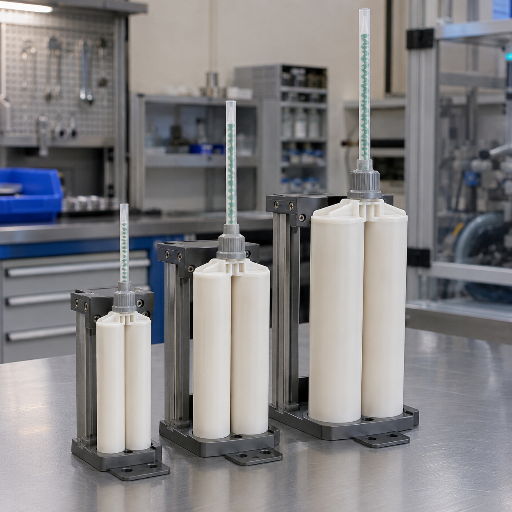
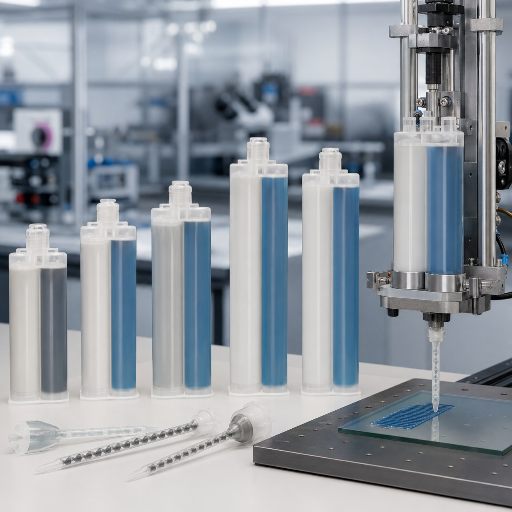
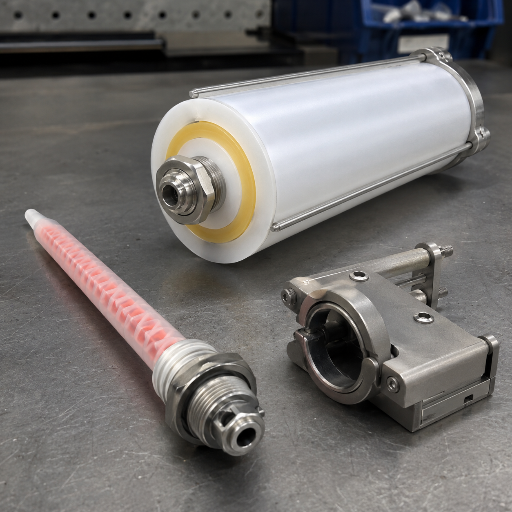
What buyers get wrong most often: gun compatibility is determined by the cartridge or barrel format your adhesive ships in, not by the brand on the gun. Every 2-K gun has to match a cartridge an adhesive maker already packs. Before a gun reach your production line, make sure the carriage matches your cartridge geometry and your static mixer thread.
For example, a Mixpac dispensing gun carriage takes a different bell housing than a coaxial Nordson cartridge. Ebestron guns fit the side-by-side cartridge and coaxial geometries the dominant adhesive companies pack their two-part products in, with the right cartridge retainer for each twin cartridge format, so a Mixpac & Cox compatible carriage and a Cox 600 mL both load without an adapter.
Cartridge-Brand Fit Matrix — confirm before you specify

Production Advantage
When it’s production time, side-by-side cartridges offer you this advantage: a 1-piece housing that won’t expand with thrust and maintains a balanced feed as your system is under pressure. Select a Static mixer based on product. An 8- to 10-element mixer works well for a 1:1 acrylic, 15-24 for a strong epoxy and 30-36 for polyurethane. It doesn’t matter how perfect the gun is if you’re using the wrong mixer.Performance That Holds the Mix Ratio, Thrust, Speed, Anti-Drip
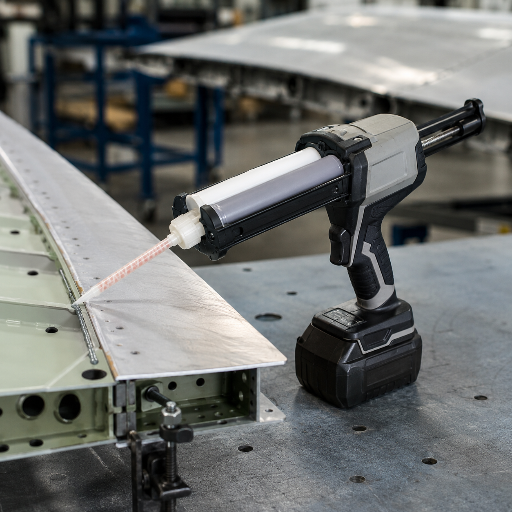
A two-component gun work because Part A and B get to the mixer in proportions the chemist described. Failure occurs three ways on the line, with three solutions that can be implemented from an engineering viewpoint. First, variations due to fatigue-an operator doesn’t exert the same steady grip hour after hour-are solved with a set-speed electric drive that offers variable speed and flow; dispensing experts note this reduces the human error that contributes to bond failure.
Third, the material is “tougher to push”-think 10:1 ratio and high-viscosity epoxy-and the poor performer is left starved. The Cox high-thrust units provide the punch you need up to 5 kN-a step up for most guns and higher than even an optimized manual operation-so both pistons are urged forward to ensure an even flow of a thick product. Fourth, run-on and drip prevention; after you release the trigger, the anti-drip mechanism retracts the plungers and halts fluid delivery, saving adhesive by preventing leakage between application and keeping the tip clean.
Build quality dictates whether those protections will outlive the transition. Cheap battery guns with a auto-retract drive are tardy on the next bead and thin plastic threads at the barrel-handle interface disintegrate under heavy mortar or high-viscosity sealant. Our guns use a hardened steel-and-aluminum carriage rated for the heaviest ratio a customer run, differing by the gap between a neat automotive panel-bond run and a scrap heap in electronics potting or aerospace structure work, where an off-ratio bead is a rejected part.
Variable speed also lets an operator match the dispensing rate to each adhesive’s working time and pot life: a fast-setting methacrylate get a quick, clean shot size, while a slower structural adhesive lays an even bond line. That control, plus the thrust force to move a stiff mix, an ergonomic grip steady enough for hundreds of cartridges per charge, and a duty cycle rated for automotive assembly and electronics lines, is what separates a CE-certified production tool from a hardware-store gun. A 30-minute fast charge keeps a second lithium-ion battery pack ready, so the line never waits.
Mix-Ratio Integrity Spec Band
What keeps a 2-K bead on-ratio
Risk to ratio
Spec that protects it
Ebestron range
Fatigue drift (manual squeeze)
Set-speed motorized drive
Variable speed + flow control
High-viscosity stall
Carriage thrust
Up to 5 kN
Cartridge bulging
Side-by-side one-piece body
200–600 mL side-by-side
Run-on / drip
Anti-drip retraction
Auto plunger retract
Under-mixed bead
Mixer elements matched to material
8–36 elements (per material)
On a two-component gun, thrust isn’t about speed, it’s about ratio. If the drive can’t push the thicker side of a 10:1 cartridge, the mix starves and the bond is compromised before it ever cures. We size the carriage to the heaviest ratio a customer runs, not the lightest.
Ebestron Engineering Team, Kunshan
Proven on the Production Line, Output & Payback
The cost justification for upgrading from manual to battery isn’t the price of the gun, it’s the investment in labor and scrap costs. A cordless drive deposits a full load in just over 35 seconds at maximum speed with approximately three times the thrust of a manual drive, enabling an operator to run the entire shift without the hand fatigue that can compromise accuracy later in the day. Unlike a pneumatic rig tethered to shop air, the cordless drive move between automotive assembly cells and aerospace bonding stations without re-plumbing, the trade-off that favours battery on multi-cell production lines.
TCO Snapshot (Silver) — manual → battery on a 2-K line
Potential savings with battery operation, based on dispensing industry rate patterns rather than a single quoted number:
Labor,
automated and semi-automated handling decreases manual labor on repetitive dispense functions; published manufacturing comparisons indicate labor savings in double digits when manual handling is eliminated.Scrap,
fewer off-ratio beads translates to fewer rejected bonds, the largest hidden cost on a structural line.Ergonomics,
lower repetitive-strain risk on high-volume stations.Certifications & Compliance, CE, RoHS
For a purchaser comparing a China-to-us supplier with a respected Western brand, assuredness through compliance is recommended. Our battery and electric guns are constructed to CE and RoHS standards. It is interesting to note than the top Western supplier product being selected is manufactured in China, meaning the authenticity of provenance is a flat value. Ebestron is able to supply the same standard of build directly, with documentation available as required.
CE Marking
RoHS Compliant
18V Li-ion (overheat-protected)
OEM / Private-Label
OPEN
⟲ FOLD FAN
×
Advanced Dispensing System Evaluation Tools
3-Drive Dispensing Selector
Answer three questions to see whether a manual, pneumatic, or battery cartridge gun fits your two-component line.
Access Tool
Cartridge-Brand Fit & Static Mixer Checker
Pick your cartridge system, size and adhesive — confirm carriage fit and how many static-mixer elements the material needs.
Access Tool
Battery vs Manual Payback Estimator
A rough TCO comparison: how fast a battery gun’s labor and scrap savings offset its higher purchase price. Your numbers stay in the browser.
Access Tool
Advanced Battery & Electric Cartridge Dispensing Solutions



01
02
03
04
05
06
Frequently Asked Questions
For low-volume or occasional jobs, a manual gun is cheaper and fine. Battery is worth it when you dispense two-component adhesive in volume, run thick or 10:1 material, or need consistent on-ratio beads, the consistency and fatigue payback is where it earns its higher upfront cost.
Yes for standard side-by-side formats (50/200/400/600 mL) across 1:1, 2:1, 4:1 and 10:1 ratios, plus coaxial/bayonet carriage options. Compatibility is set by cartridge geometry and mixer thread, so confirm your exact cartridge before ordering, we'll check it against your part for you.
Roughly 25 loads per charge on an 18V platform is typical, but it varies with adhesive viscosity and mix ratio, thicker material and heavier ratios draw more power. A fast charger (about 30–35 minutes) keeps a spare pack ready so the line never stops.
Thrust keeps both sides of the cartridge advancing together. If the drive can't push the heavier side of a high-viscosity or 10:1 cartridge, the mix go off-ratio and the bond weakens. High-thrust models (up to 5 kN) handle stiff structural adhesives where manual guns stall.
Yes. Ebestron supplies factory-direct with OEM and private-label options, custom branding, color and packaging, alongside CE/RoHS documentation. Request a quote with your volume and configuration.
Spec a Battery Cartridge Gun for Your Line
Provide your size and ratio, we'll supply our model and a factory-direct quote.
Trending now